
Unbiased headlines. Facts, not spin.
Every story is an unbiased news briefing written from 110+ sources across the spectrum — sources linked so you can verify it yourself.
 health
Low Interest (4/10)
May 31, 2026 at 08:27 PM
health
Low Interest (4/10)
May 31, 2026 at 08:27 PM
Kenya's Lake Turkana Is Rising, Drowning Villages, and Pushing Killer Crocodiles Into Communities
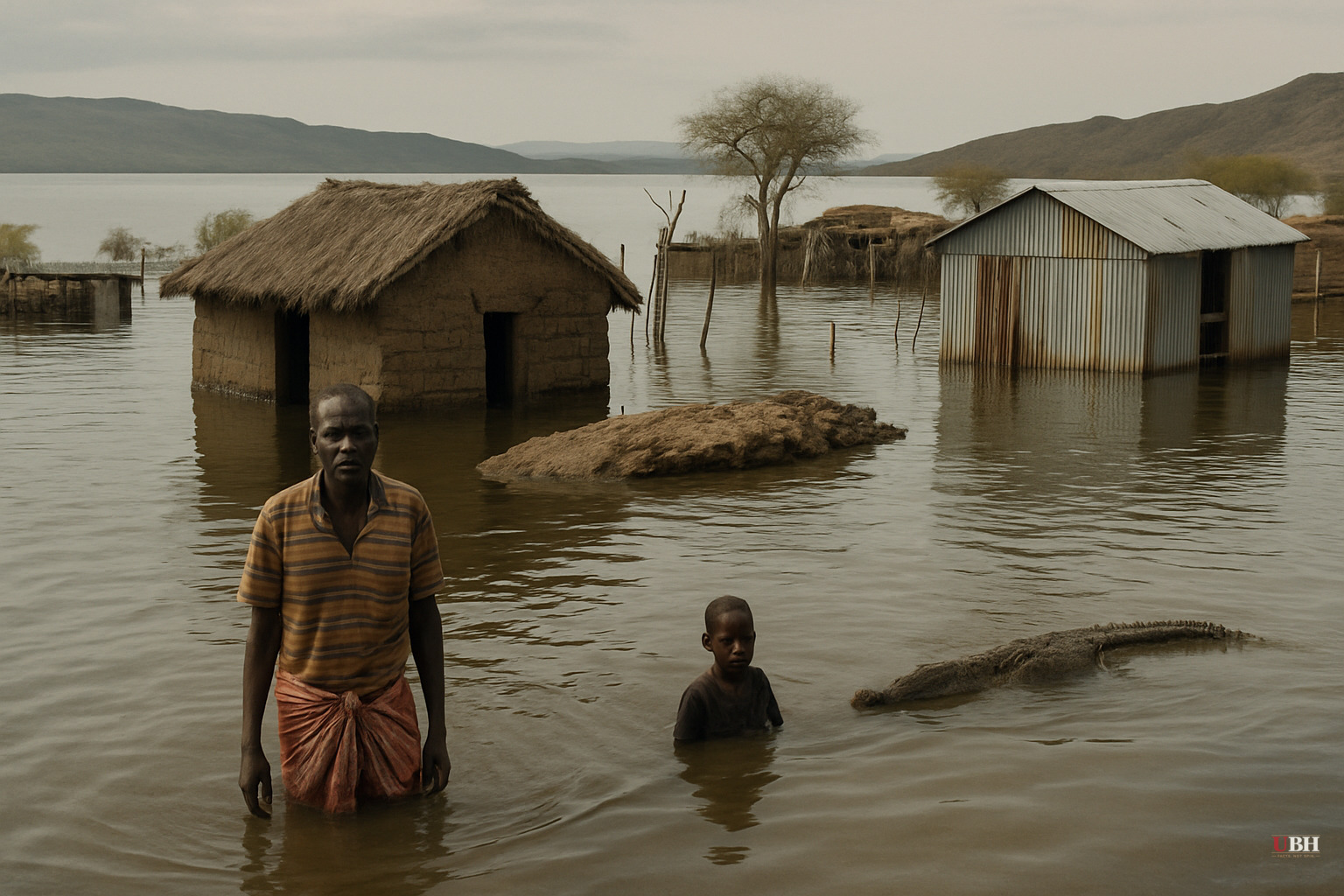
A Village That Became an Island
Ten years ago, Komote was a village on the Kenyan mainland. Today it's an island.
Alfred Lenkutuk, 71, is a member of the El Molo people — one of Africa's smallest indigenous groups — and he's watched the lake eat his world. Burial grounds. Grazing land. Schools. Roads. All underwater. His village is now separated from the mainland by 660 yards of lake water, according to NPR.
Fishermen who once hauled in 250-pound catches now come home with 10 pounds if they're lucky. Hippos — once common enough that the community organized hunts — are virtually gone. Children take a boat to school every morning. Anyone with livestock had to leave.
"Now we depend on the government," Lenkutuk told NPR. "We're not able to support ourselves."
The government response? Periodic rice and beans shipments and a reverse osmosis water plant. Lenkutuk says it's NOT enough. Hard to argue.
The Numbers Are Damning
A 2021 Kenyan government report confirmed Lake Turkana's total surface area expanded by approximately 10% over the previous decade, according to The Guardian. The lake sits inside the Great Rift Valley — a 4,000-mile geographic fault line stretching from Lebanon to Mozambique — and scientists attribute the rising waters to a combination of climate and tectonic factors.
The lake is already the world's largest alkaline lake. It sustains hundreds of thousands of people in one of the most isolated and neglected regions of Kenya. The expansion isn't delivering more resources. It's delivering chaos.
Crocodiles Are Now a Public Safety Emergency
Nile crocodiles grow up to 20 feet long and weigh up to 2,000 pounds. As rising water shifts their habitats closer to human settlements, the results are predictable and brutal.
Seven people killed. Fifteen injured. In the past year alone. Those figures come from The Guardian's reporting by Carlos Mureithi.
Ng'ikalei Loito, 33, learned this firsthand in December 2024. She was swimming near Lowarengak town on the western side of the lake when a crocodile clamped onto her legs. She grabbed a partially submerged tree and screamed for help. Villagers waded in. The crocodile eventually released her.
At the hospital — a three-hour drive away — doctors initially plastered one leg and put an external fixator on the other. The next day, both legs had turned green. Only one toe showed any responsiveness. Both legs were amputated, according to The Guardian.
Loito used to run a food stall selling fried dough to support her five children. Now she depends entirely on her mother and relatives.
"My life has totally changed," she told The Guardian. "I am not able to do anything now."
Abandoned school buildings at the El Molo Bay primary school in Komote have become crocodile breeding grounds, according to NPR. The place where children were supposed to learn is now a habitat for one of Africa's deadliest apex predators.
The Story Mainstream Coverage Is Missing
NPR and The Guardian both deserve credit for getting journalists on the ground. This story gets real human faces and real numbers. That's legitimate journalism.
What's missing from most coverage is the governance failure.
This is one of the most isolated and neglected parts of Kenya. That's not an accident of geography — it's a product of chronic government indifference to remote, marginalized communities. The Kenyan government has known about the lake's expansion since at least 2021, when it published its own report documenting the 10% surface-area increase. What happened after that report? Apparently, intermittent rice shipments and one water plant.
Seven dead from crocodile attacks in a single year. The nearest hospital is a three-hour drive. These are not ambiguous data points. They represent an inadequate government response to a documented and worsening crisis.
The coverage also buries another compounding disaster: persistent drought across northern Kenya has forced thousands of herders to abandon their livestock and take up fishing. That means more people competing for a fish population already collapsing under ecological strain. Catches are down. Hunger is up. And the same rising waters that are drowning the lakeshore communities are not producing more fish — they're producing more crocodiles near people.
What This Means on the Ground
For the El Molo and the Turkana people, this isn't a climate policy debate. It's a daily survival calculation.
Do you send your kids across 660 yards of open water to get to school, knowing crocodiles patrol that water? Do you wade in to fish, knowing seven of your neighbors died doing exactly that in the past 12 months? Do you wait for a government that sends beans every few months and calls it done?
These communities had functioning, self-sustaining lives. Not wealthy lives — but independent ones. Rising waters and failed governance have converted independence into dependency, and dependency into danger.
The lake that kept them alive for centuries is now the thing most likely to kill them. And the government that's supposed to protect them is three hours away on a good road — which the lake has probably swallowed by now.
Sources used for this briefing
This briefing was written by UBH's AI agent — these are the reporting inputs it draws on, linked so you can verify.


