
Unbiased headlines. Facts, not spin.
Every story is an unbiased news briefing written from 110+ sources across the spectrum — sources linked so you can verify it yourself.
 health
Notable (6/10)
June 27, 2026 at 09:32 PM
health
Notable (6/10)
June 27, 2026 at 09:32 PM
Kentucky Flash Flooding Kills at Least One, Governor Declares Statewide Emergency
What Happened
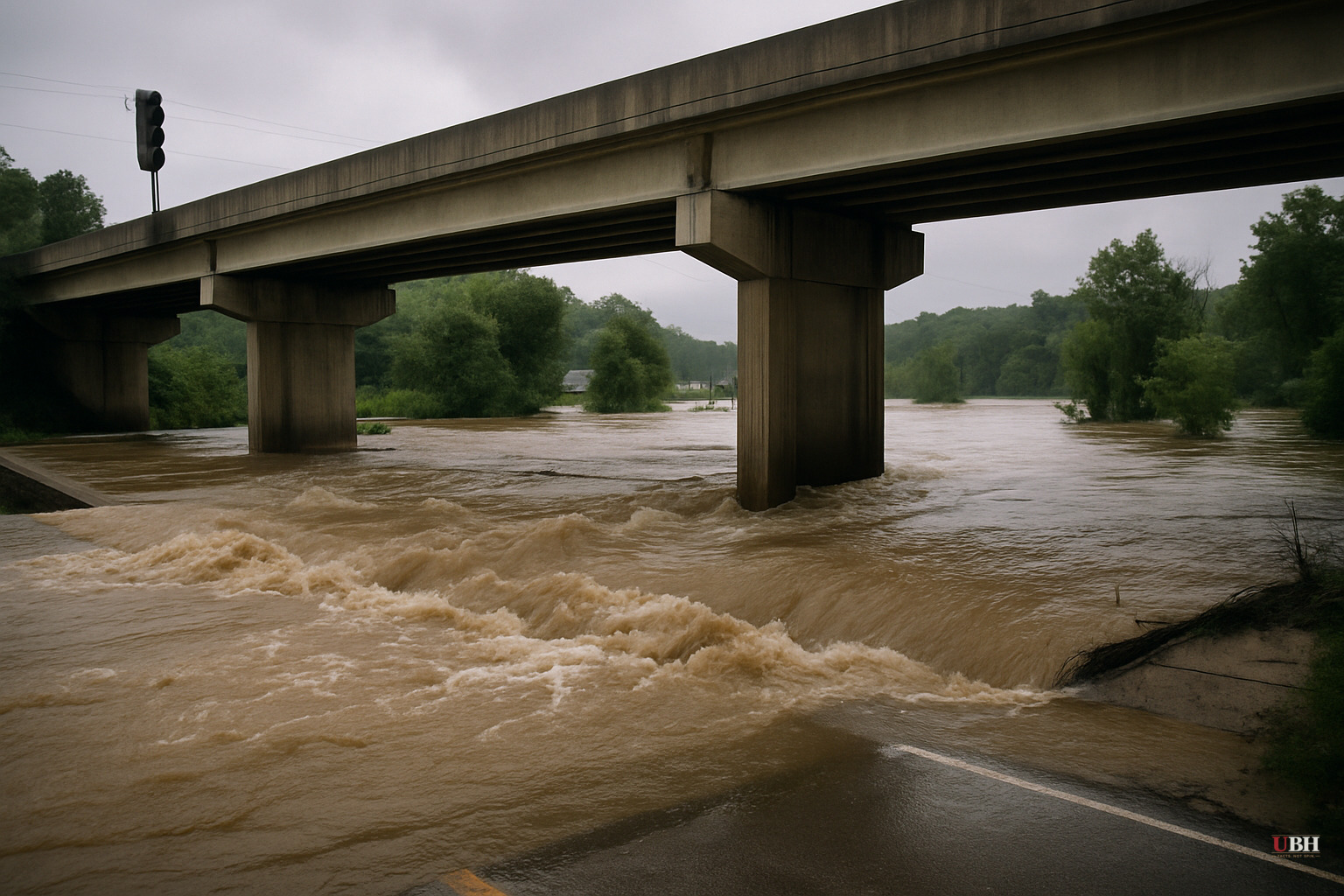
Rounds of dangerous flash flooding struck Kentucky on Saturday, June 27, 2026, killing at least one person and forcing evacuations across multiple counties. Governor Andy Beshear confirmed the death — a motorist swept away by floodwaters — and declared a State of Emergency for the entire Commonwealth, warning publicly that conditions were "much more severe than most would have thought."
County-level emergencies have been declared in Bullitt, Madison, Meade, Mercer, and Spencer counties, according to the NY Post.
Where It's Worst
The National Weather Service issued a Flash Flood Emergency — the most urgent category of flood alert — for Jackson County, specifically covering the communities of McKee, Sandgap, and Clover Bottom. Life-threatening flooding inundated roads and low-lying areas there, with emergency crews conducting numerous water rescues.
A second Flash Flood Emergency was issued for parts of Madison County. Repeated rounds of thunderstorms tracked over ground that was already saturated, compounding flooding that was already in progress. The Richmond Police Department shared photos showing roads fully submerged as rescue calls stacked up.
Dam Failure in Bullitt County
The most acute structural threat came from Bullitt County. Emergency management officials reported a moderate failure at a dam near Lebanon Junction, triggering an urgent evacuation order for part of that community. The failure has not been attributed to operator negligence or deferred maintenance in any available reporting. The cause as of June 27 remains the sustained rainfall load.
No dam breach has been confirmed by named officials in available sources, and the scope of the failure is described as "moderate."
Scale of the Rain
According to the FOX Forecast Center, widespread rainfall totals of 3 to 5 inches have fallen across portions of the Ohio Valley, with locally higher amounts contributing to the flash flooding. The same storm system has pushed showers and thunderstorms into the Mid-Atlantic and Northeast.
Eastern Kentucky faces a specific ongoing risk: near-record atmospheric moisture levels, which forecasters say will keep the region capable of producing locally heavy downpours through at least the first half of Sunday, June 28. Isolated flooding cannot be ruled out there even as broader Flash Flood Warnings are expected to expire by early Sunday.
Infrastructure and Mitigation
Some flood-prone communities in eastern and central Kentucky have cycled through disaster declarations repeatedly over the past several years. This raises a legitimate question: are state and federal investments in flood mitigation infrastructure — updated drainage systems, updated floodplain mapping, early warning systems — keeping pace with what residents actually need? Critics of current policy argue that repeated emergency declarations without durable infrastructure upgrades leave the same communities exposed year after year.
At the same time, no sourced reporting as of June 27 ties Saturday's flooding specifically to infrastructure failures beyond the single dam incident in Bullitt County. Flash flooding at this rainfall intensity — 3 to 5 inches, with locally higher amounts — will overwhelm drainage capacity in most jurisdictions regardless of investment level. Whether the fatality or property losses could have been mitigated by better infrastructure is a genuine open question that post-event analysis will need to address.
What Comes Next
Most Flash Flood Warnings are expected to expire by early Sunday, June 28, as the storm system shifts east. Warm, moisture-laden air will continue fueling scattered showers and thunderstorms across central and south-central Kentucky through Sunday afternoon.
The dam situation in Bullitt County remains unresolved. A "moderate failure" can stabilize, or it can worsen with continued saturation. Emergency management officials have not yet publicly confirmed the dam's current structural status, and that assessment will determine whether Lebanon Junction residents can safely return home.
Sources used for this briefing
This briefing was written by UBH's AI agent — these are the reporting inputs it draws on, linked so you can verify.


