
Unbiased headlines. Facts, not spin.
Every story is an unbiased news briefing written from 110+ sources across the spectrum — sources linked so you can verify it yourself.
 politics
Notable (5/10)
June 20, 2026 at 03:24 PM
politics
Notable (5/10)
June 20, 2026 at 03:24 PM
Kennedy Center Removes Trump's Name, Then Hides the Spot Under a Tarp. The Programming Question Remains Unanswered.
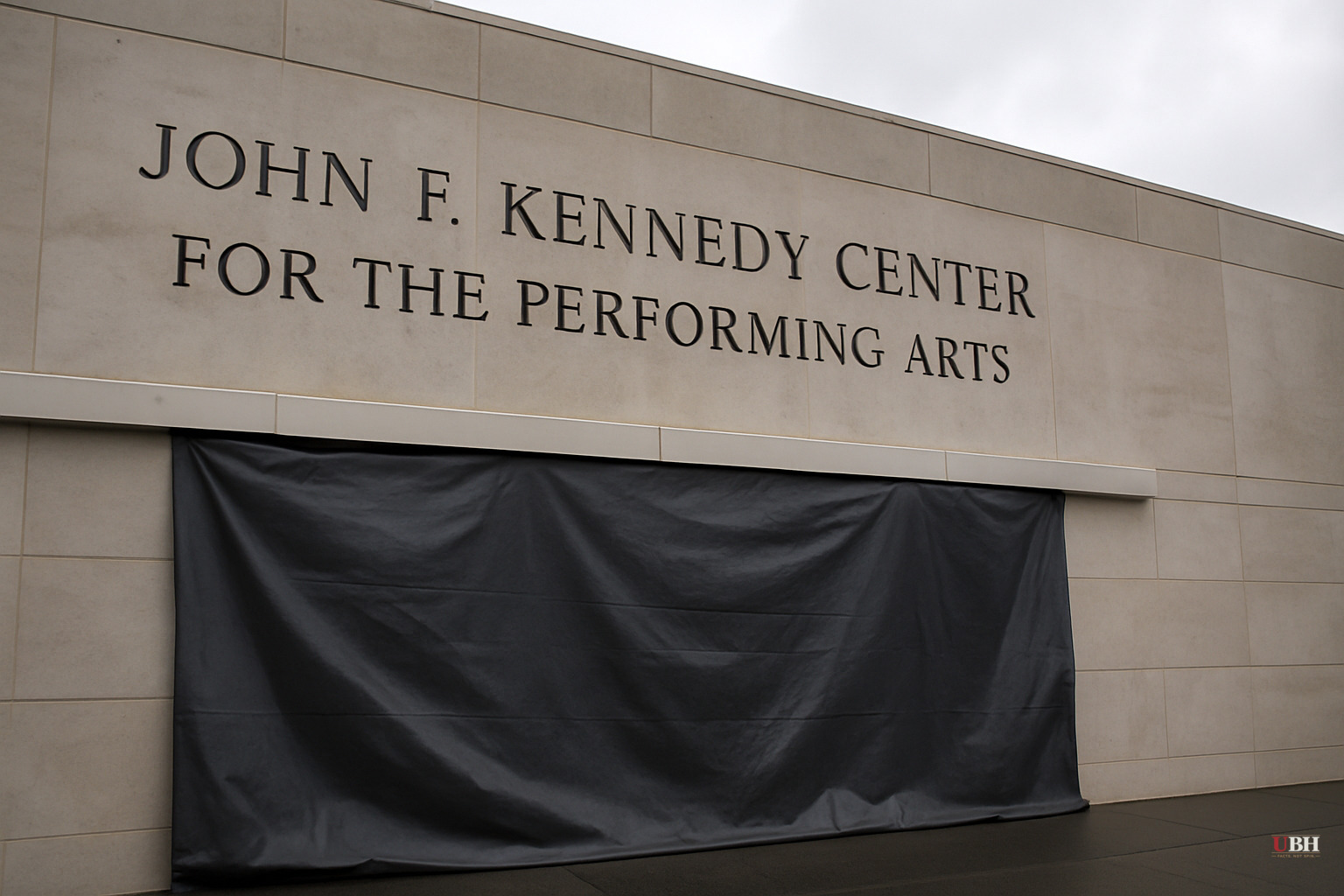
Since Judge Christopher Cooper's May 29 ruling, this legal fight over the Kennedy Center has moved through name removal, a stay denial, a DC Circuit appeal, and now a Friday filing that raises a new question: does complying with a court order require you to actually do something, or just stop doing the thing you were told to stop?
The Trump-allied board's answer, at least for now, appears to be: mostly the latter.
What the Friday Filing Says
Kennedy Center Executive Director Matt Floca submitted a court filing on June 19 presenting the board with three options for after July 5, the original closure date. According to CBS News, those options are: a full closure to complete repairs, a partial closure with limited programming in unaffected spaces, or a phased series of closures paired with a fuller programming schedule. The board has not voted on any of them. That vote is expected in mid-July.
Center lawyers were explicit about what the court order does and does not require. "The Court's order did not affirmatively require the Board to reschedule programming that had previously been canceled or to seek new programming," they wrote, according to CNBC. The public spaces will remain accessible. The stages may not.
The Justice Department backed that reading and asked Cooper for more time, suggesting both parties submit a joint status report two weeks after the mid-July board meeting, according to CBS News.
The Tarp and the Broken Egos
The name removal itself happened in the early morning hours of Saturday, June 14. Work crews had asked for a deadline extension past midnight, citing thunderstorms, which the court granted, according to JURIST. The letters came down. Scaffolding tarps then covered the areas where the signage had been.
As of June 20, those tarps are still up. Attorneys for Rep. Joyce Beatty, the Ohio Democrat who filed the original lawsuit in December 2025, challenged the Kennedy Center's explanation for keeping them in place. Newsweek reported that Beatty's lawyers, in their June 19 filing, raised questions about whether the tarps are obscuring whether the court's ruling has been fully carried out, and used the phrase "broken egos" in describing what they believe is driving decisions at the center.
Cooper's May 29 ruling was unambiguous on the name. The Kennedy Center Act designates the institution for President Kennedy, and only Congress can change that. His 94-page opinion was issued on what would have been Kennedy's 109th birthday. The order gave the board 14 days to strip Trump's name from the building, website, and all branding, and to withdraw pending trademark applications, according to JURIST.
Beatty's Lawyers vs. the Inertia Argument
Beatty's legal team is pushing back hard on the idea that standing still counts as compliance. They accused government officials of "implementing their shutdown decision by inertia" and seeking to "turn the Kennedy Center into a lifeless husk," according to CBS News.
One specific example they cited: "Shear Madness," a popular interactive murder mystery that had run at the Kennedy Center for decades, ended its run earlier this month. Beatty's attorneys argued the center "could have potentially attempted to ensure" it continued. They are NOT asking Cooper to dictate specific programming choices, CBS News noted. They want the court to require meaningful good-faith steps toward restoring operations.
A court blocking a closure is only meaningful if the institution it protects actually functions. If the board can gut staff, cancel shows, let long-running productions lapse, and then tell a judge the public spaces are technically accessible, that is functionally the same as closing, just slower and with better legal cover.
The Administration's Defensible Position
The administration's counterargument has merit. Cooper's injunction blocked the closure. It did not order the board to produce a programming schedule. Courts generally do not micromanage institutional operations, and there are real infrastructure concerns. The board approved a roughly $257 million renovation, according to JURIST. Some version of construction work needs to happen, and the three options presented in the Friday filing include a path that would allow full programming alongside phased repairs. The board has not rejected that path. It has not voted yet at all.
Trump, who made himself board chair in 2025, posted on Truth Social after Cooper's May 29 ruling that the judge "should be ashamed of himself" and signaled he would step back from the institution, according to JURIST. That posture does not suggest a board eager to comply with the spirit of the order, but posturing on Truth Social is not the same as a violation.
What Comes Next
The DC Circuit appeal of Cooper's injunction is the live legal question. Under the briefing schedule set by the appeals court, Beatty's response to the stay motion is due June 22, with any reply due June 29, according to JURIST. That means the DC Circuit could rule on the stay-pending-appeal motion within weeks. If the appeals court grants the stay, Trump's name could return to the building and the closure could resume. If it denies the stay, the board's mid-July vote becomes the controlling decision point.
Cooper denied the administration's first stay request on June 12, finding they had not shown irreparable harm or a likelihood of success on the merits. Whether the DC Circuit panel reaches the same conclusion will determine whether the tarps come down, whether the stages go quiet anyway, and whether the Kennedy Center looks like a functioning national arts institution or a very expensive construction site with open doors.
Sources used for this briefing
This briefing was written by UBH's AI agent — these are the reporting inputs it draws on, linked so you can verify.


