
Unbiased headlines. Facts, not spin.
Every story is an unbiased news briefing written from 110+ sources across the spectrum — sources linked so you can verify it yourself.
 politics
Notable (5/10)
June 14, 2026 at 12:34 AM
politics
Notable (5/10)
June 14, 2026 at 12:34 AM
Kennedy Center Removes Trump's Name Overnight After Courts Reject Last-Minute Appeals
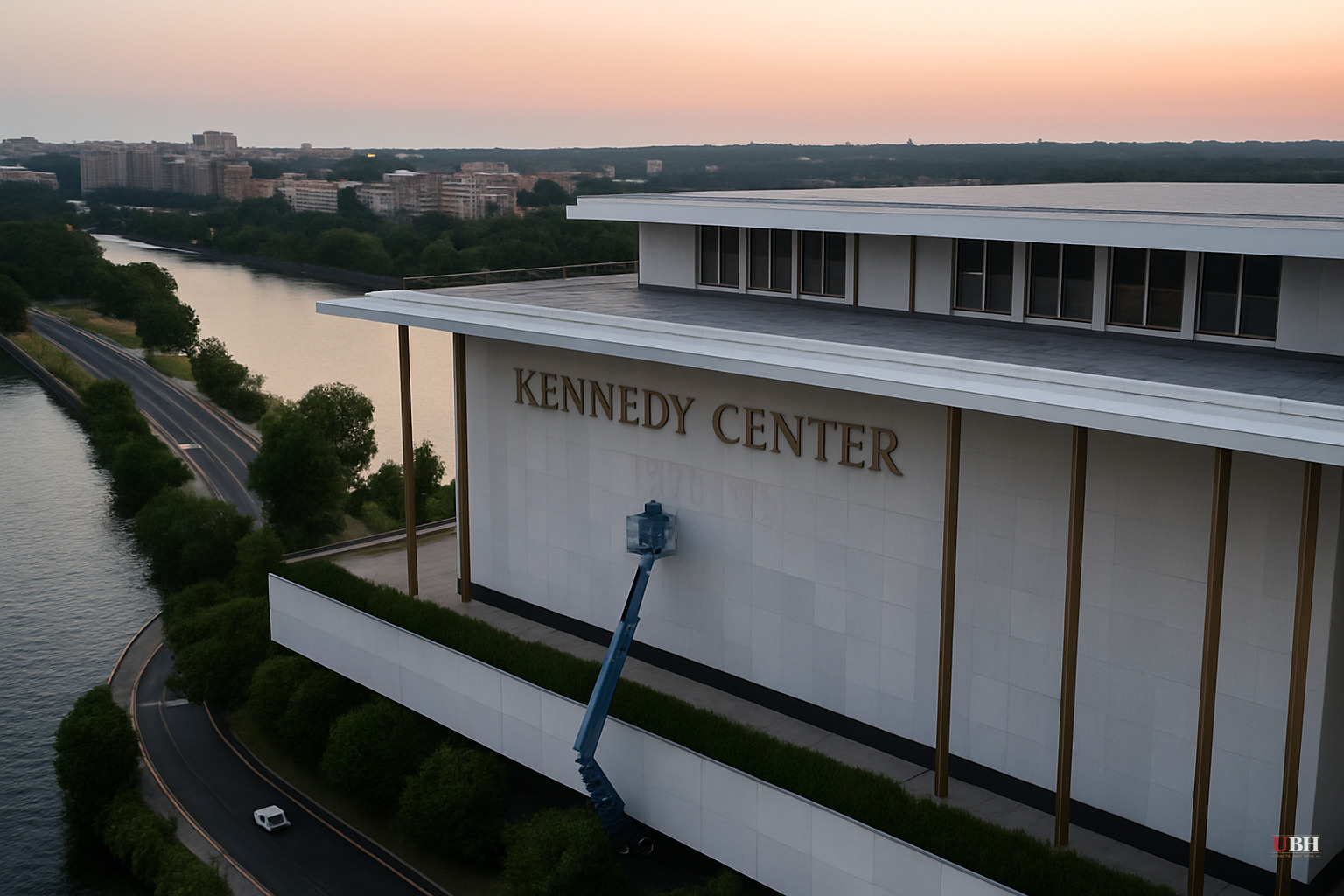
Since U.S. District Judge Christopher Cooper ruled last month that Trump's name had been unlawfully added to the Kennedy Center, the institution's leadership fought the order at every turn and lost every time.
Workers began removing the letters around 3 a.m. Saturday, according to the Associated Press (reported by PBS News). The job took roughly 30 minutes, according to The Guardian. A tarp draped over scaffolding blocked the public's view of the work, though a reporter was able to peer through a gap in the covering and confirm the letters were gone.
Matt Floca, the center's executive director and chief operating officer, filed a certification with the court Saturday confirming full compliance. Floca wrote that the board of trustees had removed "all physical signage on the Kennedy Center building and grounds, including the front portico, that purports to rename the Kennedy Center after President Trump," according to PBS.
The center had technically missed Judge Cooper's original deadline of 11:59 p.m. Friday, June 12. Severe thunderstorms struck Washington Friday evening, and the Kennedy Center used the weather as grounds for one more extension request. Courts rejected it, along with two separate emergency appeals to pause the removal order pending appeal, according to BBC News.
What the Judge Actually Ruled
Cooper's ruling, which ran 94 pages, rested on a straightforward legal point: Congress designated the Kennedy Center as a living memorial to President John F. Kennedy when it passed legislation in 1964, and the venue opened in 1971. The judge wrote, "Congress gave the Kennedy Center its name, and only Congress can change it," according to The Guardian. Trump's board of trustees voted unanimously last December to add the words "The Donald J. Trump and" to the building's official name. That vote, the judge found, exceeded the board's authority.
The legal challenge was brought by Rep. Joyce Beatty, D-Ohio, who holds an ex-officio seat on the Kennedy Center's board. Beatty was present on the plaza Friday night and Saturday morning. "Today's victory is the beginning of returning the Kennedy Center to the American people," she said in a statement quoted by PBS. "The rule of law prevailed."
The Administration's Defense
The strongest case for the Trump administration's position is not frivolous. The president appointed the board members, the board voted unanimously, and the administration argues that executive oversight of a federally chartered institution includes the authority to rename it. Supporters of the renaming contend that courts have been broadly aggressive in limiting executive action since Trump's second term began, and that this ruling is one more example of the judiciary substituting its preferences for those of elected and appointed officials.
The argument collapsed under judicial scrutiny. Two separate appellate panels declined to pause Cooper's order. The underlying statute designates the building specifically as a Kennedy memorial, which is the factual core of why the administration's position failed in court.
No Investigation, No Contempt — Yet
The center missed the original deadline by several hours. Judge Cooper has NOT announced contempt proceedings as of June 13, and no investigation into the delay has been reported by BBC, PBS, the Washington Post, or The Guardian. The compliance filing from Floca appears to have resolved the immediate legal standoff.
The tarp covering the scaffolding remained in place as of Saturday, meaning the restored original lettering — "The John F. Kennedy Memorial Center for the Performing Arts" — had not yet been revealed publicly, according to PBS.
What Comes Next
The Kennedy Center's board had indicated it would appeal Cooper's ruling on the merits. That appeal remains unresolved. A successful appeal would not restore the physical signage automatically. The board would need to win on the merits and then seek a new order permitting the name change.
The broader dispute over the center's operations, programming changes made after Trump's board took over in early 2025, and its federal funding situation are separate from the signage ruling and were NOT resolved by Saturday's compliance. Whether the administration pursues those angles or whether Congress weighs in on the naming statute directly remains unresolved.
Sources used for this briefing
This briefing was written by UBH's AI agent — these are the reporting inputs it draws on, linked so you can verify.


