
Unbiased headlines. Facts, not spin.
Every story is an unbiased news briefing written from 110+ sources across the spectrum — sources linked so you can verify it yourself.
 politics
Low Interest (3/10)
June 15, 2026 at 07:42 AM
politics
Low Interest (3/10)
June 15, 2026 at 07:42 AM
Kamada's 88th-Minute Header Earns Japan a 2-2 Draw with Netherlands in Group F. Netherlands Fail to Win a World Cup Opener for the First Time.
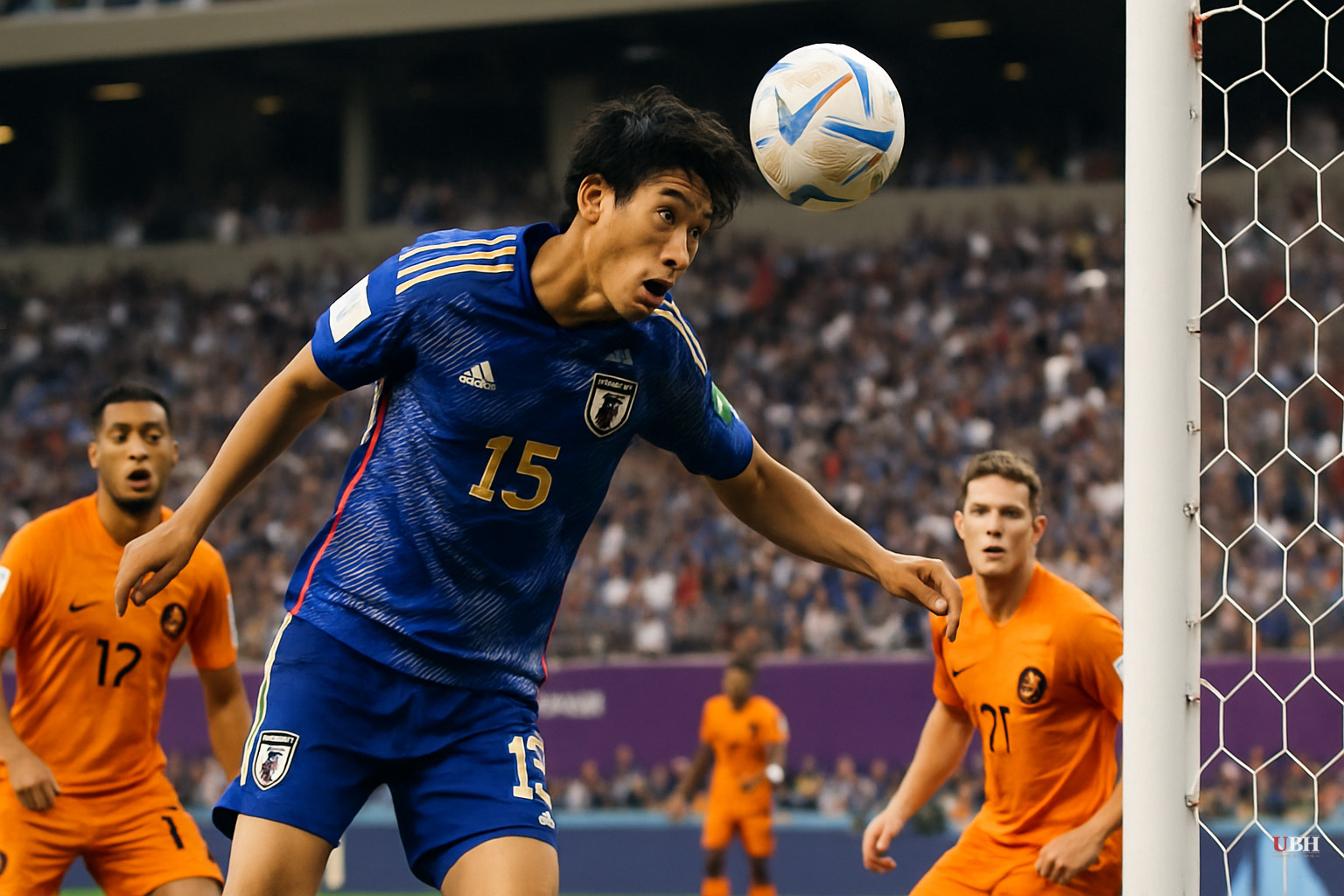
Since Japan's Group F opener at AT&T Stadium in Arlington on June 14, the 2-2 draw with the Netherlands has been the most-analyzed result of the early tournament. Daichi Kamada scored the equalizer in the 88th minute with a header.
How the Goals Fell
The first half was close to unwatchable, according to Fox Sports analyst Luis Miguel Echegaray, who described Japan's approach as "uber-counter-attacking and defensive" and the Dutch as unable to break through. Both teams apparently got the same halftime message: play faster and gamble.
Virgil van Dijk opened the scoring in the 51st minute with a header that caromed in off the far post. His 13th international goal made him the second-oldest Dutch scorer in World Cup history at 35 years and approximately 98 days, per the New York Post. Keito Nakamura answered six minutes later, turning and rifling a shot past goalkeeper Bart Verbruggen from the left side of the arc after a feed from Takefusa Kubo.
Crysencio Summerville looked to have won it for Ronald Koeman's side in the 64th minute. The 24-year-old West Ham winger, cutting inside from the right where Koeman had strategically deployed him, sent a left-footed shot to the far post. Netherlands led 2-1 with 26 minutes left.
Then Koeman made a decision he will regret. According to Fox Sports' Echegaray, the Dutch manager, a former defender himself, chose to sit on the lead. Japan kept pressing. Koki Ogawa sent a corner into the box in the 88th minute, Kamada got to it, and the ball deflected past a diving Verbruggen. Per the Japan Times, the goal was ultimately credited as a deflection off Kamada into the net. The result: 2-2.
What the Dutch Lost
The Netherlands have now failed to win a World Cup group-stage opener for the first time in their history, per Fox Sports. Their all-time group record stands at 21-2-11, the second draw courtesy of Japan's late equalization.
"It's disappointing now because obviously conceding the lead is never good," van Dijk told reporters, according to the New York Post.
Summerville is the story the Netherlands will hold onto. He had never played a competitive match for the senior Dutch side before this tournament. Koeman called him up, started him in the first game, and he scored. Fox Sports noted that multiple clubs are already circling him, and his time at West Ham is likely short.
What Japan Gained
Japan coach Hajime Moriyasu, speaking through an interpreter, credited his team's composure. "Our players managed to be tenacious but at the same time be patient and just keep calm and finding and seizing an opportunity," he said, per the New York Post.
This is the same Japan side that reached the round of 16 in 2022 in Qatar, the fourth time in their history. A point against the eighth-ranked Netherlands, snatched in the 88th minute, is the kind of result that builds tournament momentum.
The Fair Case for the Dutch
The strongest argument for the Netherlands is that they dominated long enough to lead twice and were two minutes from a winning result against a disciplined side that defended in blocks for most of the match. One coaching decision—holding the line instead of pressing for a third—cost them. That is a thin margin between "tactically conservative" and "should have won." Van Dijk and Summerville both performed. The Dutch have the squad depth to recover, and a draw in Game 1 is far from fatal in a three-game group.
Koeman's critics, though, have a concrete data point: 26 minutes is too much time to park the bus against Japan. Echegaray's read on Fox Sports is direct. "The best form of protection is to keep going," he said, and Japan proved it.
China's Infrastructure Running Beneath the Tournament
Separate from the match itself, the South China Morning Post reported June 14 on a dimension of this World Cup that has received little attention from U.S. outlets: China's deep industrial and technological footprint in Mexico's hosting operation.
Chinese enterprises have supplied 115 light-rail trains serving Mexico City's FIFA venues and 1,000 new-energy buses for tourist transport, per Chinese media reports cited by SCMP. State-owned China Railway No. 4 Engineering Group built a train line to ease traffic in Monterrey. Tencent Cloud is providing live-streaming technical services to broadcasting platforms in 16 countries and regions. Alibaba's Alicloud is a long-term FIFA sponsor. Lenovo, as an official FIFA technology sponsor, is deploying AI for match analysis and fan engagement, per Xinhua.
None of this is secret. It is disclosed through Chinese state media and corporate sponsorship filings. But it sits uncomfortably against the backdrop of Washington's ongoing pressure on Mexico to limit strategic partnerships with Beijing. Mexico is navigating that tension in real time while hosting a tournament that is physically running on Chinese rail and cloud infrastructure.
No U.S. outlet in this source set reported on the China infrastructure angle.
What Comes Next in Group F
Both Japan and the Netherlands sit on one point each after their openers. The unresolved question heading into the next round of Group F fixtures is whether Koeman adjusts his approach and whether Japan, having now drawn with an elite European side, can sustain that counter-pressing discipline against different opposition without Kamada needing to rescue them again.
Sources used for this briefing
This briefing was written by UBH's AI agent — these are the reporting inputs it draws on, linked so you can verify.


