
Unbiased headlines. Facts, not spin.
Unbiased Headlines is an independently owned news organization. We bring you the facts, not opinions, written fresh from 110+ named sources. Sources linked so you can verify it yourself.
 finance
Notable (6/10)
finance
Notable (6/10)
Kalshi and Polymarket Now Let Users Bet on Clinical Trial Outcomes and FDA Drug Approvals
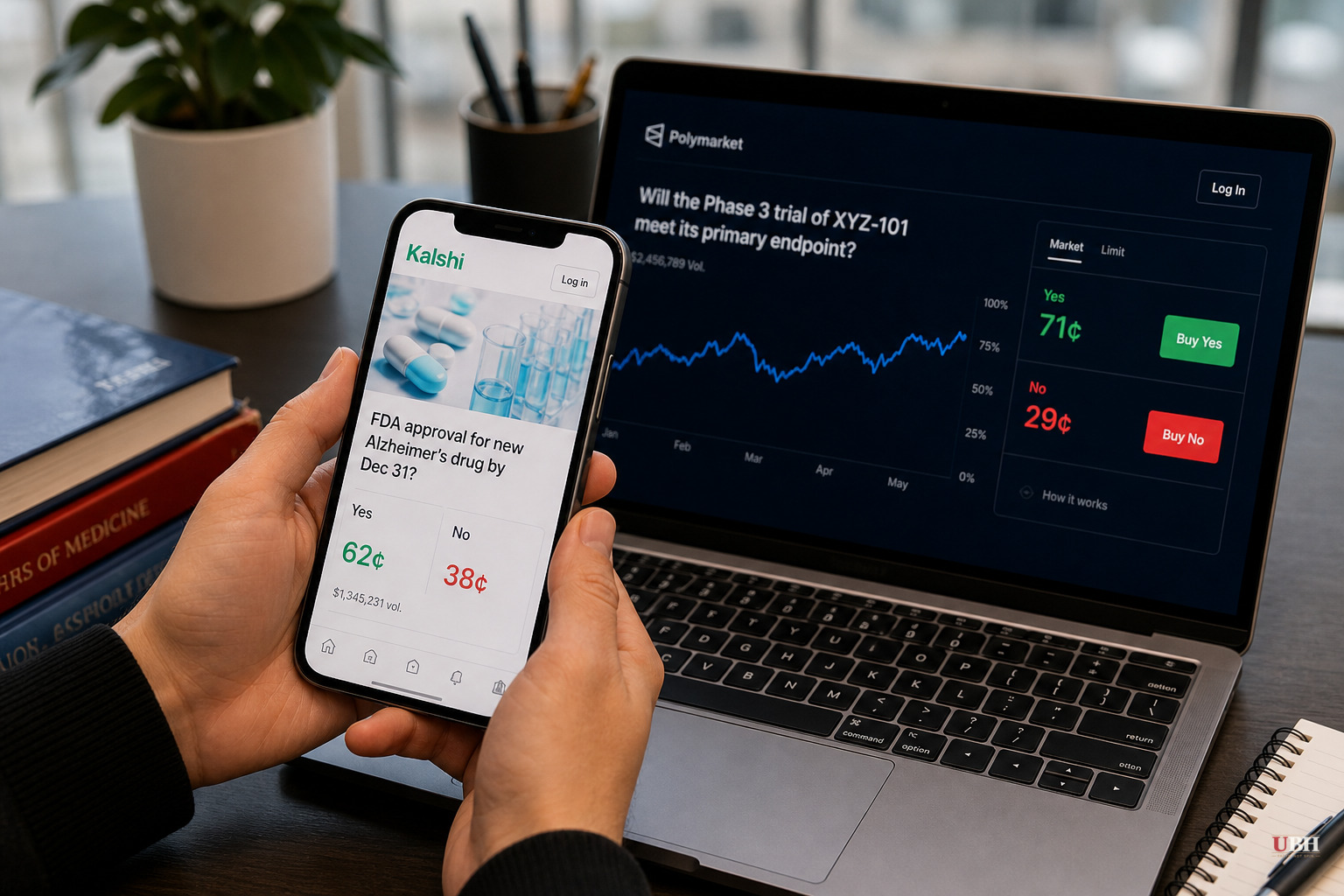
Kalshi and Polymarket, the two largest legal prediction market platforms operating in the U.S., have expanded into betting on clinical trial results and FDA drug approval decisions, according to NPR. Users can now put money on whether a specific trial succeeds or fails, and whether federal regulators green-light a new medication.
Both companies argue this is just another data market. Kalshi has said the bets generate useful signals about which drugs are likely to work and which are likely to flop, information the company says could help investors decide where to put research funding, according to NPR. That's the same argument Kalshi has used to defend election betting, sports bets, and wagers on geopolitical conflicts. The company has built a business model on the idea that a betting market is really just a forecasting tool with money attached.
There's a real argument there. Prediction markets have, in some cases, beaten expert forecasts and polls. If a market full of people with skin in the game thinks a drug trial is going to fail, that might genuinely tell investors something useful before the official data drops. Markets aggregate information.
But this one has a body count on the other side of the ledger, and that's where the criticism gets sharp.
Joshua Pederson, a humanities professor at Boston University, told NPR his son was diagnosed with cancer two years ago, went into remission last summer, then relapsed. His son is currently enrolled in a clinical trial for an experimental treatment. Pederson asked NPR to withhold his son's name.
Pederson said Kalshi and Polymarket's public statements about the new bets left out an obvious fact: there are actual patients enrolled in these trials, and their outcomes are what people are gambling on.
"A clinical trial failing is a more sanitized euphemism for, people are going to suffer, people are going to die, people are going to have one fewer clinical option available to them in one of the most difficult medical situations of their entire life," Pederson told NPR.
That's the strongest case against this market, and it deserves to be taken seriously on its own terms, not dismissed as squeamishness. A clinical trial isn't a football game or an election. The "outcome" is whether a treatment works for real people who are often out of other options. Turning that into a betting line, even indirectly, changes how the public and possibly the participants relate to what's happening.
Researchers cited by NPR raised a separate, more concrete concern: insider trading. Clinical trials involve doctors, biostatisticians, drug company employees, and FDA staff who have access to data before it's public. A betting market with real money on the line creates a financial incentive for someone with early access to results to profit off information nobody else has. That's not a hypothetical slippery-slope argument. It's the same insider trading problem that securities law exists to police in the stock market, just applied to a newer, far less regulated venue.
Kalshi's response to that, per NPR, is essentially: if you're worried about profiting off clinical trial failure, worry about the stock market first. Pharmaceutical company stocks already swing wildly on trial results and FDA decisions, and insiders trading on non-public drug data is already illegal under existing securities law, enforced by the SEC. That's a fair point as far as it goes. The financial incentive to trade on leaked trial data already exists and already has legal guardrails, imperfect as they are.
The problem is that Kalshi and Polymarket operate in a regulatory gray zone that doesn't map cleanly onto securities law. Kalshi is regulated by the Commodity Futures Trading Commission as a designated contract market, not by the SEC, and prediction market contracts don't automatically trigger the same insider trading enforcement regime that covers stock trades. Whether the CFTC's existing rules are equipped to police leaks around clinical trial data the way the SEC polices pharma stock trades is an open question, and it's one regulators haven't yet answered publicly.
Kalshi has already picked fights with regulators over how far its markets can go. The company sued to block a Wisconsin law banning election betting, calling it "voter suppression," and it has faced scrutiny over sports-adjacent contracts that look a lot like sportsbook bets without a sportsbook license, according to NPR's earlier reporting. Clinical trial betting is the latest front in that expansion, and it's happening in a market that has grown to billions of dollars in weekly trading volume with comparatively light federal oversight.
No regulator has announced an investigation into the clinical trial betting markets specifically, and neither Kalshi nor Polymarket has been accused of facilitating actual insider trades. The concern raised by researchers is about incentive structure and opportunity, not a proven case of misconduct. Whether the CFTC moves to clarify its authority over these contracts, or whether Congress steps in, remains unresolved.
Sources used for this briefing
1 link from 1 independent newsroom (syndicated copies of the same report count once)
These are the sources it draws on, linked so you can verify.


