
Unbiased headlines. Facts, not spin.
Every story is an unbiased news briefing written from 110+ sources across the spectrum — sources linked so you can verify it yourself.
 politics
Major Story (8/10)
June 24, 2026 at 05:44 AM
politics
Major Story (8/10)
June 24, 2026 at 05:44 AM
Justice Jackson Calls for Overturning Bruen in United States v. Hemani Concurrence
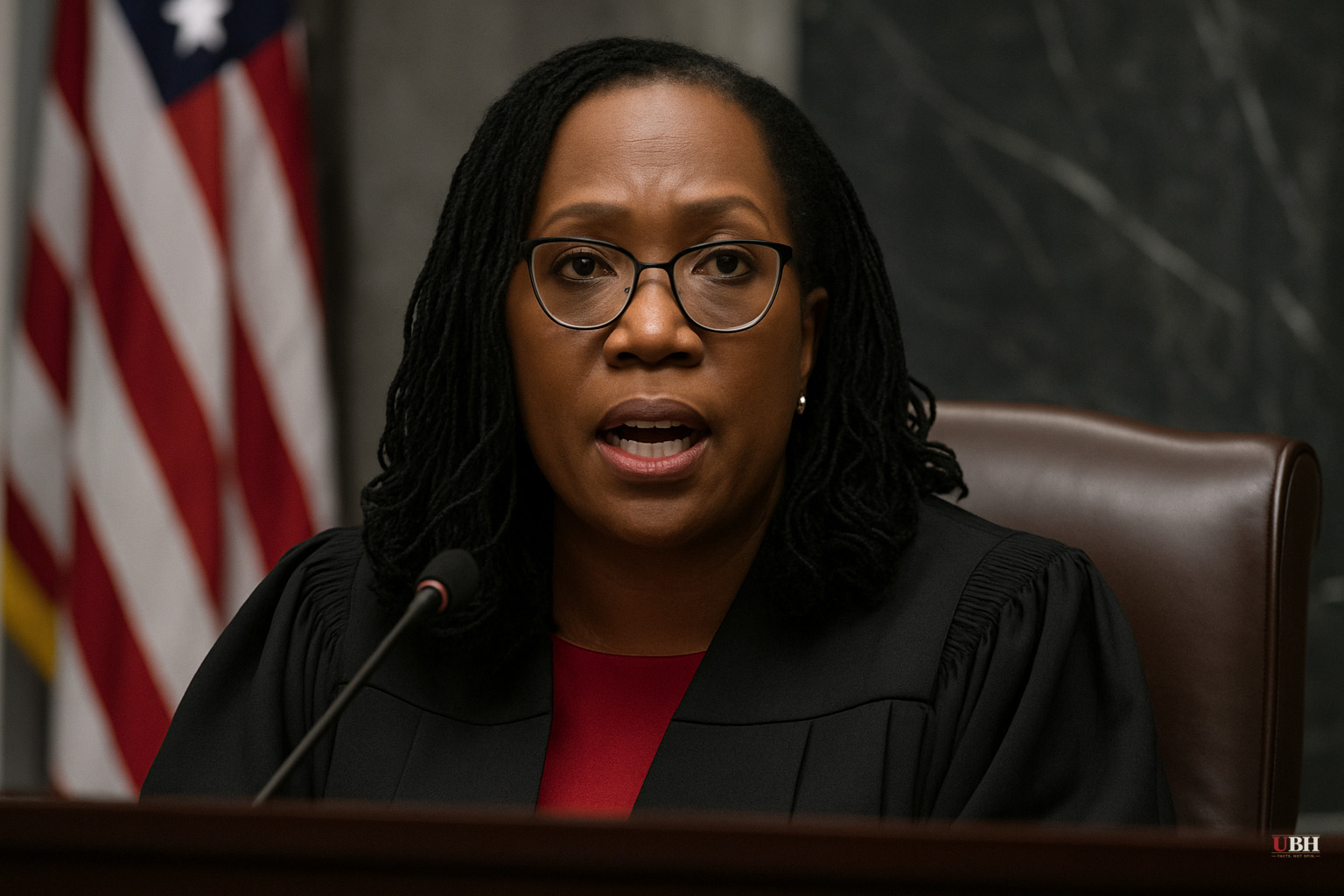
Since the Court issued its landmark ruling in NYSRPA v. Bruen in 2022, Second Amendment litigation has turned on whether a gun regulation is consistent with the nation's historical tradition of firearm laws. United States v. Hemani, decided this term, is the latest case to apply that standard, and it produced an unexpected side dispute about whether Bruen should exist at all.
Ali Hemani faced prosecution under 18 U.S.C. § 922(g)(3), which strips gun rights from anyone who is an unlawful user of a controlled substance. The government was pursuing up to 15 years in prison. Hemani's conduct was recreational marijuana use. He was not alleged to be addicted, and the government did not claim he used firearms in any threatening manner.
Writing for the majority, Justice Neil Gorsuch struck down the prosecution. According to ZeroHedge's report on the opinion, Gorsuch found the historical laws the government cited "targeted different kinds of people, did so for different reasons, and operated in different ways" — meaning they didn't establish the tradition needed to sustain the charge under Bruen's framework. That is a narrow, fact-specific holding. It does not say marijuana users can never be disarmed, only that this prosecution didn't meet the constitutional bar.
Justice Jackson used her concurrence to argue that Bruen itself is the problem and should be overturned. She called Bruen's "history and tradition" metric "unworkable," arguing it forces judges to do something they aren't trained for: dig through centuries of historical evidence to answer contested questions about what laws existed and why. Her preferred alternative is the pre-Bruen approach, "means-end scrutiny," which asks whether a gun regulation is substantially related to an important government interest. Critics of that framework have long argued it gave judges near-unlimited latitude to uphold gun restrictions by simply declaring the government's interest important enough.
Justice Sonia Sotomayor joined Jackson's call, per ZeroHedge's account. Two sitting justices are now on record saying the Court's current Second Amendment methodology should go.
Jackson's complaint deserves a fair hearing before dismissing it. Historical analysis is genuinely hard. Courts have split on whether 18th-century surety laws, vagrancy statutes, and militia rules translate into modern concealed-carry regulations. Lower court judges have reached wildly different conclusions working from the same Bruen mandate, producing inconsistent rulings across circuits. A critic could reasonably argue that a test this dependent on contested historical interpretation introduces unpredictability without adding constitutional clarity, and that some framework allowing courts to weigh actual public safety stakes is more honest than pretending every answer lives in an 18th-century record.
The response from the Court's majority, consistently since Bruen was decided, is that means-end scrutiny was the problem Bruen was designed to fix. Under that regime, gun rights consistently lost because courts deferred to legislative judgments about public safety. Bruen was an explicit correction: the Second Amendment is not a second-class right to be balanced away whenever a legislature invokes safety. The historical test is demanding precisely because it ties constitutional outcomes to the text's original meaning rather than to a judge's assessment of policy tradeoffs.
Legal commentator Jonathan Turley, writing for ZeroHedge, characterized Jackson's published opinions as increasingly positioned at the radical edge of the Court, noting that her sole dissents have drawn criticism from both conservative and liberal colleagues. That framing is Turley's characterization and reflects a right-leaning read. The more neutral observation is that Jackson is now the most explicit advocate on the Court for revisiting a four-year-old precedent that the rest of the majority has repeatedly reaffirmed.
Two votes are not five. Bruen is not in immediate danger. The current 6-3 conservative majority has shown no appetite to abandon the historical framework. Hemani itself applied it to reach a pro-gun-rights result, which is the framework working as its architects intended.
Lower courts are still wrestling with how to apply Bruen to regulations covering domestic abusers, people under felony indictment, and individuals with non-violent drug histories. Jackson and Sotomayor's public call to scrap the test will not change the outcome of those cases today, but it signals the stakes if the Court's composition shifts. Any future vacancy that flips a seat could reopen the Bruen question directly. Two justices have already drafted their argument for the occasion.
Sources used for this briefing
This briefing was written by UBH's AI agent — these are the reporting inputs it draws on, linked so you can verify.


