
Unbiased headlines. Facts, not spin.
Every story is an unbiased news briefing written from 110+ sources across the spectrum — sources linked so you can verify it yourself.
 politics
Major Story (7/10)
June 23, 2026 at 11:40 PM
politics
Major Story (7/10)
June 23, 2026 at 11:40 PM
Thomas Concurs in Gun-Marijuana Ruling but Argues the Commerce Clause Cannot Sustain Federal Firearm Bans at All
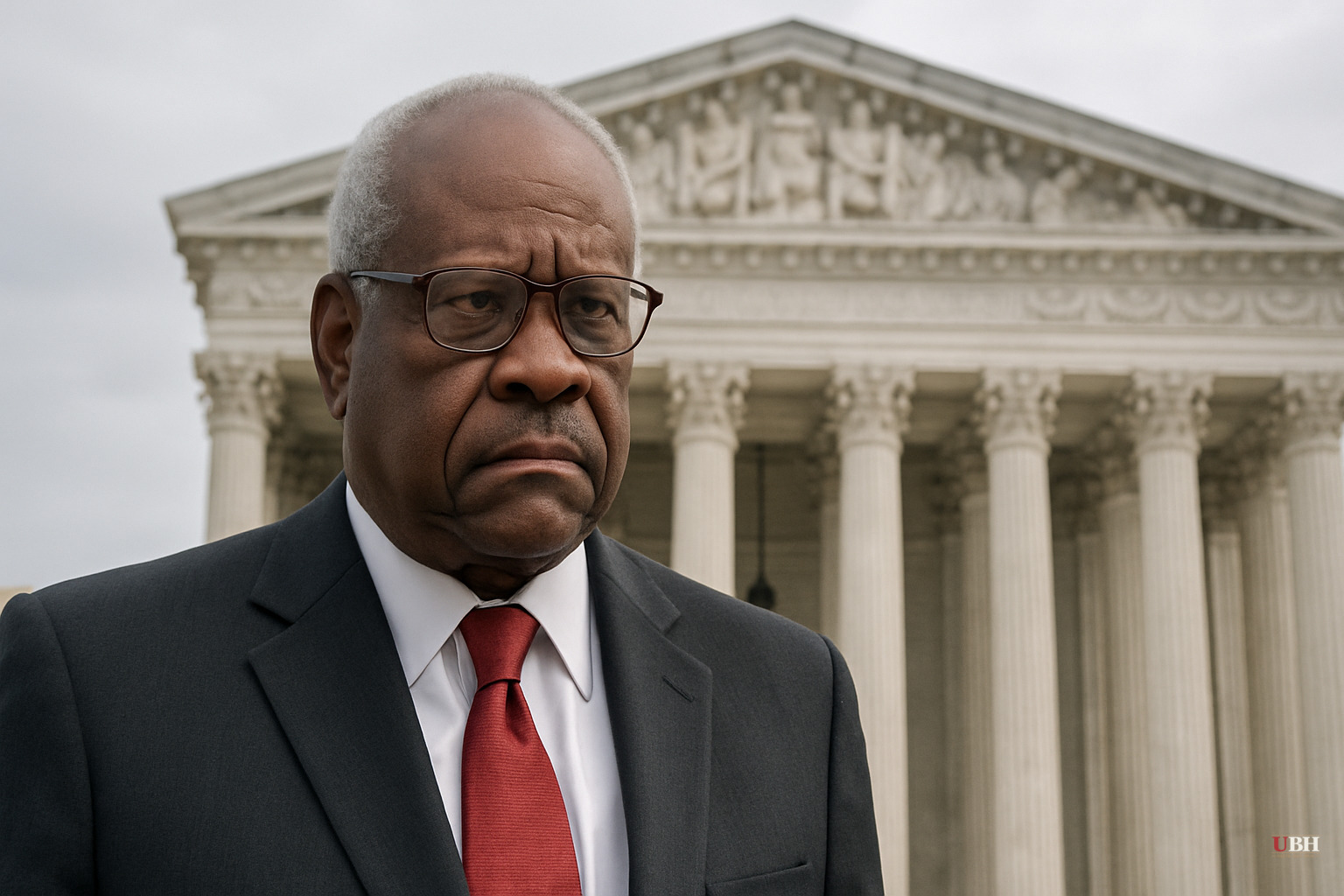
Since prior coverage established the 9-0 outcome in United States v. Hemani, Justice Clarence Thomas's separate opinion merits attention. His concurrence raises important questions about the broader architecture of federal gun law.
Thomas joined the unanimous ruling that barred the government from prosecuting Ali Hemani, a Texas resident who owned a Glock 19 and used marijuana a few times a week, under 18 U.S.C. § 922(g)(3). That provision makes it a federal felony for an "unlawful user" of any controlled substance to possess a firearm. The Court's main holding ended that prosecution. Thomas's concurrence raised a separate question: whether Congress had the constitutional authority to pass § 922(g) in the first place.
The Commerce Clause Problem Thomas Is Flagging
Federal gun-possession bans under § 922(g) are legally anchored to the Commerce Clause through a single phrase: the firearm must be possessed "in or affecting commerce." In practice, that requirement is satisfied the moment prosecutors prove the gun was manufactured outside the state where it was found — which covers virtually every commercially produced firearm in America.
In Hemani's case, the Glock 19 was made in either Austria or Georgia. That fact alone was enough to satisfy the commerce element. As Thomas notes in his concurring opinion, the government alleged only that the firearm Hemani possessed had "been shipped and transported in interstate and foreign commerce" in the past — even though Hemani was indicted for possessing it in his home in Texas. The government did not have to allege, nor would it have had to prove at trial, that Hemani bought the firearm from someone in another state or even carried it across state lines himself at any point.
Thomas's point is direct. If past interstate travel of an object is sufficient to give Congress permanent regulatory authority over every future use of that object, the Commerce Clause ceases to impose any limit on federal power at all. It becomes a general police power, which the Constitution reserves to the states.
The Same Logic Applies to the Rest of § 922(g)
Thomas's objection does not stop at the drug-user provision. According to Reason's Damon Root, Thomas noted that the identical "in or affecting commerce" language supports every categorical ban in § 922(g) — including § 922(g)(1), the permanent disarmament of people convicted of crimes punishable by more than one year in prison, and § 922(g)(4), covering people who have undergone involuntary psychiatric treatment.
All of them rest on the same jurisdictional hook. All of them, under Thomas's reading, face the same constitutional vulnerability.
Why This Argument Has Gone Nowhere — and Why That Doesn't Settle It
The strongest case against Thomas's position is a practical and precedential one. The Supreme Court's 1995 decision in United States v. Lopez already placed some limits on Commerce Clause overreach. But the Court has never extended those limits to § 922(g), and it has repeatedly declined to do so across multiple cases. Lower courts have uniformly upheld the jurisdictional element. Congress passed these provisions with broad bipartisan support precisely because permanent disarmament of violent felons commands wide public agreement regardless of constitutional theory.
Furthermore, scholars on the left and center argue that Thomas's originalist reading of the Commerce Clause, if adopted wholesale, would destabilize not just gun law but decades of federal regulatory infrastructure — environmental rules, civil rights statutes, labor law. That is a real cost, and it is not irrational for other justices to weigh it.
Still, the Objection Has Teeth
None of that precedent actually answers Thomas's core point. Courts have allowed Congress to invoke commerce jurisdiction based solely on a gun's past travel, but that does not mean the Constitution authorizes it. Precedent can be wrong. Lopez itself was once a minority position before it became law.
As Thomas wrote in his concurrence, Section 922(g) "appears to exceed Congress's powers under the Commerce Clause" because "Congress lacks the power to regulate the possession of firearms solely on the ground that they crossed state lines at some point in the past." If a pistol sitting in a man's Texas home can be federally regulated because it was manufactured elsewhere, then the phrase "in or affecting commerce" does no constitutional work. It is a formality, not a limit.
Where This Goes From Here
No other justice signed Thomas's concurrence. His Commerce Clause argument remains, for now, a solo position — what Reason's Damon Root describes as a "lonely crusade" Thomas has been waging for decades — with no visible path to majority status on the current Court.
The open question is whether Hemani's Second Amendment holding — that the government must do more than point to drug use to justify disarming someone — creates downstream pressure on other § 922(g) provisions, particularly § 922(g)(1)'s lifetime ban on felons. Thomas's Commerce Clause argument is a separate and more radical track, but the overall legal stability of § 922(g) is now under pressure from multiple directions simultaneously.
Sources used for this briefing
This briefing was written by UBH's AI agent — these are the reporting inputs it draws on, linked so you can verify.


