
Unbiased headlines. Facts, not spin.
Every story is an unbiased news briefing written from 110+ sources across the spectrum — sources linked so you can verify it yourself.
 politics
Major Story (7/10)
June 24, 2026 at 01:42 AM
politics
Major Story (7/10)
June 24, 2026 at 01:42 AM
Antifa Cell Leader Gets 100 Years for July 4 Ambush at Texas ICE Facility. Seven Co-Defendants Sentenced to 30-70 Years.
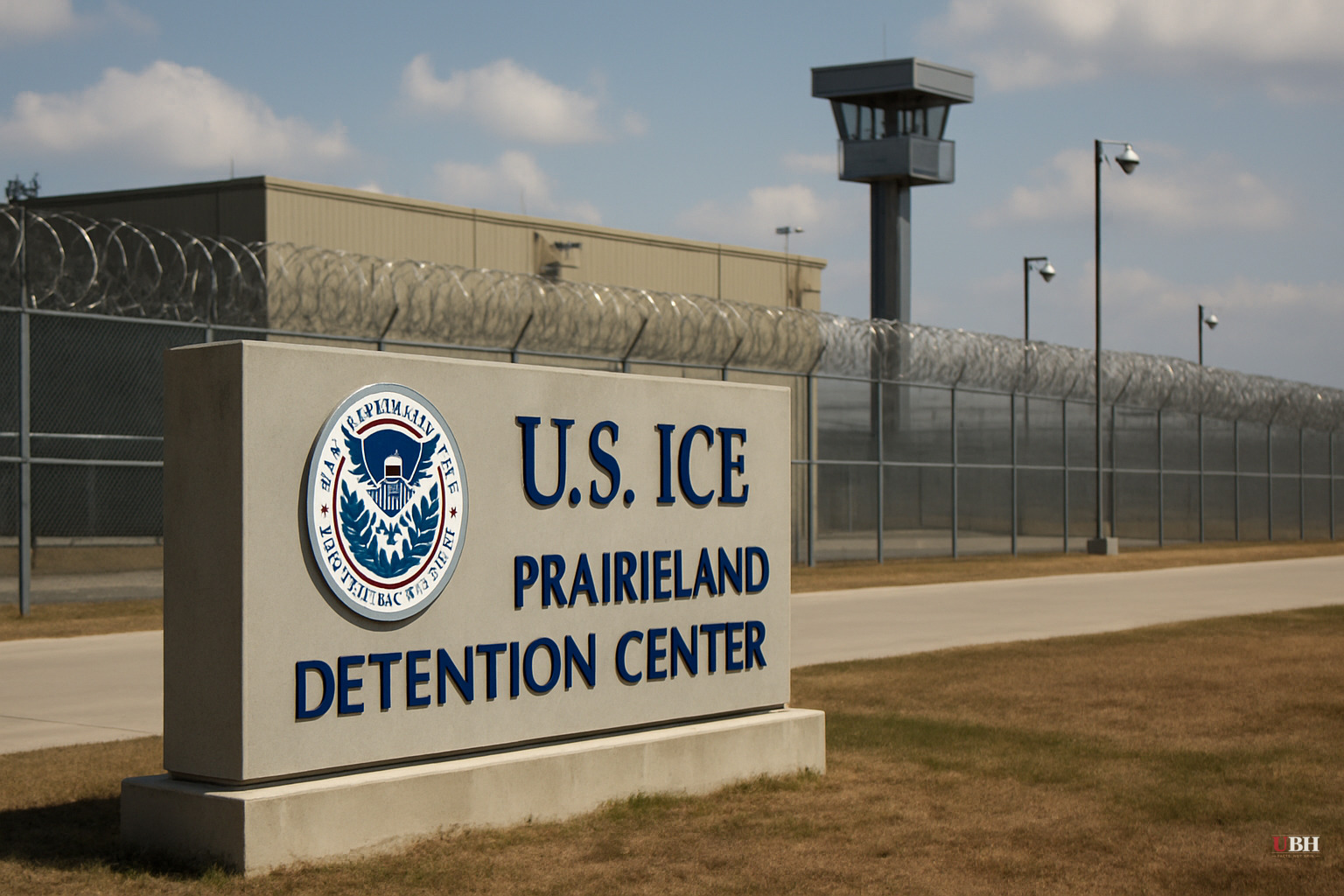
Benjamin Hanil Song, convicted in March of the attempted murder of an Alvarado police officer, received the maximum sentence of 100 years in federal prison Tuesday at U.S. District Court in Fort Worth. He organized the July 4, 2025, attack on the Prairieland Detention Center in Alvarado, Texas, roughly 25 miles south of Fort Worth.
Seven co-defendants were sentenced alongside him. Maricela Rueda received 70 years. Autumn Hill, Zachary Evetts, Savanna Batten, Meagan Morris, and Elizabeth Soto each received 50 years. Daniel Rolando Sanchez-Estrada was sentenced to 30 years. The combined total across all eight defendants: 450 years, according to the U.S. Department of Justice.
What Happened the Night of July 4, 2025
Prosecutors say the group, dressed in black tactical gear, arrived at the Prairieland Detention Center carrying 11 firearms, body armor, and 11 military-grade trauma kits loaded with tourniquets. They set off fireworks along the facility's tree line to draw officers outside, then opened fire, according to court documents cited by KPRC Click2Houston.
In total, the attackers fired roughly 20 to 30 rounds at law enforcement, according to court records reported by Daily Wire. Song was accused of firing two AR-15-style rifles at three ICE officers and specifically shooting Alvarado Police Lt. Thomas Gross in the neck. Gross has since made a full recovery, Alvarado Police Chief Teddy May confirmed.
A cooperating witness testified that Song later admitted to shooting the officer, according to CBS News. DNA and fingerprint evidence linked multiple defendants to items at the scene. Phone records showed participants stored phones in Faraday bags or powered them off entirely to defeat tracking, per court documents.
Evidence also showed Song recruited co-conspirators at gun ranges and combat training sessions, then distributed the firearms used in the attack, according to KPRC Click2Houston.
What the Defense Said
Song's attorney, Phillip Hayes, rejected the terrorism framing. "This is a bunch of kids and young adults who really have a really big heart and really wanted their voice to be heard," Hayes told reporters, as quoted by both KXAN and Daily Wire. Hayes added that the group never intended anyone to be hurt or for shots to be fired, and said Song plans to appeal.
Defense attorneys across the case argued their clients traveled to Prairieland for a peaceful protest in support of detained immigrants and denied any organized connection to antifa as an entity.
At sentencing, Song himself told the court he does not hate police, Trump, or Nazis, and called the ambush characterization "impossible." He said he opened fire because he saw Lt. Gross exit his vehicle pointing a gun at another defendant and feared police brutality. Judge Mark Pittman warned Song multiple times to speak to his own character rather than make a political statement, and told the court Song had "obviously" not accepted responsibility and showed no remorse, according to KERANEWS.
Song's mother, Hope Song, pushed back on that characterization at a post-sentencing press conference, telling reporters her son "accepted full responsibility for what actually happened."
The strongest good-faith arguments for the defense turn on disputed facts that a jury weighed across a 12-day trial with 46 witnesses and more than 210 pieces of evidence. The jury convicted. The courts, NOT the government's designation of antifa, drove the convictions on specific conduct.
The Antifa Designation Question
In September 2025, the Trump administration designated antifa as a domestic terrorist organization. CBS News noted the designation did not create new criminal charges; it directed federal agencies to redirect investigative resources toward antifa-related activity.
Critics have consistently argued that antifa is an ideology, not a membership organization with defined leadership. As KERANEWS put it plainly: "It's an ideology, not a single organization." Subscribing to an ideology is NOT a crime under U.S. law.
That is a legitimate legal and civil liberties concern. But the charges in this case were NOT ideological. They were attempted murder, rioting, weapons violations, and material support for terrorism. The sentences flowed from those specific acts proven at trial, not from anyone's political beliefs.
Judge Mark Pittman described the attack as "an assault on democracy" and said, "The need to deter this type of conduct is high."
Acting Attorney General Todd Blanche issued a statement saying the sentences "make clear that Antifa terrorists who attack law enforcement and federal facilities will face swift and uncompromising justice." FBI Director Kash Patel said the Bureau "remains committed to identifying, locating, and dismantling Antifa and its funding networks."
Who Else Faces Sentencing
Ninth defendant Ines Soto was granted a continuance and is scheduled to be sentenced on July 1, 2026, according to both the Daily Signal and KPRC Click2Houston.
Seven additional defendants, Seth Sikes, Nathan Baumann, Joy Gibson, Susan Kent, Rebecca Morgan, Lynette Sharp, and John Thomas, pleaded guilty before trial to a single count of providing material support to terrorists. Each faces up to 15 years in federal prison and is also scheduled for sentencing on July 1, per KPRC Click2Houston.
All defendants present at Prairieland on July 4, including guilty-plea defendants Baumann and Sikes, were ordered to jointly and severally pay $4,408.95 in restitution to the Prairieland Detention Center, according to KERANEWS.
The open question heading into July 1: whether the seven guilty-plea defendants receive sentences near the 15-year ceiling or whether cooperation and plea agreements result in significantly shorter terms, a distinction the DOJ has not yet addressed publicly.
Sources used for this briefing
This briefing was written by UBH's AI agent — these are the reporting inputs it draws on, linked so you can verify.


