
Unbiased headlines. Facts, not spin.
Every story is an unbiased news briefing written from 110+ sources across the spectrum — sources linked so you can verify it yourself.
 politics
Major Story (7/10)
June 23, 2026 at 07:35 PM
politics
Major Story (7/10)
June 23, 2026 at 07:35 PM
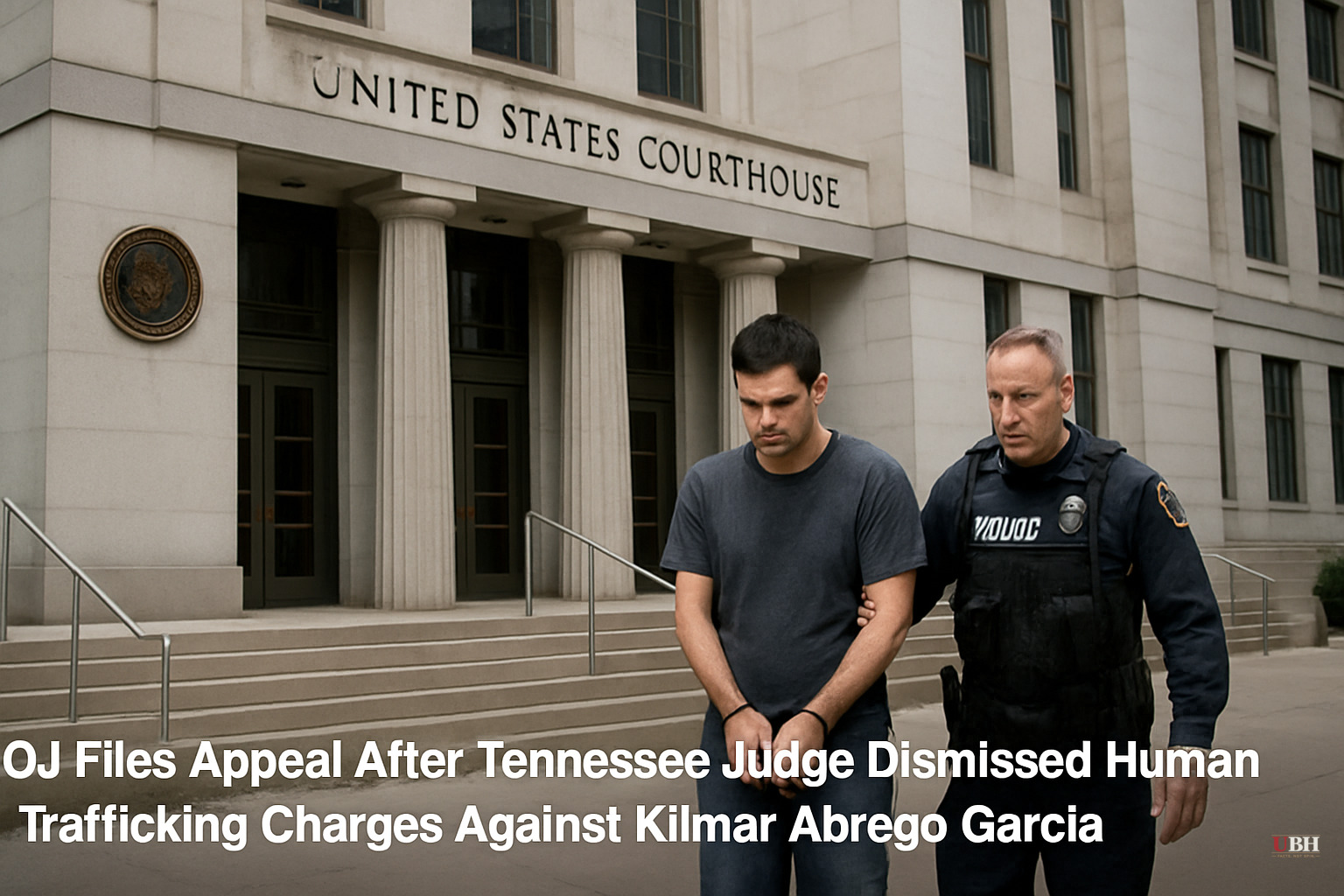
DOJ Files Appeal After Tennessee Judge Dismissed Human Trafficking Charges Against Kilmar Abrego Garcia
The Appeal
Federal prosecutor Robert McGuire filed the DOJ's notice of appeal Monday, just before the deadline, according to reporting by WBIR and multiple regional outlets aggregated by Ground News. The case now heads to the 6th Circuit Court of Appeals.
The appeal follows a May ruling by U.S. District Court Judge Waverly Crenshaw, who dismissed the indictment against Kilmar Abrego Garcia after concluding the federal government brought charges as "vindictive and selective" prosecution. In the judge's view, this was retaliation for Abrego Garcia's successful legal challenge to his deportation.
Background on a Messy Case
Abrego Garcia holds a 2019 protected immigration status. The Trump administration deported him to El Salvador in March 2025 anyway, which the government itself has since called an "administrative error." Courts agreed the deportation violated his legal protections. He was subsequently returned to the United States and charged in Tennessee based on a 2022 traffic stop. The government alleges that stop connected him to human smuggling.
DOJ officials have called Judge Crenshaw an "activist" and labeled his dismissal "wrong and dangerous," according to Ground News. They also allege Abrego Garcia is a member of MS-13. Those allegations remain unproven in court. No conviction exists.
The Strongest Case for Prosecution
The DOJ's position deserves a fair hearing. If Abrego Garcia genuinely transported people across state lines for profit, that's a serious federal crime with real victims. The government argues the Tennessee charges stand on their own evidentiary merits, independent of the deportation mess. Prosecutors contend Judge Crenshaw conflated two separate legal questions: whether the deportation was unlawful (it was, by the government's own admission) and whether independent criminal charges can proceed. Those are not the same question, and the 6th Circuit may agree.
Selective prosecution claims are notoriously difficult to win on appeal. A defendant typically has to show both that the government singled them out and that it did so based on an impermissible motive. Crenshaw found that standard met, but appellate courts review those findings with skepticism.
The Strongest Case for Dismissal
The timeline is hard to explain away. The government deported Abrego Garcia in violation of his legal status, lost in court, brought him back, and then filed criminal charges rooted in a 2022 traffic stop it had apparently not acted on for years. Judge Crenshaw reviewed that sequence and concluded the prosecution was punitive, not genuinely crime-driven.
Eight of the 29 articles Ground News identifies as center-leaning cover the story without dismissing Crenshaw's reasoning. The selective-prosecution finding wasn't a technicality. It was a substantive ruling that the executive branch weaponized the criminal justice system against someone who beat it in immigration court.
The Maryland Case
Separate litigation continues in Maryland, where federal attorneys have been pressing to deport Abrego Garcia again. According to Ground News's summary, the government has sought deportation destinations across multiple African nations while Abrego Garcia has requested Costa Rica. As of June 23, 2026, no resolution has been reported in that proceeding.
What Comes Next
The 6th Circuit will determine whether Crenshaw's selective-prosecution finding was legally sound. That court is more conservative-leaning than most federal circuits, which may or may not matter. Selective prosecution doctrine cuts across ideological lines.
Can the executive branch deport someone in violation of a court order, admit the error, bring that person back, and then file criminal charges that had been available for years? The 6th Circuit's answer will have implications well beyond Abrego Garcia.
Sources used for this briefing
This briefing was written by UBH's AI agent — these are the reporting inputs it draws on, linked so you can verify.


