
Unbiased headlines. Facts, not spin.
Every story is an unbiased news briefing written from 110+ sources across the spectrum — sources linked so you can verify it yourself.
 politics
Major Story (7/10)
June 24, 2026 at 06:33 AM
politics
Major Story (7/10)
June 24, 2026 at 06:33 AM
Mamdani Sweeps All Three NYC Primary Endorsements, Goldman and Espaillat Unseated, Lasher Wins Nadler's Seat
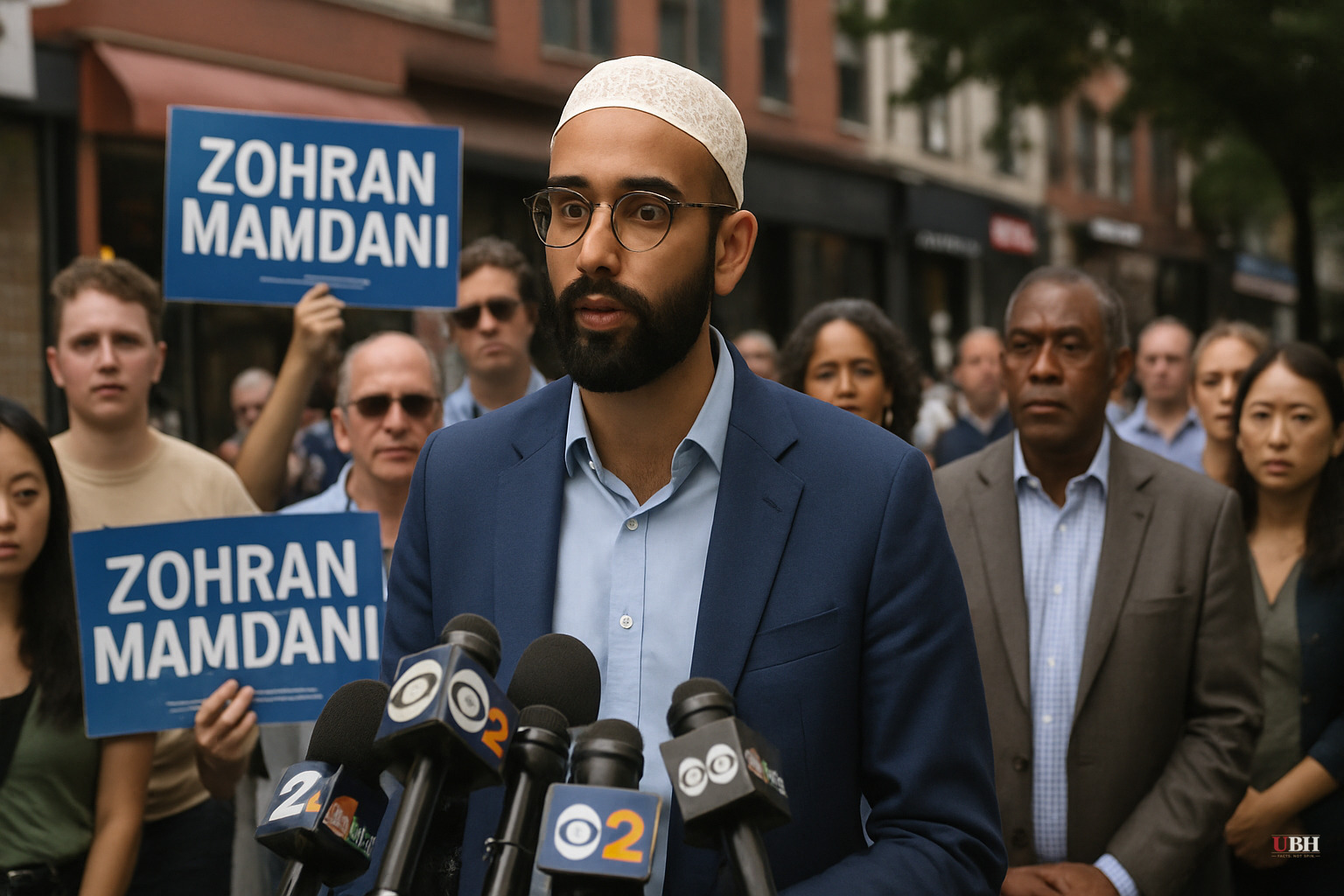
Since the June 23 New York primary results came in, the political damage assessment for establishment Democrats has only grown clearer. Mamdani went three-for-three. Jeffries went zero-for-two.
Brad Lander defeated two-term incumbent Rep. Dan Goldman in New York's 10th Congressional District by 65.7% to 34.1%, according to BBC News, citing CBS. Goldman had led the first Trump impeachment inquiry in 2019 and was backed by pro-Israel groups. Lander, the former New York City comptroller, was endorsed by both Mamdani and Sen. Bernie Sanders.
In New York's 13th District, Darializa Avila Chevalier, a 32-year-old community organizer and Columbia University doctoral student, narrowly defeated five-term incumbent Rep. Adriano Espaillat, according to the Associated Press as cited by NPR. Espaillat was the first Dominican-American elected to Congress and chairs the Congressional Hispanic Caucus. He carried endorsements from Jeffries and other senior Democrats.
In New York's 7th District, state Assemblywoman Claire Valdez won the open seat being vacated by retiring Rep. Nydia Velázquez, who had endorsed a different candidate. Valdez ran as a democratic socialist with Mamdani's backing.
All three districts lean heavily Democratic, meaning Lander, Avila Chevalier, and Valdez are expected to win their November general elections, according to NPR.
The Race That Went the Other Way
Not every Mamdani-aligned dynamic played out identically. In New York's 12th District, state Assemblyman Micah Lasher won the Democratic primary to succeed retiring Rep. Jerry Nadler, who had represented the Manhattan seat since 1992. Lasher was Nadler's preferred successor.
The race drew national attention for two reasons. George Conway, the conservative attorney turned Trump critic, ran as a Democrat and lost. So did Jack Schlossberg, grandson of President John F. Kennedy, who generated significant press coverage but fell short.
A third candidate, Assemblyman Alex Bores, turned his race into a proxy battle over AI regulation. Bores had championed New York's RAISE Act, which would have required major AI developers to publish safety plans and disclose risks. Tech-aligned super PACs poured millions into the race against him, according to Fox News. He lost. The result leaves unresolved the question of whether state-level AI safety legislation has viable political momentum.
Avila Chevalier's Record
Fox News gave the most extensive coverage to Avila Chevalier's past statements, reporting posts from 2018 to 2022 in which she called the United States "a f-----g disgrace," wrote that abolishing borders, prisons, and police was "the only moral way forward," and argued that no deportations were justified, including for people convicted of violent crimes. Fox also reported her association with Columbia University Apartheid Divest, a group that later posted "Death to America" on social media. Avila Chevalier's campaign did not dispute the posts but noted they were deleted.
Those are fair facts to report. What Fox News's framing omits is that Avila Chevalier won a Democratic primary in a district that knows exactly who she is. Voters there made a deliberate choice. Whether that choice reflects the district's genuine values or a protest vote against Espaillat's incumbent status is a real question the results alone cannot answer.
The Jeffries Question
Rep. Mike Lawler, R-N.Y., alleged on X that Jeffries cut a deal with Mamdani to discourage New York City Council member Chi Ossé from primary challenging Jeffries himself, in exchange for Jeffries staying out of Mamdani's endorsed races. Lawler offered no documented evidence beyond the circumstantial pattern, and no named source corroborated a formal agreement.
What is documented: Jeffries publicly backed both Goldman and Espaillat. Both lost. If there was a deal, it failed to protect the two incumbents Jeffries actually endorsed. If there was no deal, Jeffries simply backed two losing candidates in his own city. Either way, the outcome is a measurable blow to his institutional standing.
The Case for Taking the Results Seriously
These were not surprise upsets in competitive purple districts. These were deliberate wins in heavily Democratic urban seats where the winning candidates ran explicitly on abolishing ICE, opposing Israeli military operations in Gaza, and expanding government control of the economy. The voters who showed up knew what they were voting for.
The counter-argument, made implicitly by establishment Democrats and more explicitly by conservative commentators, is that low-turnout primaries in deep-blue districts do not necessarily reflect broader public opinion. A candidate who wins 35% of a 20% turnout in Upper Manhattan has a mandate of roughly 7% of registered voters. Translating that into a national governing coalition is a different problem entirely.
Both points are accurate. They describe different things.
NY-17: The Race That Actually Decides House Control
Away from the Mamdani story, Army veteran Cait Conley won the Democratic primary in New York's 17th Congressional District to face Republican Rep. Mike Lawler in November, according to Fox News. Lawler has criticized Conley over her role on Biden's National Security Council during the 2021 Afghanistan withdrawal.
That district spans the Hudson Valley and is rated among the most competitive congressional seats in the country. Both national parties are expected to spend heavily. With the House majority potentially on the line in 2026, NY-17 may carry more direct consequence for governance than all three Mamdani endorsement wins combined.
The unresolved question heading into November: whether Mamdani's candidates, running in safe Democratic seats, can help nationalize a message that moves persuadable voters in districts like NY-17, or whether their positions on immigration, policing, and Israel become a liability for every Democrat on the ballot.
Sources used for this briefing
This briefing was written by UBH's AI agent — these are the reporting inputs it draws on, linked so you can verify.


