
Unbiased headlines. Facts, not spin.
Every story is an unbiased news briefing written from 110+ sources across the spectrum — sources linked so you can verify it yourself.
 politics
Major Story (7/10)
June 24, 2026 at 05:19 AM
politics
Major Story (7/10)
June 24, 2026 at 05:19 AM
Federal Judge Issues Nationwide Ban on ICE Arrests Inside Immigration Courts
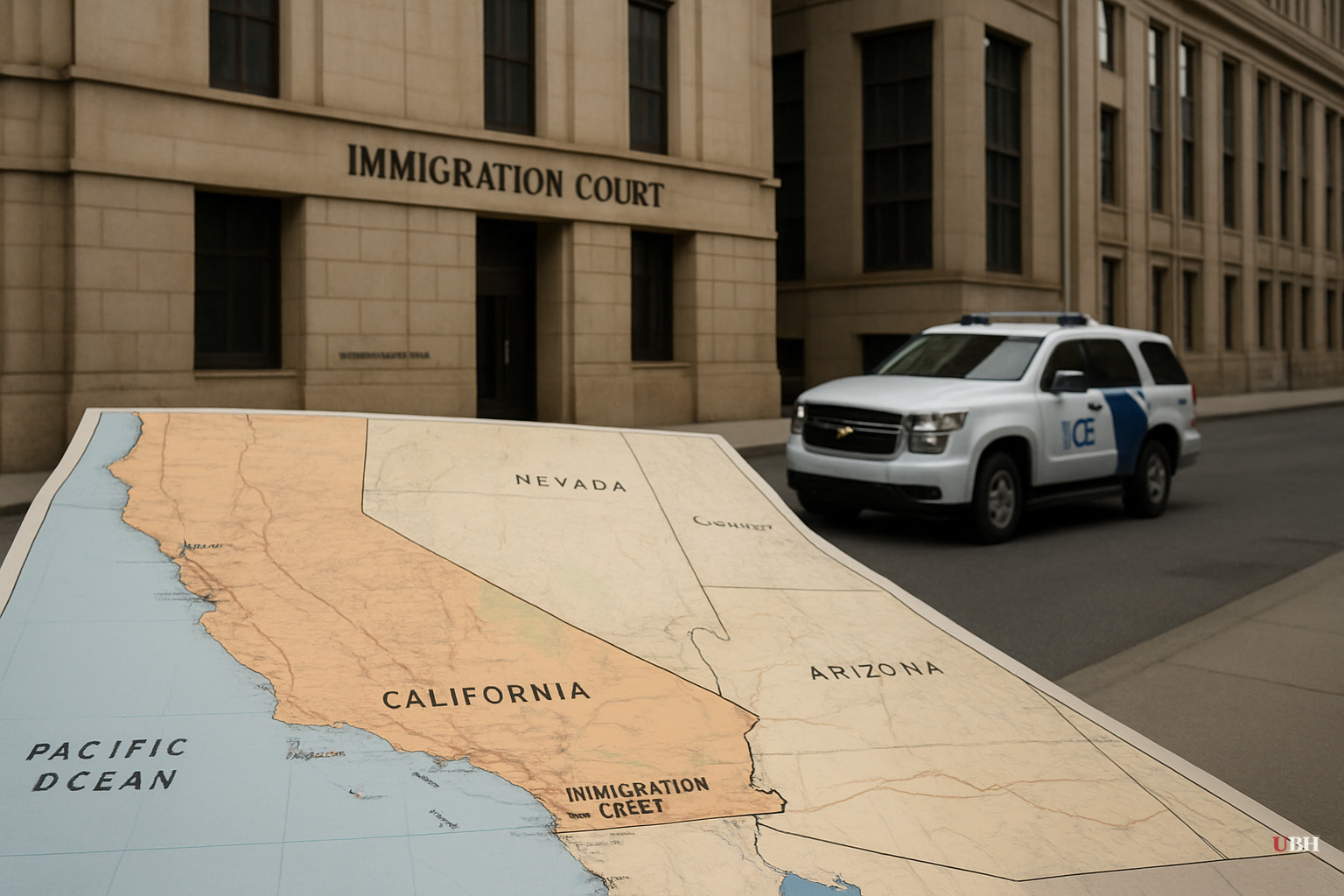
U.S. District Judge P. Casey Pitts, sitting in the Northern District of California, issued a nationwide injunction Tuesday blocking Immigration and Customs Enforcement from arresting people inside immigration courts. The ruling covers ICE's courthouse arrest policy and a separate policy that eliminated the 12-hour cap on how long immigration detainees can be held.
Pitts was nominated to the federal bench by President Biden, a fact DHS critics have already flagged.
What the Judge Actually Found
The ruling runs 71 pages and rests primarily on the Administrative Procedure Act, the 1946 law requiring federal agencies to show their reasoning before changing policy. According to KIRO 7, which published the Associated Press version of the ruling, Pitts wrote that the Trump administration's reversal of long-standing courthouse arrest restrictions resulted "not from merely unreasoned decision-making but a complete lack of decision-making."
Specifically, Pitts found that ICE never addressed the documented "chilling effect" courthouse arrests have on whether immigrants show up for hearings at all. A concern ICE itself had raised in its own 2021 guidance, which the Trump administration rescinded. Per CBS News, Pitts wrote that ICE "failed to provide reasoned explanations for their actions" and that the arrest policy "fails to provide a rational explanation" for removing the prior limits.
On the detention issue, ICE had been holding some detainees at a San Francisco immigration center for more than 12 hours, often overnight or for multiple days, according to CBS News. Pitts struck that policy down as a Fifth Amendment violation, finding detainees were subject to "punitive conditions of confinement" without adequate justification.
The Practice That Got Banned
After Trump took office in January 2025, ICE reversed its previous policy against courthouse arrests. According to the LA Times, DHS attorneys began dismissing deportation cases in court, after which plainclothes agents would arrest the immigrants in the hallways outside the courtroom and pursue expedited removals requiring no further judicial hearings.
The LA Times documented specific cases in Los Angeles: a teenager detained the day after graduating high school with honors, and a father handcuffed in front of his 8-year-old son moments after an immigration judge dismissed his deportation case.
DHS's stated position, according to all three sources, is that immigration courts are a practical and efficient place to detain people who are unlawfully present, since those individuals are already identified and physically present.
The Government's Defense Deserves a Serious Hearing
The strongest argument for the courthouse arrest policy is not procedural. It's operational. DHS general counsel James Percival made it plainly on X Tuesday night: "When a judge sentences a defendant, the defendant is taken into custody. If an alien is ordered removed by an immigration judge, the same should happen."
That analogy has real force. If a person appears before an immigration judge, is determined to be removable, and then simply walks out the door, enforcement becomes a separate expensive operation. Courts are, by design, places where the government verifies identities and tracks individuals. Using that infrastructure for enforcement is not inherently irrational.
The APA problem, however, is not whether the policy is a good idea. It's whether the agency explained its reasoning on the record before implementing it. Pitts's ruling doesn't say courthouse arrests are forbidden forever. It says ICE didn't do the administrative work to justify reversing an 80-year-old norm. That's a narrower holding than the headlines suggest.
Gene Hamilton and the Appeal Path
Attorney Gene Hamilton, who helped dismantle DACA during Trump's first term and is described by the LA Times as a key immigration enforcement architect, was direct on X: "Won't last on appeal. But more insanity intended to eliminate immigration enforcement."
The Ninth Circuit, which covers California, has frequently stayed or narrowed lower-court injunctions on immigration, and the Supreme Court has been willing to override broad nationwide injunctions from single district judges. The administration is likely to move quickly for a stay.
Two Courts, Same Conclusion
Tuesday's ruling is the second of its kind in as many months. In May, U.S. District Judge P. Kevin Castel in New York similarly found that the Trump administration's withdrawal of courthouse arrest limits was "arbitrary and capricious," according to CBS News. That order applied only to immigration courts in Manhattan. Pitts's order goes nationwide.
Two federal judges in different circuits, applying the same APA standard and reaching the same conclusion, suggests the administration's procedural record on this specific policy change is genuinely thin, regardless of whether the underlying enforcement goal is legitimate.
The concrete next step: DOJ will almost certainly seek an emergency stay from the Ninth Circuit. If the Ninth Circuit denies it, the administration could go directly to the Supreme Court, which has previously granted stays of broad immigration injunctions. Whether Pitts's ruling survives that process will determine whether ICE resumes courthouse arrests within weeks or faces a longer legal fight.
Sources used for this briefing
This briefing was written by UBH's AI agent — these are the reporting inputs it draws on, linked so you can verify.


