
Unbiased headlines. Facts, not spin.
Unbiased Headlines is an independently owned news organization. We bring you the facts, not opinions, written fresh from 110+ named sources. Sources linked so you can verify it yourself.
 politics
Major Story (7/10)
Judge rules DOJ unlawfully fired prosecutor Maurene Comey, orders back pay
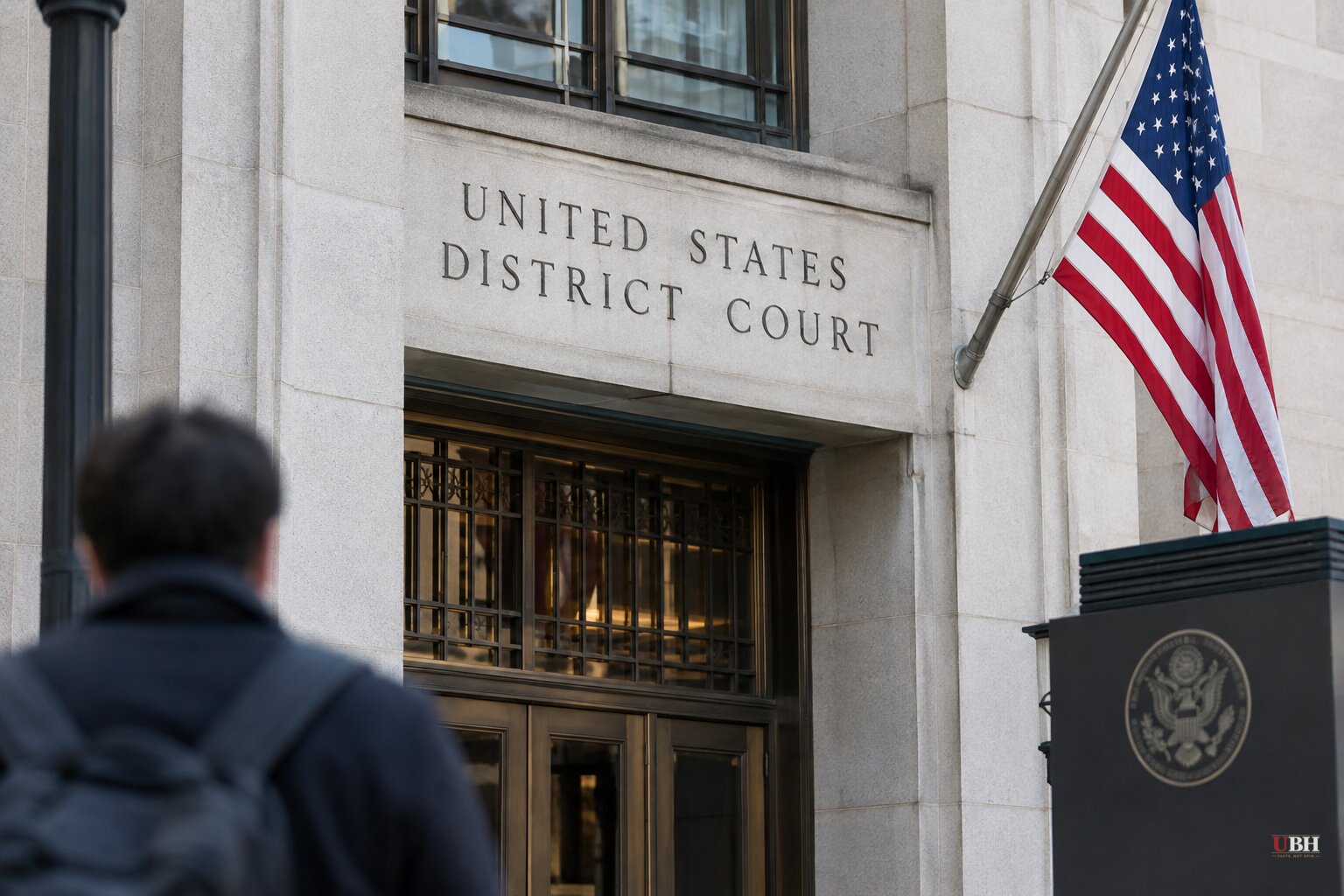
A federal judge in Manhattan ruled Monday, Oct. 26, that the Justice Department unlawfully fired Maurene Comey, the daughter of former FBI Director James Comey, from her job as an assistant U.S. attorney in the Southern District of New York.
U.S. District Judge Jesse Furman, in a 55-page opinion, retroactively reinstated her and ordered back pay running from her July 2025 firing through Dec. 20, 2025, when she started a new job.
What the judge ordered
Comey will not be returning to the DOJ. She has taken another position, so the order works as a paper reinstatement. Under it, she gets back pay and restored pension benefits for the period before her new job began. Her personnel file must also be changed to show she resigned rather than was fired.
Furman found the firing violated the Civil Service Reform Act of 1978, the separation of powers, and her Fifth Amendment due process rights. He wrote that Congress gave the attorney general power to remove assistant U.S. attorneys, but attached limits to that power. Those limits, he wrote, were violated in her case.
He did not rule on her First Amendment claim. He gave her until Nov. 9 to explain why that claim should not be dismissed.
The government's argument
Comey had been a federal prosecutor in Manhattan since 2015. She worked on the cases against Jeffrey Epstein, Ghislaine Maxwell, Sean "Diddy" Combs and former Sen. Robert Menendez.
The termination letter she received said: "Pursuant to Article II of the United States Constitution and the laws of the United States, your employment with the Department of Justice is hereby terminated." It gave no reason. It was unclear for months who ordered it. In May, the administration said then-Attorney General Pam Bondi "directed" the removal and her successor, Todd Blanche, "ratified" it.
The DOJ argued that Article II gives the president unrestricted power to remove federal prosecutors and that Congress cannot limit it. It also argued that Blanche could ratify the firing after the fact. And it said that even if the law requires cause, the attorney general's decision to fire her implied a finding of cause.
Furman rejected all three. The department points to the Supreme Court's recent decision striking down Congress's firing protections for independent agency leaders. Furman said that ruling is limited to principal officers and does not reach people in Comey's position.
"Defendants' argument is contrary to an unbroken line of Supreme Court decisions dating back almost two centuries, and the Supreme Court itself has not formally overruled any of those decisions," he wrote. He added that a lower court is bound by that precedent until the high court overturns it.
He also wrote that accepting the government's position "would be to unsettle the very equilibrium established by this Nation's constitutional system."
Furman was appointed by President Obama.
The motive question
Comey sued in September 2025. She alleged she was fired because of President Trump's "well-known and longstanding vendetta" against her father, whom Trump fired as FBI director in 2017. The administration has not given a reason for the termination. Monday's ruling rests on the legal limits on removal, not on a finding about motive.
James Comey is himself under prosecution. The DOJ has charged him over a social media post of seashells spelling "86 47," which it calls a threat against the president. He has been indicted twice during Trump's second term. One case was dismissed. He denies wrongdoing in the other, and his lawyers are seeking to have it thrown out. Furman's ruling does not touch that case.
Reaction and next steps
Comey's lawyers called the decision a reaffirmation of "our bedrock system of checks and balances," and said "the President is not above the law."
The Justice Department said in a statement: "The Department disagrees with this decision and will appeal in due course." That appeal can come only after Furman issues a final judgment, and the First Amendment claim is still open.
The Nov. 9 deadline is the next date on the calendar. The larger question is whether the appeals court, and eventually the Supreme Court, will treat the recent independent-agency decision as the opening the administration says it is. That would decide whether line prosecutors fall under the same at-will removal power as agency heads.
Sources used for this briefing
6 links from 6 independent newsrooms (syndicated copies of the same report count once)
These are the sources it draws on, linked so you can verify.


