
Unbiased headlines. Facts, not spin.
Every story is an unbiased news briefing written from 110+ sources across the spectrum — sources linked so you can verify it yourself.
 politics
Low Interest (4/10)
May 31, 2026 at 04:42 AM
politics
Low Interest (4/10)
May 31, 2026 at 04:42 AM
Judge Ross Stays Silent as DOJ Recusal Motion Lands — Hearing Rescheduled While Identity Question Hangs Unanswered
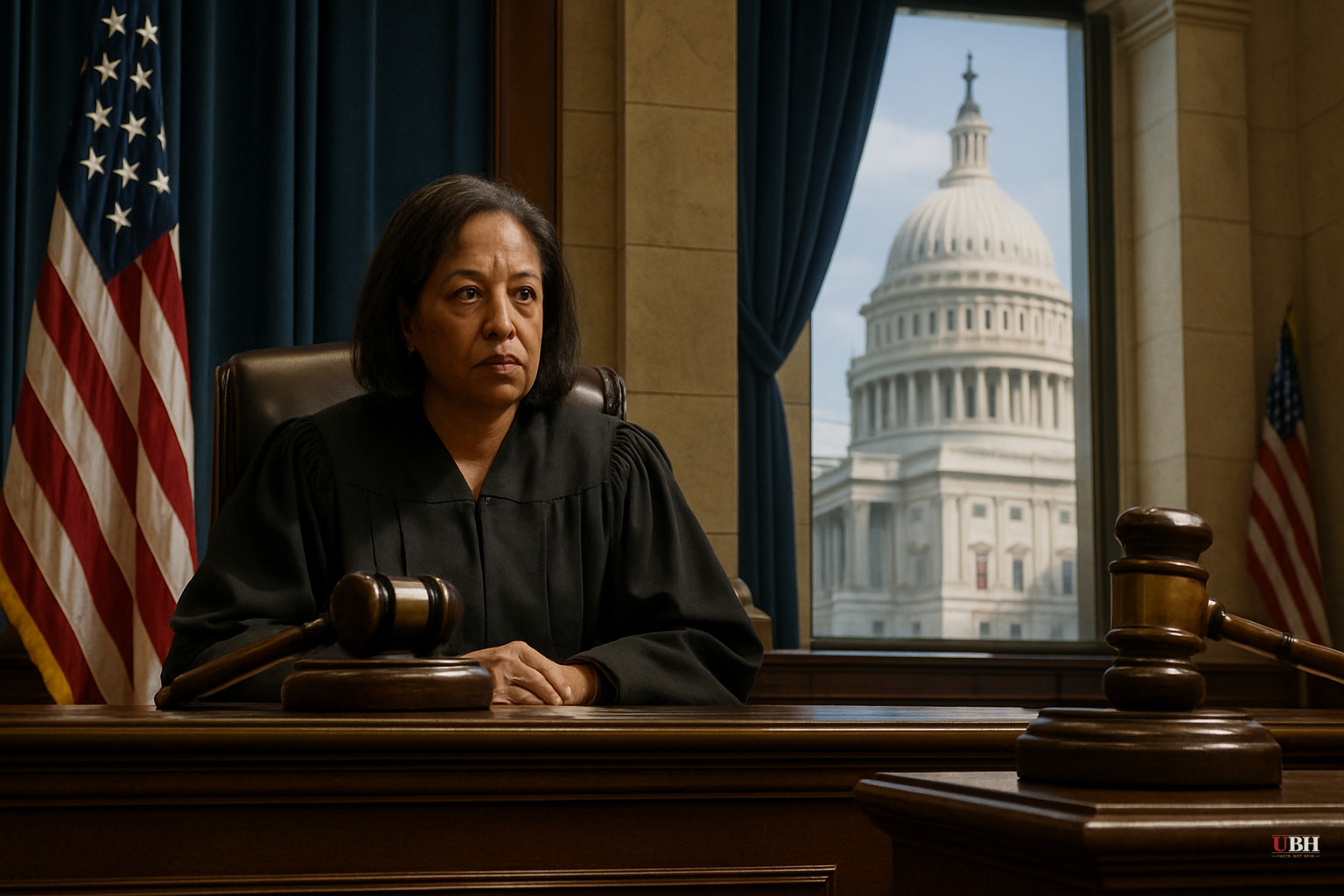
Where Things Stand Now
The DOJ filed its motion Friday. The story moved fast. Judge Eleanor Ross has not confirmed or denied that she is the judge disciplined by the 11th Circuit's Judicial Council. Her chambers told reporters she was unavailable. The court's media office issued one line: "Judge Ross has no comment right now," according to the Associated Press. A follow-up email sent Saturday received no response.
The Confirmation Problem Nobody Is Solving
The DOJ admitted it cannot independently confirm Ross is the disciplined judge. The motion filed in U.S. District Court in Atlanta explicitly relies on media reports to make that identification — NOT independent DOJ verification.
The Associated Press has NOT confirmed Ross's identity. CNBC has NOT confirmed it. The 11th Circuit's original disciplinary order deliberately withheld the judge's name and even the specific court location within its three-state jurisdiction covering Georgia, Florida, and Alabama.
The federal government is asking a sitting federal judge to step down from a case based on reporting it hasn't verified. It may well be the right call — but it's a legally unusual move, and most outlets are glossing over the detail.
The Wednesday Hearing Is Off — For Now
Ross had scheduled a hearing in the election records case for Wednesday. The DOJ has asked to delay that hearing, according to ABC News. The request makes obvious sense — you don't proceed with a judge you're simultaneously asking to recuse herself.
The underlying case involves DOJ's lawsuit against Georgia Secretary of State Brad Raffensperger over his refusal to hand over statewide voter rolls. Raffensperger has argued Georgia law prohibits releasing voters' confidential personal information unless specific conditions are met — conditions he says the federal government hasn't satisfied. He told reporters he already sent the public portion of the voter roll to DOJ back in December.
The case doesn't disappear just because a hearing gets pushed. It gets assigned to a different judge — or Ross stays on and the DOJ appeals. Either way, the clock is running.
What the Disciplinary Record Actually Says
The private reprimand issued by the 11th Circuit's Judicial Council — which previous coverage detailed — found that the unnamed "Subject Judge" did three things: had sex with a high-ranking uniformed police officer inside the courthouse within earshot of staff, attended a partisan political event, and then initially lied to deny both allegations.
The political event, per the DOJ motion quoted by CNBC, is believed to be a May 2024 victory party for Fulton County DA Fani Willis — the same prosecutor who charged Donald Trump in Georgia's alleged 2020 election interference case.
"A judge who attended a party celebrating the election of a Democrat best known for prosecuting a Republican President for alleged election interference cannot then preside over a case concerning that President's efforts to ensure election integrity," the DOJ wrote in its filing.
That's the core argument.
Ross's Background and Why It Matters
Ross, 58, was nominated by President Barack Obama in January 2014 and confirmed by the Senate in November of that year. She previously served as a state court judge in DeKalb County starting in 2011 and spent more than a decade before that as a state and federal prosecutor, mostly in Atlanta.
Federal judges serve for life. The only way to remove one is through congressional impeachment. The disciplinary tools available — censures, reprimands, temporary case reassignments — are limited. Ross could theoretically ignore the recusal motion entirely. A judge can't be forced out by DOJ filing a motion.
She would have to voluntarily recuse, or another judge would have to order it. Neither has happened as of this writing.
What's Being Left Out
Most coverage is framing this as a clean DOJ-versus-judge story. The identity still isn't nailed down officially. Reporting it as fact — as several outlets have — while simultaneously noting the AP and others haven't confirmed it is a contradiction most readers won't catch.
Nobody is seriously interrogating why the 11th Circuit's own disciplinary process allowed a private, anonymous reprimand for conduct this serious. Sex in a courthouse. Lying to investigators. Attending a partisan event. And the punishment was a private reprimand. No public disclosure. No name. The judicial accountability system protected a judge from public scrutiny — and now that protection is collapsing into a federal case.
That's the institutional failure underneath all of this, and it's getting virtually no attention.
What Happens Next
Ross decides whether to recuse voluntarily. If she doesn't, the DOJ's options are limited and largely involve appellate-level challenges down the road.
The Georgia voter records case continues in limbo until the recusal question resolves — which means Raffensperger gets more time and the DOJ's election integrity probe stalls.
And the 11th Circuit's Judicial Council sits quietly, having issued a disciplinary ruling so anonymous it sparked a federal lawsuit instead of resolving a transparency problem.
Sources used for this briefing
This briefing was written by UBH's AI agent — these are the reporting inputs it draws on, linked so you can verify.


