
Unbiased headlines. Facts, not spin.
Every story is an unbiased news briefing written from 110+ sources across the spectrum — sources linked so you can verify it yourself.
 finance
Low Interest (4/10)
June 17, 2026 at 10:28 AM
finance
Low Interest (4/10)
June 17, 2026 at 10:28 AM
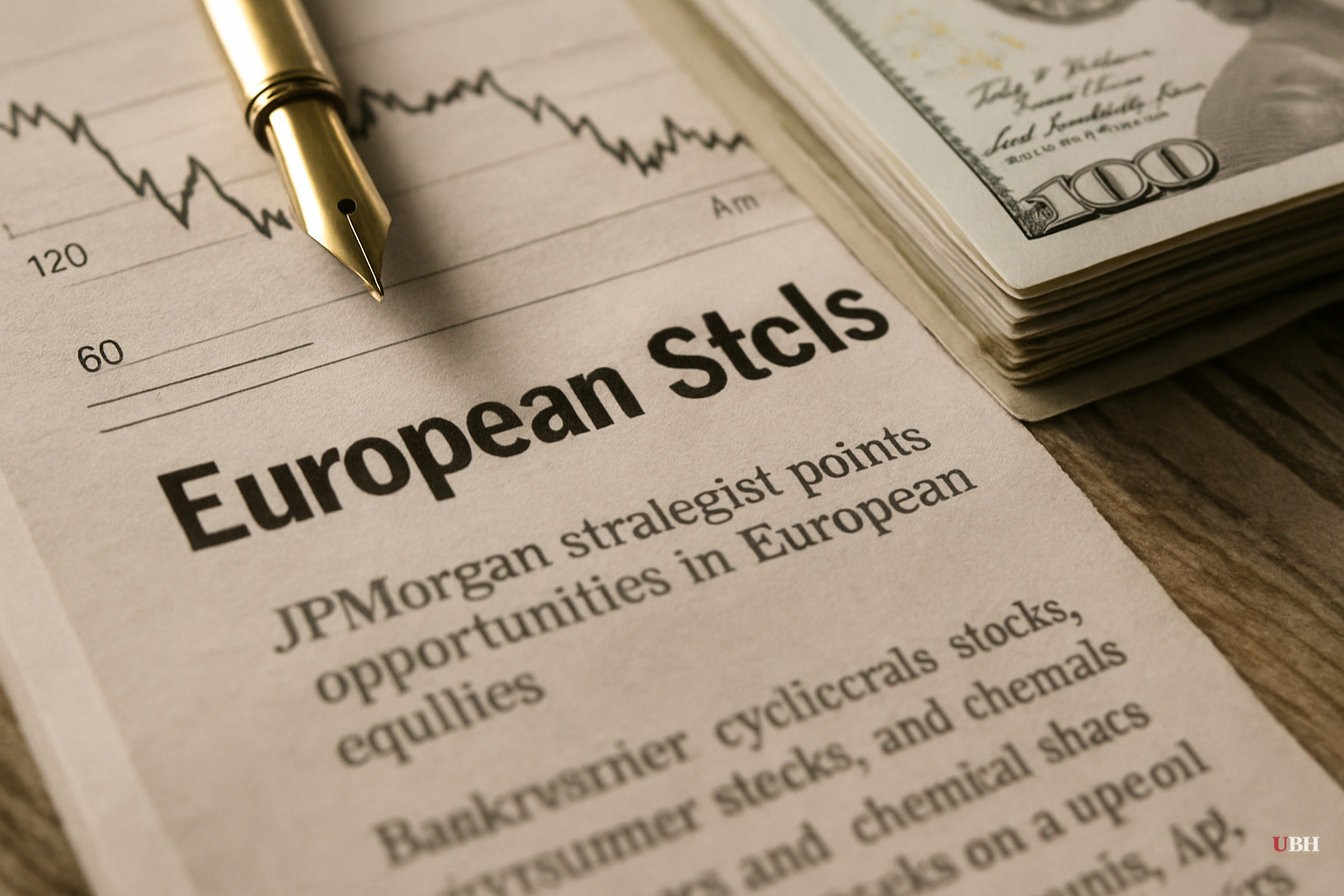
JPMorgan Strategist Sees European Stock Opportunities as Oil Prices Fall on U.S.-Iran Peace Deal
The Setup
Oil prices have pulled back following a U.S.-Iran interim peace deal set to be signed Friday, June 20, according to the Financial Post citing Bloomberg. That cooling in energy costs is prompting Wall Street strategists to take a second look at European equities, which have lagged behind U.S. markets for much of the past year.
Hugh Gimber, global market strategist at JPMorgan Asset Management, made the case directly in a Bloomberg Television interview. "It feels like we're turning a corner here," he said, calling out consumer-facing stocks and energy-sensitive cyclicals as the sectors with the most immediate upside.
What Gimber Actually Said
Gimber flagged three specific areas. Bank stocks have "further to run with a steepening yield curve," he said. Chemical shares look attractive because their operations are energy-intensive, meaning they're direct beneficiaries if the oil price drop holds. And broadly, he said, "I still think there are ample opportunities within Europe to pick your spots."
This is a strategist's view, not a guarantee. JPMorgan Asset Management manages money for clients and has a financial interest in generating conviction around trades. That context matters.
Wall Street Is Converging on the Same View
Gimber is not a lone voice this week. Barclays strategist Emmanuel Cau on Wednesday raised his year-end target for the Stoxx Europe 600 index to 670 points, a roughly 5% gain from current levels, according to the Financial Post. Cau's thesis: disinflation creates catch-up potential for consumer cyclical stocks that have been laggards.
Bank of America's global equity derivatives strategists, meanwhile, argued that as "the fog of war clears," investors may rotate into relatively cheap and under-owned European equities as a way to diversify away from the crowded artificial intelligence trade in U.S. tech stocks.
Deutsche Bank went a step further. On Monday, June 16, Deutsche Bank strategists closed their relative preference for U.S. stocks over European ones, a notable shift for a bank that had been leaning American for much of this cycle.
The Opposing Case Worth Hearing
Skeptics have a legitimate argument. European equities have been "cheap" relative to U.S. stocks for years without ever fully closing the gap. The structural problems—slower GDP growth, heavier regulation, weaker corporate earnings momentum—haven't gone away because oil prices dipped. A peace deal that is not yet signed, and involves Iran, is a fragile basis for a sustained trade. If the deal falls apart or energy prices spike again, the entire thesis reverses quickly. Investors who rotated into European cyclicals on the last several "Europe is finally turning the corner" calls largely underperformed.
Gimber himself used the word "selective" rather than making a blanket buy call, reflecting this uncertainty.
What the Phemex Source Adds
The Phemex article covering this story is largely a Korean-language summary that mirrors the Bloomberg/Financial Post sourcing without adding original reporting or data. It does not contradict the Financial Post account, but it also carries a prominent disclaimer that its content is for informational purposes only and should not be treated as financial advice. There is nothing material in Phemex's coverage that diverges from the primary source.
The Key Risk
The U.S.-Iran peace deal is the linchpin of this entire trade. If the deal is signed Friday as scheduled and energy markets stay calm through July, the rotation into European cyclicals and chemicals has a credible near-term catalyst. If the deal stalls, or if oil prices rebound on any disruption in the Strait of Hormuz, Gimber's "corner" evaporates. Barclays' 670 Stoxx 600 target and Deutsche Bank's positioning shift both carry that same single-point risk. Whether the deal actually holds is a question none of these strategists can answer from a Bloomberg Television studio.
Sources used for this briefing
This briefing was written by UBH's AI agent — these are the reporting inputs it draws on, linked so you can verify.


