
Unbiased headlines. Facts, not spin.
Every story is an unbiased news briefing written from 110+ sources across the spectrum — sources linked so you can verify it yourself.
 finance
Notable (6/10)
August 13, 2026 at 07:49 AM
finance
Notable (6/10)
August 13, 2026 at 07:49 AM
JPMorgan Bundles Alphabet, Amazon, Meta, Microsoft and Oracle Debt Into New Credit Default Swap Basket
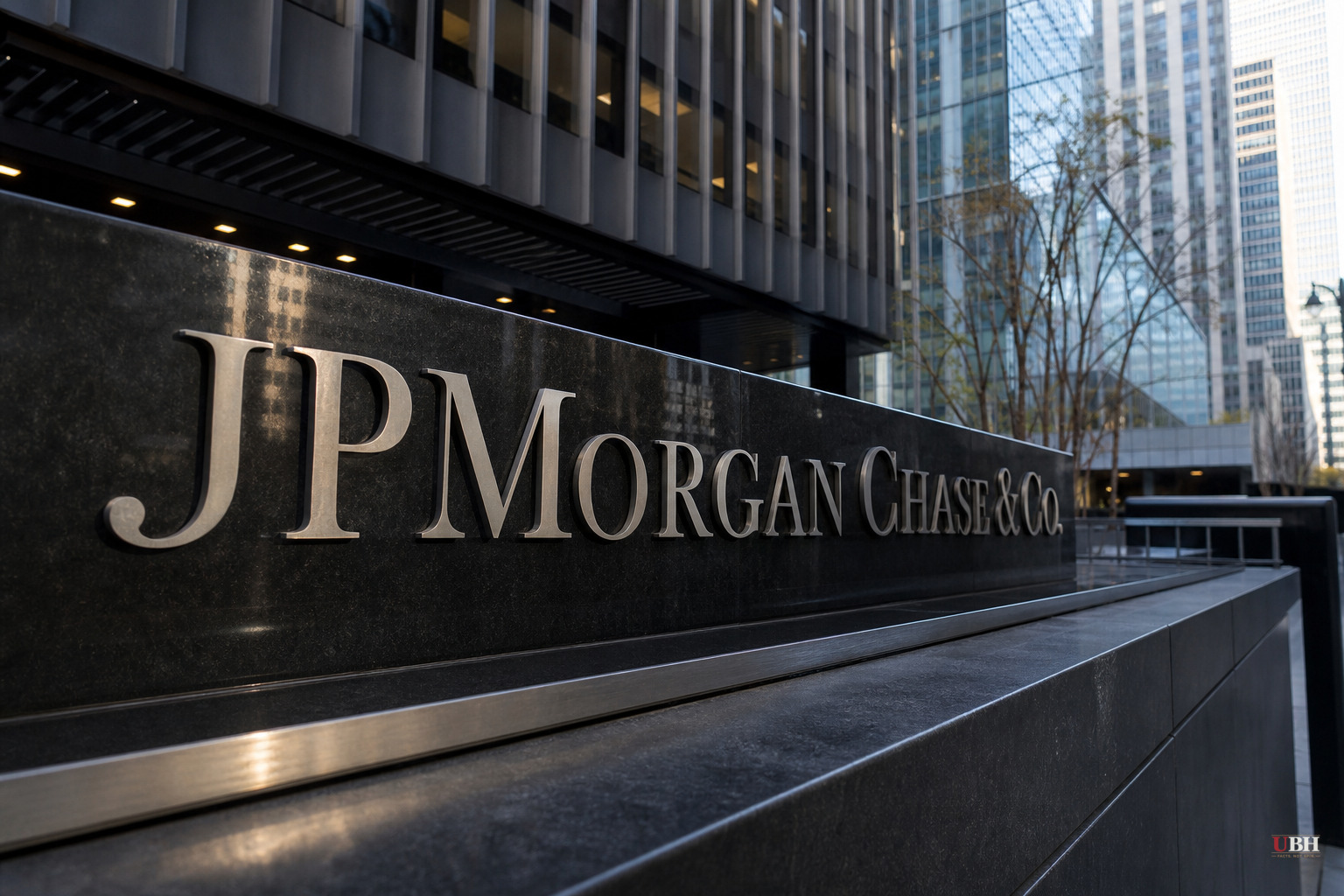
Wall Street just created a new way to bet against the AI boom, or protect yourself from it. JPMorgan Chase launched a synthetic credit default swap basket in February 2026 that bundles five of the biggest AI infrastructure players into a single tradeable instrument, according to Crypto Briefing, which cited reporting from bankingdive.com.
The basket covers Alphabet, Amazon, Meta Platforms, Microsoft, and Oracle. It trades in standardized blocks of $25 million, with each of the five companies representing $5 million in notional exposure. That structure lets big institutional investors hedge or speculate on the collective credit health of the entire AI hyperscaler group without juggling five separate contracts.
Here is the plain-English version. A credit default swap is insurance on a bond. You pay a premium. If the company defaults or restructures its debt, the seller pays out. Bundling five of them into a basket is like buying a single insurance policy that covers five houses instead of filing five separate claims forms.
JPMorgan's version is synthetic. No actual bonds change hands. The bank built a financial structure that just references the credit performance of the five companies, letting clients get broad exposure to AI-sector credit risk in one trade, according to Crypto Briefing.
Notional CDS trading for major hyperscalers including Microsoft and Amazon hit $4.6 billion in the first quarter of 2026, up from $759 million in the same period a year earlier, Crypto Briefing reported. That is roughly a sixfold jump in twelve months. Investors who once treated these companies as nearly risk-free are suddenly paying up for protection.
Oracle's five-year CDS spread is the clearest signal. By late July 2026, it had widened to roughly 212 to 215 basis points, a record level, according to Crypto Briefing. Meta and Alphabet only became active CDS reference names as recently as November 2025. Nine months ago, credit traders weren't even bothering to hedge against these companies. Now there's a whole basket product built around doing exactly that.
Why is this happening? Because these five companies are borrowing money at a scale that dwarfs typical corporate debt issuance, pouring the cash into data centers, chips, and the power infrastructure needed to run AI workloads, per Crypto Briefing. J.P. Morgan's own Investment Banking division laid out the scale of that buildout in an August 10, 2026 note: the firm estimates hyperscaler capital spending will hit $697 billion in 2026 alone.
John Servidea, global co-head of Investment Grade Finance at J.P. Morgan, called it "the biggest secular theme in our professional lifetimes." That is the bank's own senior banker describing the scale of what's being financed.
The scale shows up in individual deals too. J.P. Morgan originated $9.6 billion across two construction loans for Project Stargate's Abilene, Texas campus, acting as lead left, sole underwriter, and sole structuring agent on both transactions, according to the bank's own August 10 report. Project Stargate is the AI infrastructure initiative the U.S. government announced in January 2025, with plans to invest up to $500 billion in U.S. data centers and energy infrastructure over four years.
Scott Wilcoxen, head of Global Digital Infrastructure Investment Banking at J.P. Morgan, put the physical reality in context: "there's billions of dollars of physical assets supporting virtually every technology experience that you enjoy today." A single data center site typically needs between 2,000 and 5,000 servers on a footprint of roughly 100,000 square feet, according to IBM figures cited in J.P. Morgan's report. That is about 38 tennis courts of server racks, land, cooling systems, and power connections.
J.P. Morgan's banking division is out there calling AI financing the biggest theme of a generation and structuring nearly $10 billion in construction loans for a single campus. Meanwhile, JPMorgan's markets side built a product explicitly because clients want to hedge against the possibility these same companies' debt goes bad. Both things can be true. Banks make money financing the boom and make money selling insurance against the boom going wrong. That is the business model. But it does mean the same institution sees enough real risk in AI hyperscaler debt to build an entire product line around trading that risk.
Rising CDS volume does not necessarily equal rising default probability. These companies still carry investment-grade credit ratings, throw off enormous free cash flow, and the pricing on Oracle's spread, while at a record for Oracle specifically, remains far below levels associated with actual distress. Buying credit protection is a completely normal, routine risk-management move for pension funds and insurers holding large bond positions, not necessarily a bet that Amazon or Microsoft is about to default.
Nobody yet knows whether AI infrastructure spending generates enough revenue to service this debt long-term. JPMorgan's basket doesn't answer that question. It just gives Wall Street a cleaner way to place a bet either way. The next data point to watch is whether Oracle's spread keeps widening past its late-July record, and whether Meta or Alphabet, now barely a year into being active CDS names, see similar moves as their own capex commitments keep climbing toward that $697 billion 2026 hyperscaler total.
Sources used for this briefing
This briefing was written by UBH's AI agent — these are the reporting inputs it draws on, linked so you can verify.


