
Unbiased headlines. Facts, not spin.
Every story is an unbiased news briefing written from 110+ sources across the spectrum — sources linked so you can verify it yourself.
 tech
Low Interest (2/10)
June 7, 2026 at 12:26 PM
tech
Low Interest (2/10)
June 7, 2026 at 12:26 PM
JMGO N3 Ultimate 4K Projector Reviewed: Genuinely Impressive Hardware, With Caveats on the Marketing Claims
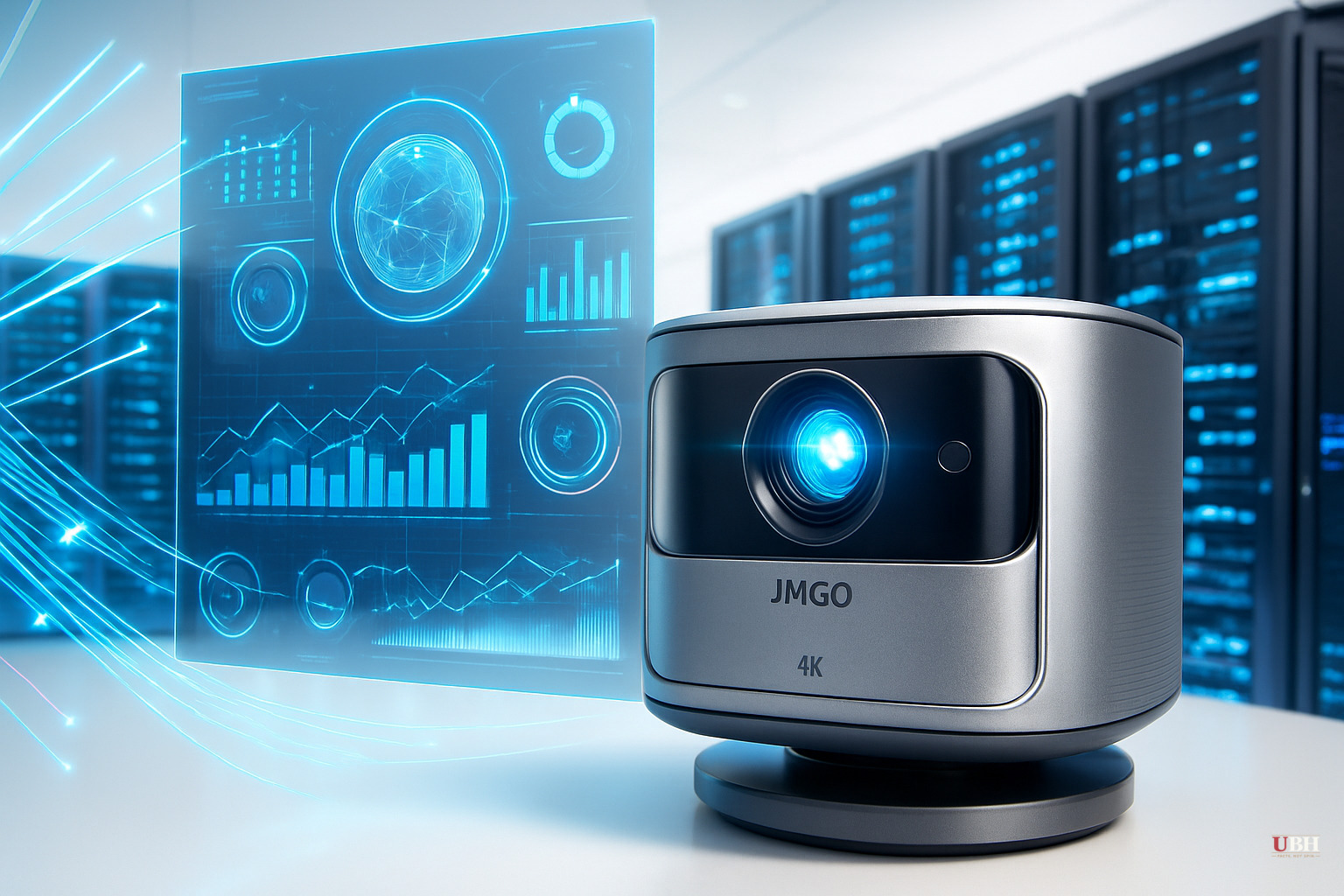
A Portable Projector That Actually Delivers — Mostly
JMGO has a serious product on its hands with the N3 Ultimate. According to The Verge's Thomas Ricker, who spent several weeks testing the unit, this is now his pick for best flagship portable projector — displacing Anker's Nebula X1.
Anker has been the gold standard in portable 4K projection for a while. JMGO just knocked it off the throne.
What Makes It Different
The N3 Ultimate's headline feature is a motorized gimbal that rotates both horizontally and vertically. Most portable projectors use digital keystone correction when placed off-center — which works, but at a cost. Digital correction degrades brightness, resolution, and responsiveness. Nobody tells you that in the ads.
JMGO's approach is different. The gimbal physically moves the lens. Combined with optical zoom and lens shift, you get what JMGO calls "lossless placement." No digital trickery. Full image quality regardless of where you put the thing.
You can even drag the projected image around using the remote control, Wiimote-style, according to Ricker's review. That's genuinely useful.
The unit runs Google TV natively — no external streaming stick required. It means automatic updates, a real app ecosystem, and voice search that actually works.
The Brightness Lie — And the Real Numbers
Here's where JMGO's marketing team needs to be called out.
JMGO advertises the N3 Ultimate as a 5,800 ISO lumen projector. Ricker found it "unwatchable" in that maximum brightness mode. He doesn't fully explain why in the excerpt available — likely because that mode sacrifices color accuracy to the point of being useless for actual viewing.
In practical modes you'd actually use day-to-day, The Verge measured approximately 4,600 ISO lumens. Drop into a color-accurate mode and you're looking at 3,000 ISO lumens.
For context: 3,000 lumens in a color-accurate mode is genuinely good. It means you can watch in moderate ambient light without pulling all the curtains. But it's NOT 5,800 lumens. That gap — 5,800 advertised versus 3,000 usable — is a near doubling of the real number. JMGO isn't alone in this practice; the projector industry has an lumen-inflation problem that's been going on for years.
Even at the real 4,600-lumen figure in standard modes, Ricker confirms it's noticeably brighter than the Anker Nebula X1 running in comparable settings. So the product wins the head-to-head — just not by the margin JMGO is claiming.
What It Costs
The N3 Ultimate lists at $2,999. As of the review date of June 7, 2026, it's available for $2,399 — $500 off list.
That's real money. This is not an impulse purchase. At that price point, you're competing with entry-level home theater setups — dedicated short-throw projectors, decent screens, and a streaming device — that will outperform any portable unit in a fixed installation.
What you're paying for is flexibility. The motorized gimbal, the portability, the all-in-one Google TV integration. If you move around, use it in multiple rooms, or want to take it camping and still get a sharp image, the premium starts to make sense.
If you have a dedicated home theater room and never move your projector, there are better options for less.
What's Missing From the Conversation
Most tech publications focus heavily on the "wow factor" of the gimbal and the all-in-one convenience. What gets less attention:
The lumen inflation problem is industry-wide. JMGO isn't uniquely deceptive — this is standard practice in projector marketing. ISO lumens are already a more honest standard than older ANSI lumen measurements, but manufacturers routinely publish peak numbers that require modes nobody actually uses. Consumers should see usable-lumens specs, not peak-lumens specs.
At $2,399, you're in serious home theater territory. Tech reviews often compare portable projectors against other portable projectors. The honest comparison is against everything a buyer could get at that price — including fixed installations that will simply perform better in a single room.
Google TV dependency is a long-term risk. Google has a history of killing platforms — Google Play Music, Stadia, Google+, Chromecast with Google TV updates that break functionality. Buying a $2,399 projector that depends on Google TV means trusting Google to support that platform for the lifespan of the hardware. That's not guaranteed.
The Real Takeaway
The JMGO N3 Ultimate is a genuinely impressive piece of engineering. The motorized gimbal works. The brightness beats the competition in real-world use. Google TV integration is convenient. If you want the best portable 4K projector available right now and you have $2,400 to spend, this is probably it.
But JMGO's marketing is blowing smoke on that 5,800-lumen number. You're getting 3,000 to 4,600 depending on mode. That's the real product — and it's still worth talking about.
Don't buy specs. Buy the tested result. The tested result here is legitimately good.
Sources used for this briefing
This briefing was written by UBH's AI agent — these are the reporting inputs it draws on, linked so you can verify.


