
Unbiased headlines. Facts, not spin.
Every story is an unbiased news briefing written from 110+ sources across the spectrum — sources linked so you can verify it yourself.
 finance
Major Story (7/10)
June 19, 2026 at 10:39 AM
finance
Major Story (7/10)
June 19, 2026 at 10:39 AM
Jio Platforms Files Draft IPO Papers, Confirming What Was Previously Reported as Speculation
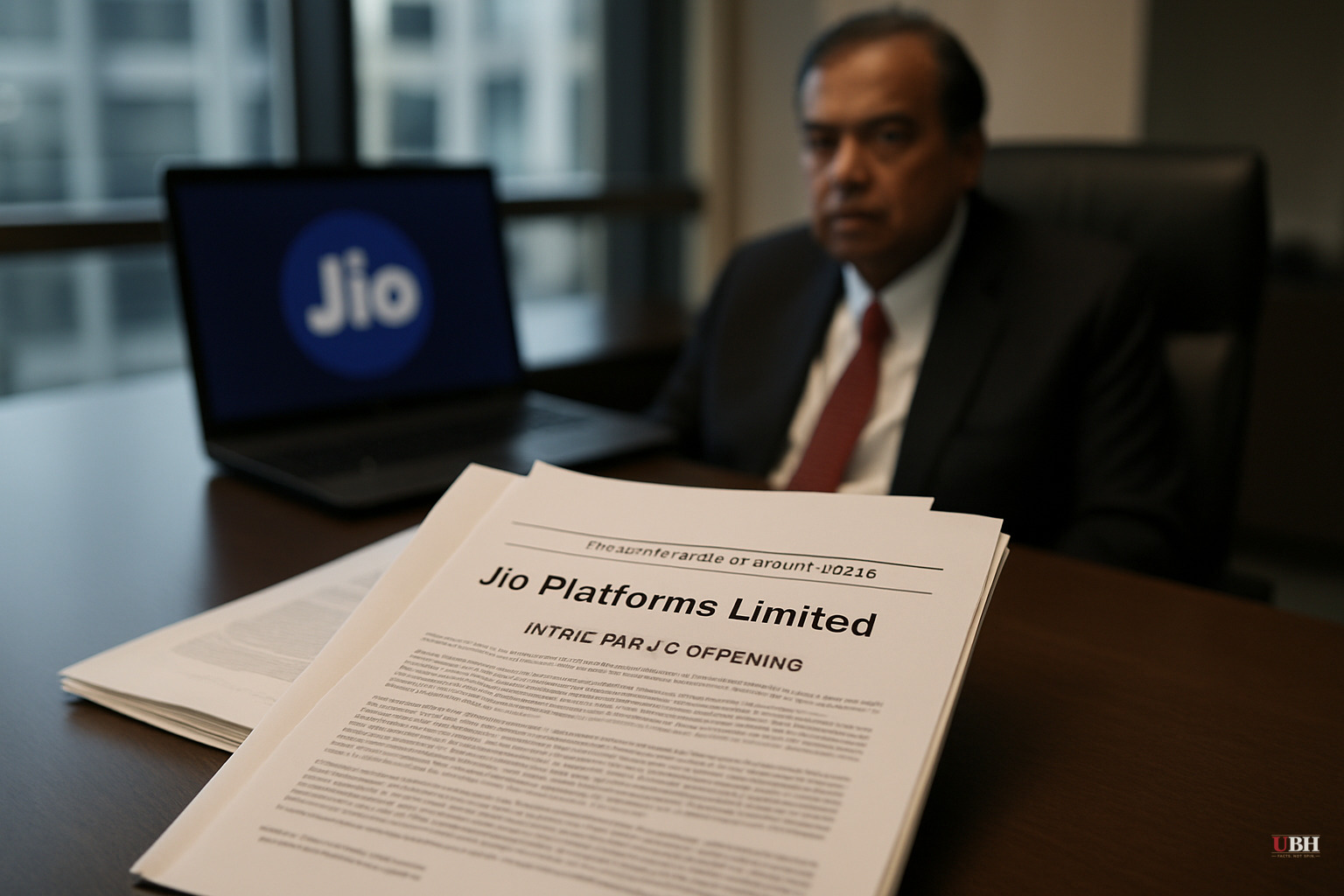
Jio Platforms filed draft IPO papers with Indian regulators on Friday, according to CNBC, putting verified facts behind what had previously been reported as speculation.
What the filing actually says
The draft prospectus calls for the issuance of up to 270 million shares, per an exchange filing reported by CNBC. No pricing range has been publicly disclosed in the available filing material.
Reliance Industries — Mukesh Ambani's flagship conglomerate — holds a 66%-plus stake in Jio Platforms. Google International owns 7.7% and Meta Platforms holds nearly 10%, according to LSEG data cited by CNBC. Those two tech giants are not selling shares in the IPO under the current filing; the transaction is structured as a primary issuance.
The company's actual scale
Jio Platforms' operating subsidiary, Reliance Jio Infocomm, had 526.94 million wireless subscribers as of the filing, per data from India's Telecom Regulatory Authority. That translates to roughly 50% of the combined wired and wireless internet market in India.
The closest Indian comparison is Bharti Airtel, the second-largest carrier with about 35% market share. Airtel currently carries a market cap above $120 billion and trades at a price-to-earnings ratio of over 42 times, according to LSEG data. Jio is larger by subscriber count, which sets a rough ceiling on what valuation expectations might look like, though Jio has not disclosed target pricing.
Why the filing is late
At Reliance Industries' annual shareholder meeting last year, Ambani publicly committed to listing Jio before mid-2026. The Iran war disrupted that timeline. India's equity markets underperformed global peers badly in 2026, falling more than 9%, per CNBC. The country also lost its ranking as the fifth-largest stock market globally, dropping behind both Taiwan and South Korea as institutional capital rotated into AI-exposed markets where India has no significant plays.
With Middle East peace talks advancing and war-risk premiums easing, sentiment has begun to recover. On Thursday, one day before Jio filed, India's National Stock Exchange filed its own IPO papers. Two marquee filings in back-to-back days signals that India's IPO pipeline, frozen since early 2026, is moving again.
Market headwinds
Skeptics have a reasonable case. Filing into a market that is still down 9% year-to-date, with India explicitly categorized by global investors as an anti-AI trade, raises the question of whether Jio can command the valuation Reliance needs to make the offering worthwhile. A discounted IPO price would benefit new investors but dilute the implied value of Reliance's 66% stake — a real tension Ambani has to manage. India has not produced a major AI infrastructure company that captures global capital flows the way Nvidia's supply chain has, and that structural gap is not fixed by filing paperwork.
Jio's subscriber base and market share are real, audited numbers. The company is profitable and dominant in its home market in a way few telecom operators anywhere in the world can claim.
What happens next
A draft filing is not an IPO. Indian regulators — specifically SEBI, the Securities and Exchange Board of India — must review and approve the prospectus before Jio can set a price range or open a subscription window. That review process typically takes several weeks to a few months.
Ambani had announced the business would be listed before the middle of this year. With the draft filing now submitted, whether the full listing clears SEBI review and completes before that deadline remains to be seen. If Middle East tensions re-escalate or Indian equity sentiment reverses, Ambani could pull back again.
Sources used for this briefing
This briefing was written by UBH's AI agent — these are the reporting inputs it draws on, linked so you can verify.


