
Unbiased headlines. Facts, not spin.
Every story is an unbiased news briefing written from 110+ sources across the spectrum — sources linked so you can verify it yourself.
 finance
Notable (5/10)
June 15, 2026 at 02:01 PM
finance
Notable (5/10)
June 15, 2026 at 02:01 PM
Jim Paulsen Says Policy Pressures Will Slow the Economy This Fall, and Wall Street Isn't Ready
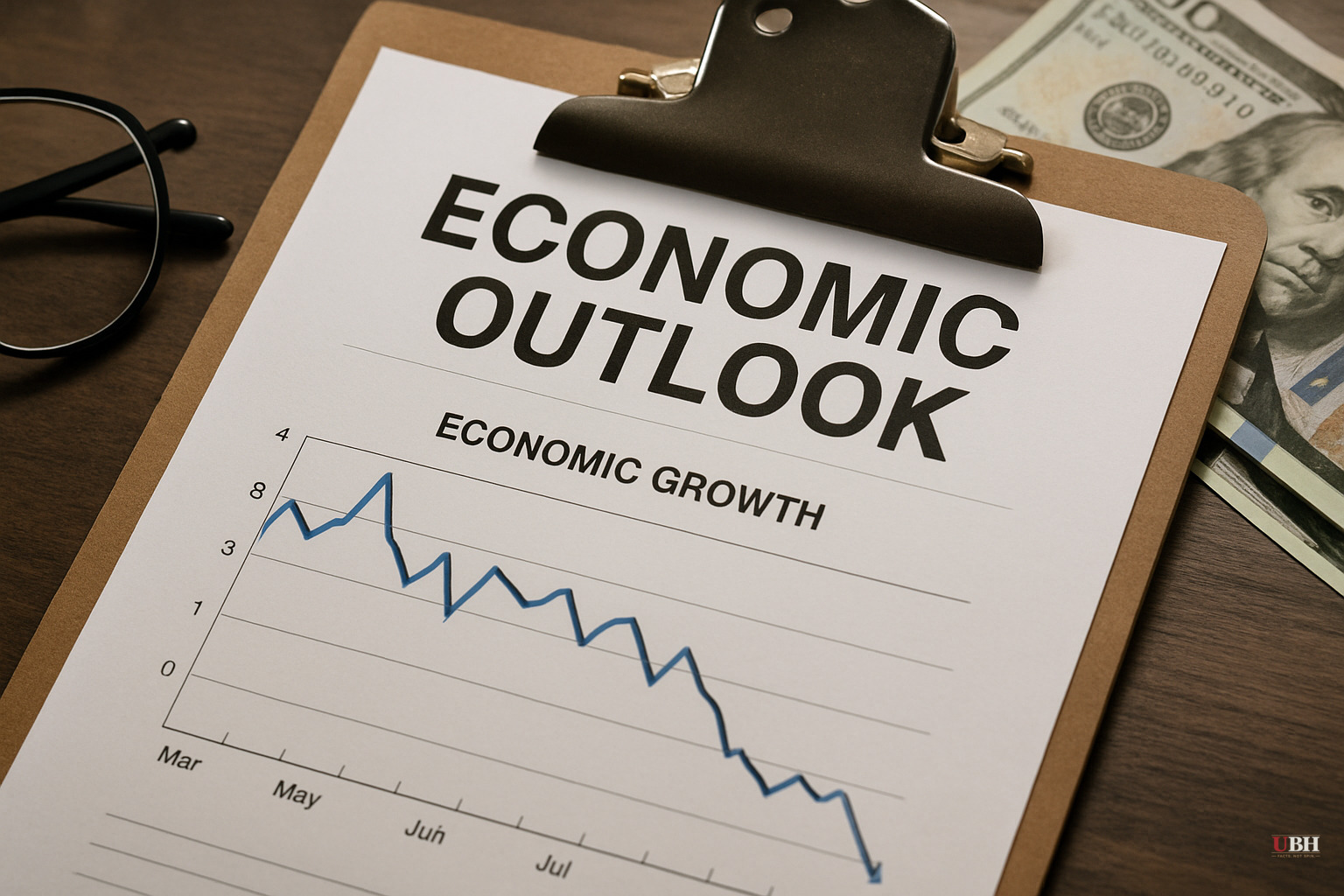
The Setup Wall Street Is Ignoring
The S&P 500 has added $9 trillion in value since late March, according to Bloomberg via the Financial Post. Records fell regularly from mid-April onward as traders brushed off rising oil prices, a lingering Middle East conflict, and rekindling inflation. Analysts kept raising their targets.
Jim Paulsen thinks they're about to get surprised.
Paulsen is not a permabear. He's a closely followed veteran strategist, formerly chief investment strategist at The Leuthold Group, who has spent decades tracking economic cycles. His current warning is built on a specific, testable model, not a gut feeling.
What the Model Shows
Paulsen developed an index of policy pressures that tracks the combined impact of higher crude oil prices, elevated 10-year Treasury yields, and dollar strength. He found a strong inverse correlation between that index and the Citigroup Economic Surprise Index, with the policy pressures index leading by roughly three months.
The Citigroup Economic Surprise Index, which measures how much actual economic data beats or misses consensus forecasts, is currently sitting at its highest level since 2023, according to the Financial Post. On its face, that looks like an all-clear signal. Paulsen's model says it's a lagging indicator of conditions that are already deteriorating underneath.
The policy pressures index is now near its highest level since spring 2025, the period when Trump's trade war sent markets into a tailspin. The lagged effect of those pressures, Paulsen told Bloomberg by phone, is expected "to slow overall US economic momentum" and weigh on activity through the fall.
"It's going to catch people a little bit out of left field," he said. "We're just coming off people on Wall Street raising their target estimates to 8,000 and to 8,500."
What the Stock Market Is Already Saying
The macro model isn't the only warning. Writing on his Substack, Paulsen's Perspectives, Paulsen pointed to several sectors whose stock performance has historically tracked actual economic conditions. All of them are flashing red.
Employment services stocks haven't improved despite the strong June 5 jobs report. According to Business Insider's coverage of the Substack post, the relative price of that sector "remains near its lowest level in at least 26 years." A strong labor market that isn't lifting the stocks of companies that profit from hiring is an anomaly worth explaining.
Consumer discretionary stocks are near their lowest relative price since 2011, per Paulsen. These stocks have historically moved with real (inflation-adjusted) retail sales. They've underperformed the broader market consistently since 2020. Paulsen's conclusion: "Consumer stocks on Wall Street are suggesting retail results on Main Street are poised not to improve soon on better job prospects but rather to worsen further."
Cyclical stocks, the companies most sensitive to overall economic growth — automakers, travel and leisure, luxury retail — have also struggled. Paulsen told Business Insider that cyclicals "are suggesting the economy is closer to a recession than a period of strong growth."
The Counterargument
The strongest case against Paulsen's view is the one Wall Street is currently making with its price targets: the economy keeps beating expectations. The June 5 jobs report was hotter than forecast, and the Citigroup Economic Surprise Index being at a three-year high is real data. If policy pressures were truly overwhelming, you might expect to see it in hard economic numbers already.
There's also a structural argument. The U.S. has absorbed elevated rates and oil prices before without sliding into recession. Some analysts argue that labor market resilience is a genuine buffer, not a mirage. A three-month lag model, however well-tested historically, is still a model, and models built on past cycles can misfire when the underlying conditions shift.
Paulsen doesn't claim certainty. His argument is specifically that the market isn't pricing in the risk of a slowdown, not that a crash is guaranteed.
Where the Two Sources Diverge
The Financial Post framed the story primarily through the macro model and the Citigroup index, with emphasis on the S&P 500's $9 trillion run-up as the thing most at risk. Business Insider, writing on June 9, leaned into the sectoral stock market signals and gave more space to Paulsen's Substack writing on the labor market disconnect. Neither framing is wrong; they're complementary. The Financial Post omitted the specific sector-level data (employment services, consumer discretionary, cyclicals) that Business Insider reported, which is a meaningful gap because that data provides the most concrete, observable evidence for Paulsen's thesis.
The Unresolved Question
If Paulsen's three-month lag is accurate, the economic slowdown he's forecasting would begin to show up in hard data sometime between now and September. The Federal Reserve's next policy decisions, complicated by the June 5 jobs report pushing rate-cut expectations further out, will be made against exactly that uncertain backdrop. Whether the Fed tightens into a weakening economy, or holds while inflation lingers, is the question Paulsen's model puts squarely on the table. The answer isn't here yet.
Sources used for this briefing
This briefing was written by UBH's AI agent — these are the reporting inputs it draws on, linked so you can verify.


