
Unbiased headlines. Facts, not spin.
Every story is an unbiased news briefing written from 110+ sources across the spectrum — sources linked so you can verify it yourself.
 finance
Low Interest (4/10)
July 7, 2026 at 02:45 AM
finance
Low Interest (4/10)
July 7, 2026 at 02:45 AM
Jeremy Grantham's Bear-Market Warnings Carry Weight on TV. His Fund's Long-Term Numbers Tell a More Complicated Story.
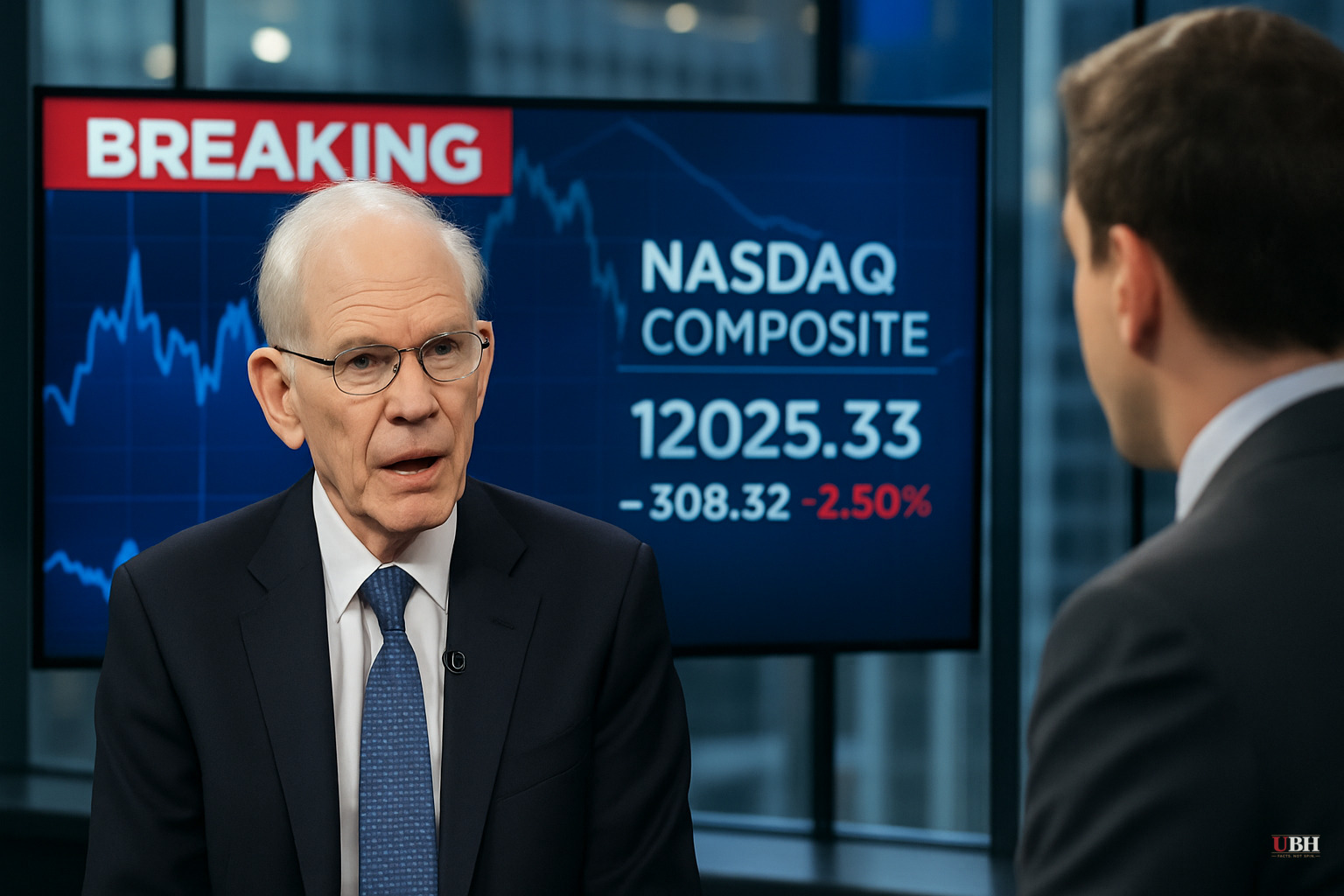
Since this ongoing series last covered the Fed's potential inflation-gauge switch and Iran's post-Khamenei power struggle, a separate but connected financial conversation has been building: whether the current AI-driven equity rally is a bubble, and who has the credibility to say so.
Jeremy Grantham is one of the loudest voices in that camp right now. He co-founded GMO, a Boston-based asset manager, and at his peak oversaw roughly $165 billion in assets under management, a figure that has since declined to somewhere between $80 billion and $90 billion, according to Mark Jeftovic writing via BombThrower.com. Grantham has also donated more than 90% of his personal net worth to the Grantham Foundation, which focuses primarily on green-technology innovation.
His media presence is substantial. A recent interview on the Diary of a CEO podcast circulated widely among financial commentators, with Grantham warning that the AI trade is deep into bubble territory and that equities broadly are overvalued. Those warnings are reaching a large audience.
The Number Behind the Name
The reasonable question: what is Grantham's actual track record?
The closest auditable benchmark is the GMO Global Asset Allocation Composite, the strategy he co-founded. Per GMO's own Q4 2025 letter, cited by Jeftovic, that composite's lifetime annualized return is 8.43%. Of that, 0.8 percentage points came from a one-time litigation settlement received in 2024, not from investment performance in any ordinary sense.
The S&P 500's historical annualized return runs around 10%. Warren Buffett's lifetime batting average, per Jeftovic's analysis, is approximately 19.8%. Grantham's composite trails the passive index by roughly 200 basis points.
That is not a small gap compounded over decades.
The Strongest Case for Taking Him Seriously Anyway
Long-term returns are not the only lens that matters here. Valuation-based investors routinely underperform in late-cycle bull markets, by design. They hold cash or defensive assets when momentum investors are racking up gains, then look smart when the correction comes.
Early is not the same as wrong. A strategist who manages tens of billions of dollars for institutional clients has different constraints than a retail investor riding the index. Preservation of capital in a drawdown can matter more to a pension fund than maximum upside capture. Grantham himself made this point directly to Joe Kernen on CNBC, saying: "We've been in a bull market since 2009, let's see how all this stuff holds up when the next bear market hits."
Jeftovic himself acknowledges he is personally "all in" on AI and holds meaningful equities exposure to it, including positions in AI and high-performance computing stocks that have been his portfolio's biggest recent winners. He is not dismissing the bubble argument. He is noting that the messenger's credibility deserves scrutiny.
The Grantham Foundation Question
There is a separate thread worth watching. Distressed-asset investor Thomas Braziel, known for his work on Mt. Gox and FTX bankruptcy claims, analyzed the Grantham Foundation's public filings and concluded that Grantham's on-air commentary about where he sees opportunity does not fully line up with where the foundation is actually allocating capital. Jeftovic flags this discrepancy but does not fully resolve it. Braziel's analysis has not been independently verified here, and the foundation has not publicly responded to his reading of the filings.
If real, this gap is exactly what journalists covering Grantham's media appearances should ask him about directly.
What This Means for the Broader Debate
The AI bubble question itself remains genuinely unsettled. Consensus among contrarian commentators, as Jeftovic documents, is that valuations are stretched. Whether stretched valuations produce a crash or simply a prolonged period of below-average returns is a different question, and history offers examples of both outcomes.
What is provable: the GMO composite's 8.43% lifetime return, including a one-time settlement boost of 0.8 percentage points, is a documented number from GMO's own quarterly letter. What is not resolved: whether Grantham's valuation framework will be vindicated in this cycle, and on what timeline.
The unresolved question hanging over all of this is timing. Grantham has been warning about overvaluation in U.S. equities for years. Investors who reduced equity exposure in response have missed substantial gains. At some point that call may prove correct. The open question is whether the foundation's actual portfolio positioning, once Braziel's analysis is either confirmed or rebutted by direct examination of the filings, matches the public message.
Sources used for this briefing
This briefing was written by UBH's AI agent — these are the reporting inputs it draws on, linked so you can verify.


