
Unbiased headlines. Facts, not spin.
Every story is an unbiased news briefing written from 110+ sources across the spectrum — sources linked so you can verify it yourself.
 finance
Notable (6/10)
June 26, 2026 at 04:56 PM
finance
Notable (6/10)
June 26, 2026 at 04:56 PM
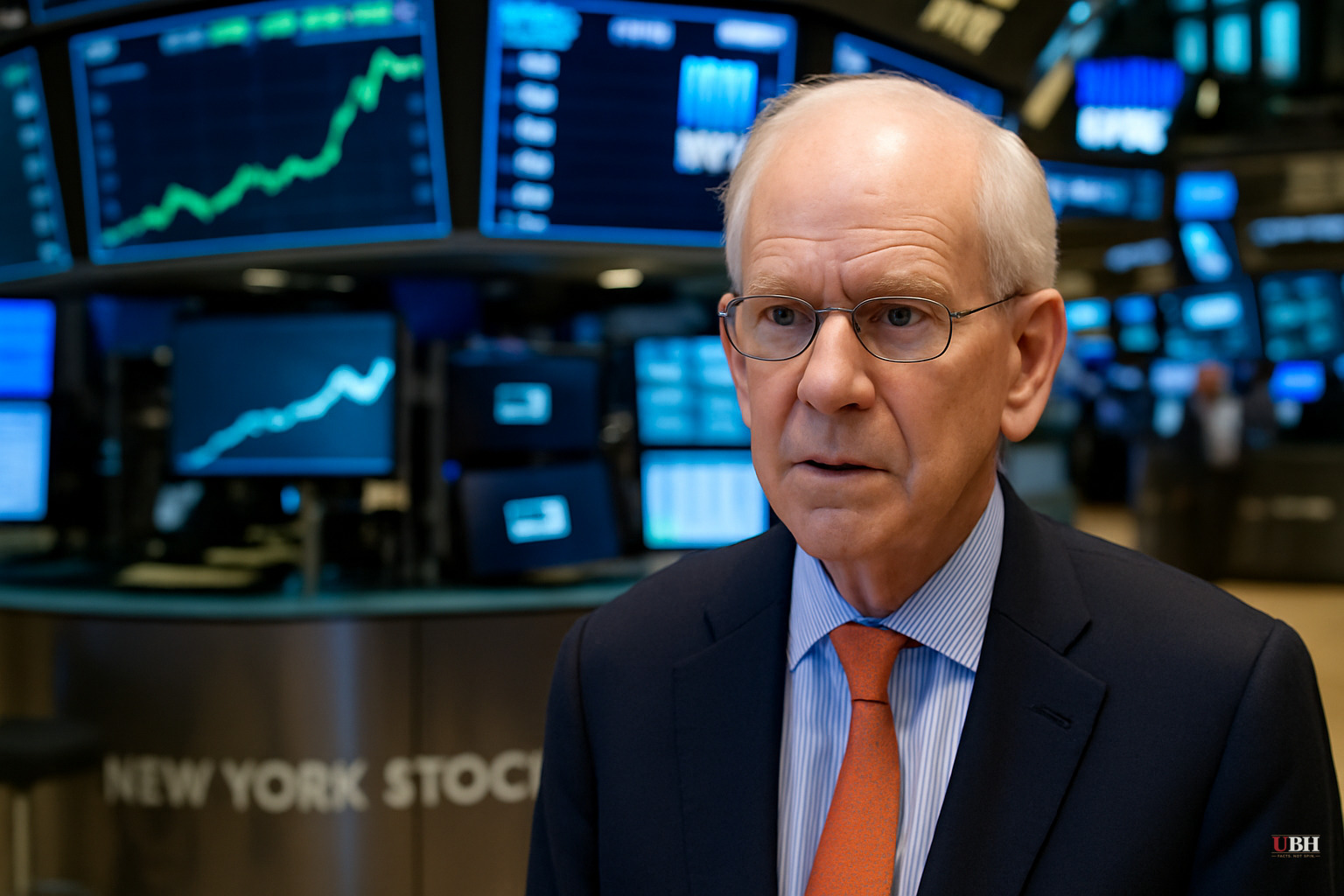
Jeremy Grantham Calls U.S. Market the Most Expensive in American History, Predicts Bitcoin Will Fade Over Decades
The Valuation Warning
Jeremy Grantham has been warning about overvalued markets for decades. Speaking on CNBC's Squawk Box, he delivered his strongest warning yet.
"Based on the value of the stock market compared to GDP, with modifications, this is the most expensive market in American history," Grantham told CNBC.
His benchmark: the market capitalization-to-GDP ratio, commonly called the Buffett Indicator, currently sitting at approximately 235%, according to data from Longtermtrends.com. The total value of U.S. publicly traded companies is more than double the size of the entire U.S. economy.
For context, Warren Buffett himself once wrote that when this ratio "approaches 200% — as it did in 1999 and a part of 2000 — you are playing with fire." The ratio is now meaningfully above that threshold.
Grantham pointed to the dot-com bubble of 2000 as the closest historical parallel, though he said he wasn't sure there was a truly comparable period.
The AI Factor
The driver, in Grantham's view, is artificial intelligence. He argued that AI has generated the kind of mass investor enthusiasm that historically accompanies speculative peaks, then precedes their collapse.
Grantham cited SpaceX as an example, referencing the privately held company's roughly $2 trillion valuation as emblematic of the speculative excess he sees in AI-adjacent investments. Grantham said historians may one day look back on peak valuations like SpaceX's as "one of the defining peaks of all time."
"It's the thing you see around the top," he told CNBC.
He drew a direct parallel to Amazon after the dot-com crash. Amazon shares fell 92% from their peak before the company recovered and eventually dominated global commerce. Even if a technology is genuinely transformative, the stock can still collapse spectacularly before it "inherits the earth."
The Bitcoin Obituary — Again
Separately on the same Squawk Box appearance, Grantham revisited his long-standing skepticism of bitcoin. His verdict was blunt: "useless, speculative" with no intrinsic value.
"Over years and years, decades and decades, it will dwindle away, I suspect — not with a bang, but a whimper," he said.
Grantham's specific criticisms: bitcoin hasn't outperformed during a bull market, nobody uses it for everyday commerce, and its volatility disqualifies it as a stable store of value. Grantham noted that bitcoin had "just halved … for no particular reason in a strong economy," referring to a significant drawdown he described during the interview.
He also contrasted bitcoin unfavorably with gold, which he said has delivered solid long-term gains even after pulling back from recent highs.
The Strongest Case Against Grantham
Grantham was right about the dot-com bubble, right about the 2008 housing crisis, and right about the 2021 speculative frenzy in meme stocks and SPACs. His analytical framework isn't crazy.
But his timing has repeatedly been off by years. In March 2024, he told GMO clients that "the long-run prospects for the broad U.S. stock market here look as poor as almost any other time in history." The market continued climbing after that warning. A bear call issued too early looks, in the interim, like a wrong call, even if the eventual outcome vindicates the analyst.
Bitcoin critics similarly have predicted its irrelevance for over a decade. According to the sources, bitcoin has crashed at least 70% from its peak in every cycle and recovered to new highs multiple times. Whether any given drawdown marks the beginning of Grantham's long fade or another cyclical trough cannot be determined in real time.
The structural bull case that Grantham largely dismisses: U.S. companies, especially the mega-cap tech names driving the market-cap-to-GDP ratio upward, generate a far larger share of global earnings than their predecessors did in 2000. A high ratio today may partly reflect genuine earnings power, not pure speculation. That's not a guarantee the market isn't overvalued, but a reason the ratio alone doesn't settle the argument.
What's Uncertain
Grantham himself acknowledged the central limitation of his own view: timing is "terribly uncertain." He said markets "could potentially peak" without specifying when.
That caveat matters enormously in practice. Investors who exited U.S. equities on his March 2024 warning missed significant gains. Being right about the direction of a crash while being wrong about the timing can be just as costly as being wrong about the direction.
The open question facing anyone weighing Grantham's warnings as of June 26, 2026: if the market-cap-to-GDP ratio at 235% is genuinely the most extreme reading in U.S. history, what catalyst closes that gap, and over what timeframe? Grantham doesn't have an answer. Neither does anyone else.
Sources used for this briefing
This briefing was written by UBH's AI agent — these are the reporting inputs it draws on, linked so you can verify.


