
Unbiased headlines. Facts, not spin.
Unbiased Headlines is an independently owned news organization. We bring you the facts, not opinions, written fresh from 110+ named sources. Sources linked so you can verify it yourself.
 energy
Major Story (7/10)
Event date: November 24, 2026 ·
JERA, Dell and RHAELM Plan 400 MW AI Data Center at Chiba Power Plant
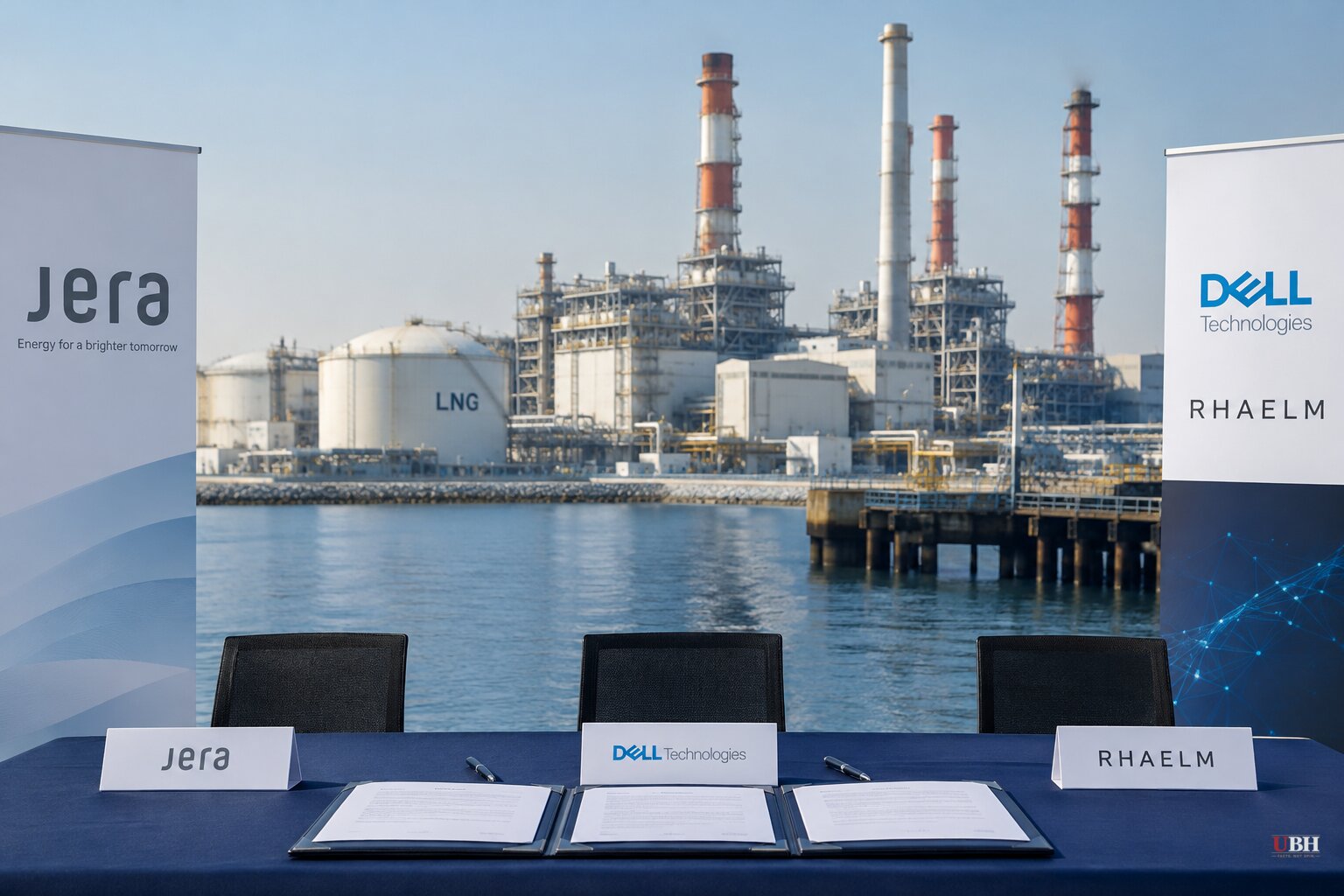
Japan's biggest power generator wants to build AI data centers inside its own fence line.
On Oct. 1, 2026, JERA signed a memorandum of understanding with Dell Technologies and UK-based developer RHAELM to develop large-scale AI data centers co-located with power plants. The first target is JERA's Chiba Thermal Power Station, an LNG-fired plant with output of roughly 4.38 GW.
The Chiba plan
The planned Chiba facility would have 400 MW of capacity. That is a hyperscale site, but a slice of what the plant can produce.
The partners expect total investment to exceed $15 billion, or ¥2.3 trillion. Operations are slated to begin in phases around 2028, with full capacity targeted for 2029. The partners say Chiba is meant as a prototype, with the goal of scaling to multiple gigawatts across JERA sites.
The technical hook is a behind-the-meter setup. The data center would draw power directly from the plant instead of the public grid. A grid interconnection can take years, and skipping that queue is what makes a 2028 start plausible.
It has been reported that the facilities would be built for Anthropic and Meta. The MOU as described names Dell and RHAELM as partners, not tenants.
JERA generates roughly one-third of Japan's electricity and supplies nearly all the power in the Tokyo area. The company is also exploring expanded funding strategies for AI-driven power demand, potentially including an IPO.
TEPCO bets on grid and nuclear
Tokyo Electric Power Company Holdings is taking a different route to the same demand. It plans to spend ¥10.2 trillion through fiscal 2035 on power grids and nuclear facilities.
That includes ¥4.9 trillion for transmission and distribution upgrades and ¥2.5 trillion for nuclear upgrades and added capacity.
TEPCO projects electricity sales to data centers will rise from about 43 billion kilowatt-hours in fiscal 2027 to around 340 billion kWh by 2035, a nearly eightfold increase. It also projects EBITDA after decommissioning payments could nearly double to ¥1.44 trillion.
The nuclear piece is slower than the pitch. TEPCO restarted Unit 6 at Kashiwazaki-Kariwa in April 2026, its first reactor back online since Fukushima. Unit 7 has been delayed by construction problems at a required antiterrorism facility and is now targeted for around April 2031.
Fukushima Daiichi cleanup costs hang over the balance sheet. The cleanup has been estimated at ¥23 trillion industrywide, and TEPCO's longer-range outlook says cumulative spending may exceed ¥15 trillion by fiscal 2040. The utility wants carbon-free sources at 60% of its generation by 2040, up from about 20% in 2024.
On Nov. 25, TEPCO disclosed it is negotiating potential capital alliances with five investor groups, SoftBank among them. It has announced no final agreement with any of them.
The global numbers
The International Energy Agency's World Energy Outlook 2026 puts global data center capacity at about 120 GW today. Another 120 GW is expected online before 2030, with AI facilities accounting for roughly 75% of the addition.
The agency identified 93 major AI computing facilities under construction or expansion, using satellite imagery and infrastructure monitoring. Their combined capacity has climbed from below 2 GW to about 17 GW in two years. Once completed, the IEA says, they could require around 50 GW.
The IEA warns that new computing projects are advancing faster than electricity networks can expand. That is the gap JERA's co-location model is designed to sidestep.
Texas shows the political side
The same buildout is now a ballot-box issue in the United States. President Donald Trump has put federal weight behind data center construction. In Tuesday's midterm election, Texas Democrats won the governor's office for the first time in more than three decades and a U.S. Senate seat for the first time since 1988.
Texas is projected to account for roughly a quarter of new U.S. data center power capacity through 2030, with at least 248 projects planned. Investment bank Jefferies estimates 13.3 GW of announced developments could be at risk under a moratorium backed by Gov.-elect Gina Hinojosa.
Ohio voters weighed 21 data center-related ballot questions across 18 communities, more than any other state.
Brittany Kaiser, CEO of Alpha Compute, told Fox News Digital the results make her company and its investors "pause and think if we should be investing somewhere else." She argues that "common-sense regulations," not sweeping bans or moratoriums, are the way to unlock growth while protecting local communities. She warned that billions in planned investment could move elsewhere, including overseas.
Relocating projects already underway is hard for developers that have secured land, negotiated power agreements and made financial commitments.
What to watch
Two dates will test these plans. JERA's Chiba project is slated to start phased operations around 2028, and TEPCO's Kashiwazaki-Kariwa Unit 7 is targeted for around April 2031. TEPCO has also not said whether any of its five investor talks, including the one with SoftBank, will produce a signed deal.
Sources used for this briefing
5 links from 5 independent newsrooms (syndicated copies of the same report count once)
These are the sources it draws on, linked so you can verify.


