
Unbiased headlines. Facts, not spin.
Unbiased Headlines is an independently owned news organization. We bring you the facts, not opinions, written fresh from 110+ named sources. Sources linked so you can verify it yourself.
 energy
Major Story (7/10)
Iran Truckers' Strike Enters Sixth Day, Union Reports Stoppages in at Least 18 Cities
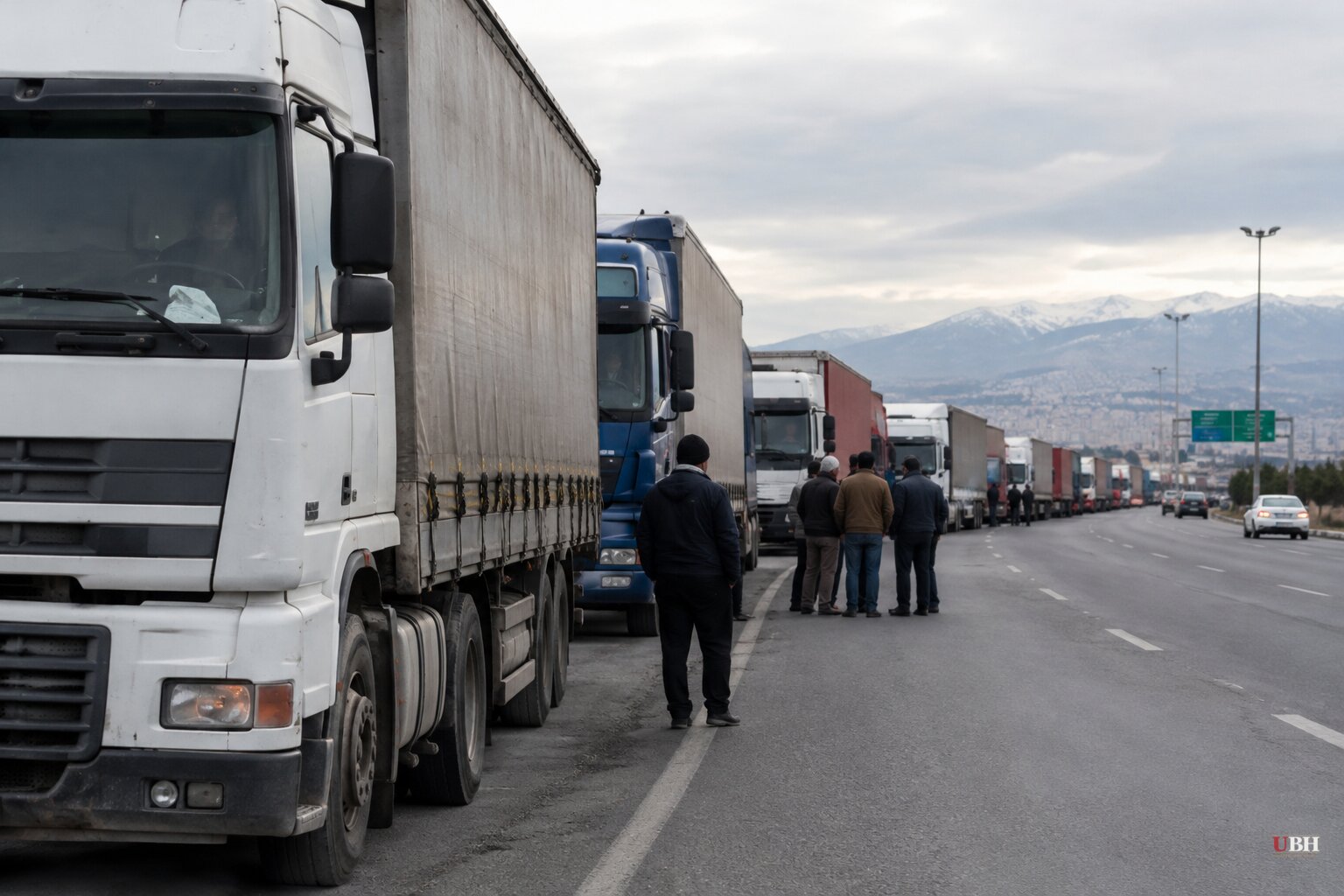
Iran's truck drivers have now been on strike for six days, and the central bank chief has publicly conceded the economic squeeze behind it.
The Union of Truck Drivers and Trucking Associations Across Iran called the strike on Saturday, Nov. 21, and drivers stopped work the next day. The union documented stoppages in at least 18 cities as of Thursday, Nov. 26. The opposition People's Mojahedin Organization of Iran (PMOI) claimed on Friday, Nov. 27, that at least 20 municipalities were affected, including Tehran, Shiraz, Isfahan, Qazvin, Bandar Abbas and Chabahar. Simaye Azadi, an opposition outlet, reported stoppages in 14 provinces.
Those numbers come from the union and from groups opposed to the government. Iranian authorities have not published their own count.
What the drivers say
The union's complaint is about math. Freight rates have stayed flat while the cost of engine oil, tires, spare parts, fuel, insurance and tolls has climbed.
"Tires are priced in dollars, oil is priced in dollars, diesel is priced in dollars," the union said in a statement Thursday. "So freight rates have to reflect reality too."
One driver told the union that 40 liters of engine oil and five filters now cost 620 million rials, roughly $230 at the free-market rate. Iran's minimum monthly wage in 2026 is about 166 million rials, or $62. That bill equals nearly four months of base pay.
Jalal Mousavi, deputy chairman of the national truckers' association, told domestic media that a pair of Chinese tires now runs 200 to 240 million tomans. Twenty liters of engine oil costs 22 million tomans on the open market.
"We went on strike because of these incompetent officials who do not care about the country or its people," one driver wrote to the union.
The numbers behind it
The Statistical Center of Iran puts year-on-year consumer inflation at 88.7% for the month ending Oct. 22. Food and beverage prices rose 112.6%.
The dollar is trading near 294,000 tomans, according to the NCRI, an opposition coalition. Central Bank Governor Abdolnaser Hemmati addressed the currency crisis today, Nov. 27. "We do not deny the decline in oil revenues and the difficulty of transferring foreign currency resources," he said, according to Tasnim.
Hemmati said the bank holds enough foreign currency banknotes to intervene but gave no reserve figures. He also warned government bodies against pushing the costs of their decisions onto the central bank and, in turn, onto ordinary people's purchasing power. Blaming sanctions, he said, cannot substitute for fixing domestic policy.
The strain extends beyond trucking. Iran International reports renewed electricity outages and long petrol queues in several cities. Ali Rabbani, an energy official at the National Petrochemical Company, told ILNA on Nov. 25 that daily gas deliveries to petrochemical complexes had dropped below 35 million cubic meters, less than half last autumn's average consumption.
Why trucks matter more now
The U.S.-Iran war began in late February after U.S.-Israeli strikes. Washington responded to Iran's attempts to halt Hormuz traffic with a blockade of Iranian ports, which remains in place. With sea trade restricted, Iran leans harder on overland freight, so a trucker walkout hits farms, groceries and factories directly. One driver told colleagues: "Produce markets will empty, ports will empty, and factories will come to a halt."
Global crude is not what is driving the strike. The International Energy Agency attributes recent falling oil prices to a recovery in Gulf exports. The truckers' complaint is about rial-denominated costs for dollar-priced inputs, along with falling Iranian oil income.
Political analyst Iman Aghayari told Iran International that continued protests could encourage other professions to join. He said authorities are trying to stop that through threats, inducements and repression.
There are signs of wider unrest. Iran News Update, which is aligned with the opposition, reports protests by retirees in Kermanshah, emergency medical staff and factory workers in Karaj. It also reports that demonstrators outside the governor's office in Qazvin were attacked with stun guns and tear gas. That account has not been independently confirmed.
The military backdrop
The pressure is building as Tehran escalates at sea. UKMTO, the Royal Navy-affiliated maritime monitor, logged more than 30 reported attacks in the Hormuz region in October, a wartime high, and at least 22 in November as of Nov. 22. UKMTO says its counts are likely low because many vessels will not report incidents. Iran's military claims near-daily incidents involving commercial ships and often blames sea mines rather than drones or missiles.
On Thursday, President Trump told U.S. troops on a Thanksgiving call that victory over Iran is "at hand" and that Tehran has "every chance to make a deal." Today, U.S. Central Command announced that U.S. forces disabled a commercial vessel trying to breach the blockade, and Tehran threatened military action from "the air and sea."
No government concession to the drivers has been announced. It is unclear whether Tehran can raise freight rates, or offer other relief, while its foreign-currency access shrinks as the strike heads into a second week.
Sources used for this briefing
7 links from 6 independent newsrooms (syndicated copies of the same report count once)
These are the sources it draws on, linked so you can verify.


