
Unbiased headlines. Facts, not spin.
Unbiased Headlines is an independently owned news organization. We bring you the facts, not opinions, written fresh from 110+ named sources. Sources linked so you can verify it yourself.
 energy
Major Story (7/10)
Australia's Parliament Passes 20% Gas Reservation Law, Exempts Western Australia and Gives No Savings Figure
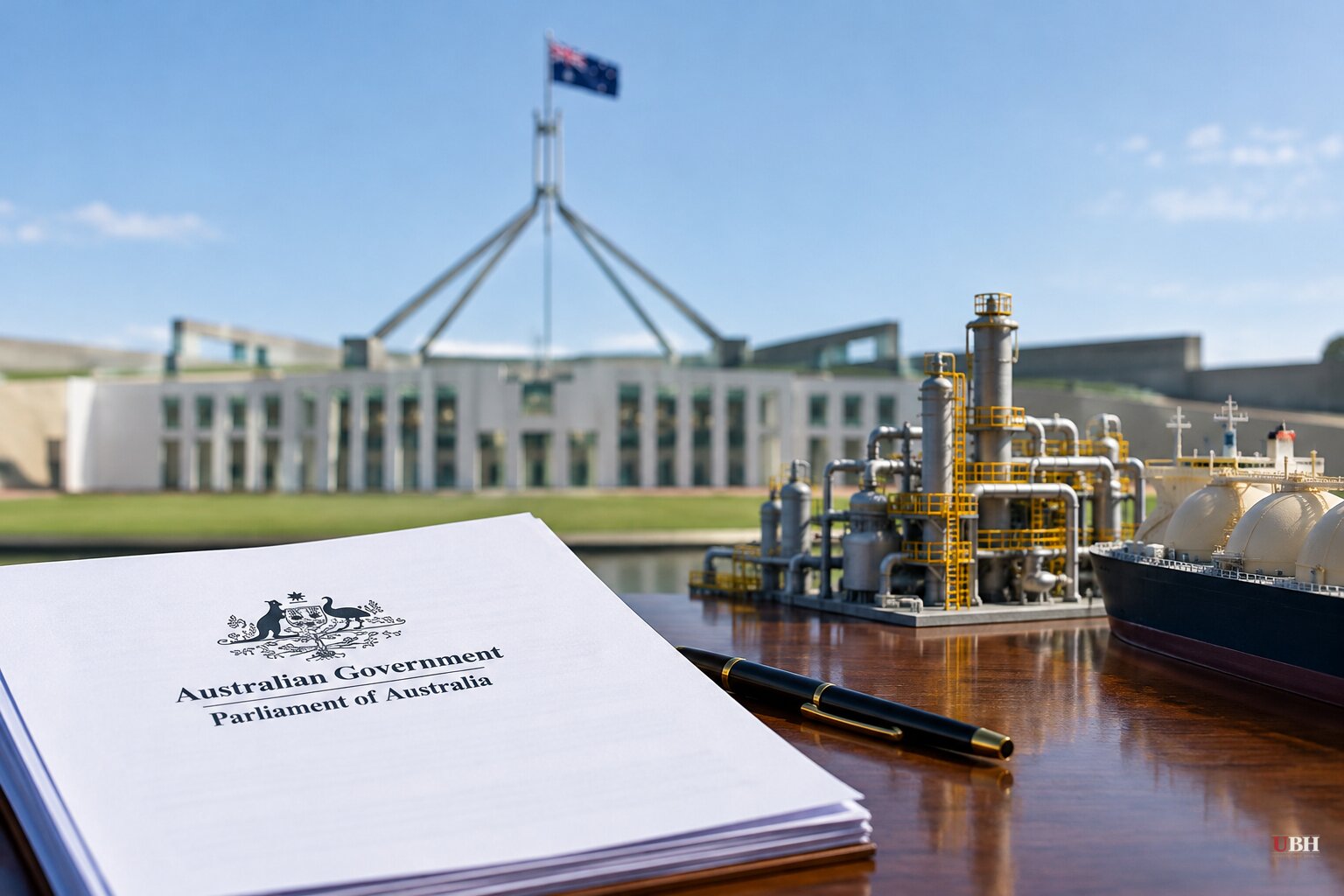
Since the Senate backed Labor's gas reservation bill 21-10 on Thursday, Nov. 26, the legislation has cleared its last hurdle. The lower house approved the amended package on Friday, Nov. 27, and the Department of Industry, Science and Resources confirms the three bills have passed Parliament.
The scheme requires LNG exporters to hold an export licence. That licence carries a domestic supply obligation of up to 20% of annual export volumes. The obligation applies from Jan. 1, 2028. The export licensing framework is intended to start Jan. 1, 2027.
The package has three parts: the Domestic Gas Reservation Bill 2026, the Domestic Gas Reservation Levy Bill 2026 and a Consequential Amendments Bill. The Australian Energy Regulator will administer it. Licence decisions sit with the Resources Minister, in consultation with the Industry Minister and in agreement with the Climate Change and Energy Minister.
Coalition support, Western Australia carve-out
The Senate vote came late Thursday after the Liberal-National Coalition said it would not block the bill. That followed Labor's decision last week to exempt Western Australia.
Shadow resources minister Susan McDonald told the Senate: "We will allow the government's proposal to move forward because we do believe in a domestic gas reservation and more gas being made available to Australia."
Labor gave Western Australia a permanent carve-out after lobbying from the federal Coalition and state Premier Roger Cook. The state accounts for a majority of Australia's LNG output, though the sources differ on the exact share. It has run its own 15% reservation policy since 2008 and is not connected to the east coast gas market, where supply is falling and demand is highest.
The Greens' bid for a 25% tax on exports was rejected, according to Guardian Australia.
Three east coast LNG projects, operated by Origin Energy, Shell and Santos, fall under the scheme. They export mainly to China, Japan, South Korea and Malaysia.
No price target
Albanese said the law would put "downward pressure" on prices for households and businesses. He did not say by how much.
King explained why. "We don't want to set a figure at this time because the experience with price caps when you name a figure is that also becomes the floor, the lower price," she said.
Industry Minister Tim Ayres called the law "fundamental economic reform" and said: "This is not an export ban, nor is it an export cap. It is a predictable and proportional contribution to domestic supply."
The government kept its requirement that gas companies oversupply the domestic market by 10%, which Guardian Australia identified as the main sticking point between Labor and the Coalition.
Industry objects, others want more
Australian Energy Producers rejected the premise. Chief executive Samantha McCulloch said the scheme "will destroy investment signals for new gas supply, crowd out domestic-focused producers, and ultimately increase the risk of higher prices and less reliable energy for Australian households, manufacturers and businesses."
The Business Council of Australia supports reservation but has reservations about execution. Chief executive Bran Black said success depends on whether it "supports investment in new supply, puts downward pressure on energy costs and maintains our reputation as a reliable trading partner." The council has called for a review once the obligation starts.
The Institute for Energy Economics and Financial Analysis welcomed the scheme but called it long overdue. Lead gas analyst Joshua Runciman said the Western Australia exemption leaves that state's gas users "facing continuing shortages" because its exporters are "well behind on their domestic supply obligations."
The state's own numbers back part of that. Cook said in August that the share of LNG delivered domestically was 8.7% in 2021 and 12.5% by 2025, still short of the 15% target. Western Australia's rule is measured over the life of a development, so companies can deliver the gas at any point.
The Queensland Government argued the carve-out would put an unfair burden on its own producers.
What comes next
The east coast market has struggled with tight supply and high prices for a decade as mature fields off Victoria decline. Some LNG producers have bought domestic production to meet export commitments. This year Qatar supply disruptions sent global LNG prices sharply higher.
The first test comes on Jan. 1, 2027, when the licensing framework is meant to begin. The Business Council has asked for a review once the obligation takes effect in 2028. By then the government will have been asked to name the savings it promised.
The government has set no price target, and exporters are telling ministers the scheme could reduce the supply it is meant to protect.
Sources used for this briefing
7 links from 7 independent newsrooms (syndicated copies of the same report count once)
These are the sources it draws on, linked so you can verify.


