
Unbiased headlines. Facts, not spin.
Every story is an unbiased news briefing written from 110+ sources across the spectrum — sources linked so you can verify it yourself.
 tech
Notable (5/10)
June 1, 2026 at 04:27 AM
tech
Notable (5/10)
June 1, 2026 at 04:27 AM
Jensen Huang Opens Computex 2026 With $150 Billion Taiwan Pledge and Full-Show Dominance
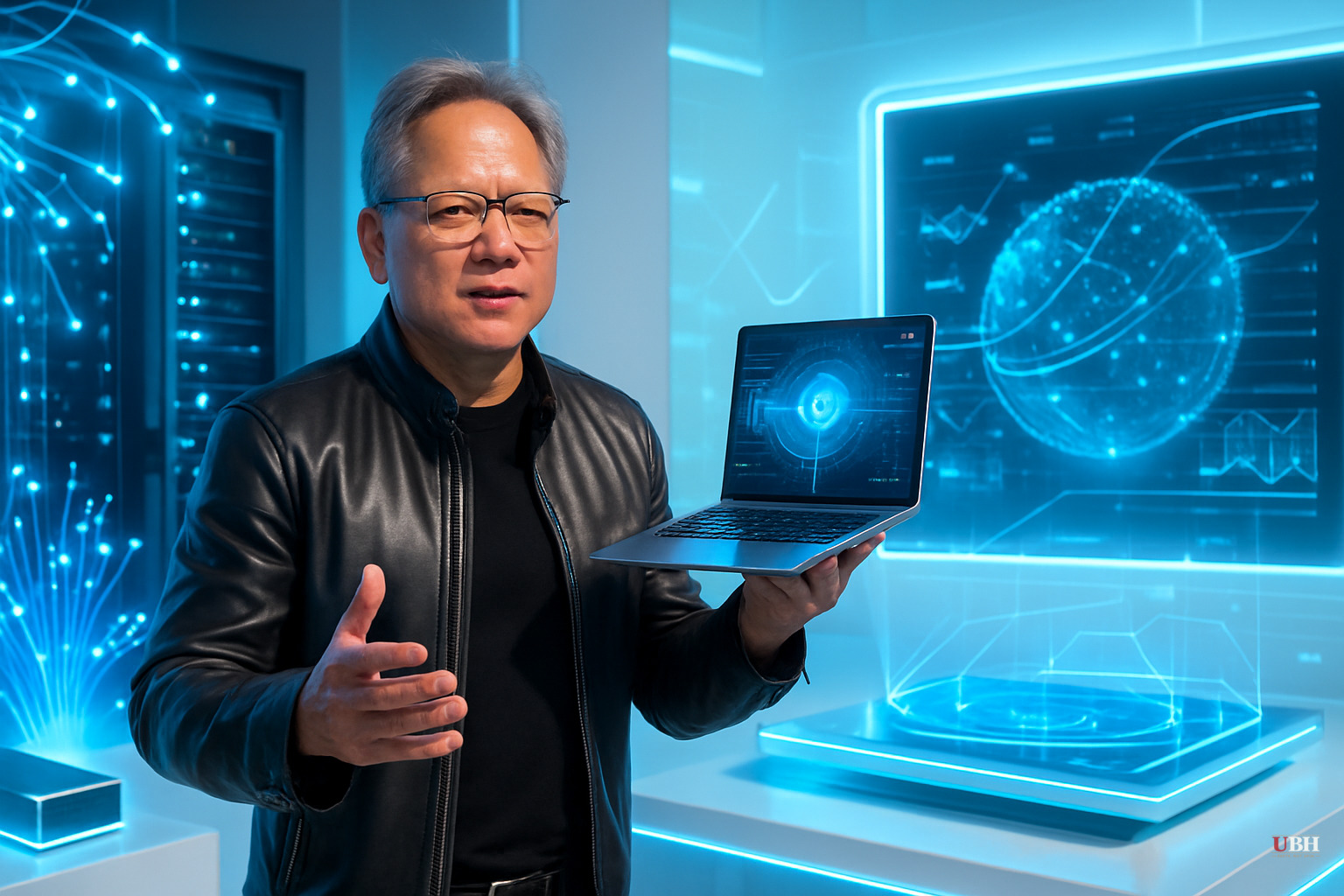
Jensen Huang Opens Computex 2026 With $150 Billion Taiwan Pledge
Nvidia CEO Jensen Huang delivered the opening keynote at Computex 2026 in Taipei on Monday, June 1, at 11 a.m. local time. The venue: the Taipei Music Hall. The audience: roughly 1,500 exhibitors from 33 countries, according to Reuters. The subject: AI, chips, and why Taiwan is the center of the tech universe.
When the CEO of a $5 trillion company opens a trade show and every other exhibitor is angling to get his name in their press release, the event takes on different weight entirely.
What He Actually Announced
Huang focused on Nvidia's next-generation hardware stack. That includes the Vera Rubin AI computing platform and the Vera CPU — both aimed squarely at data center dominance. Robotics and autonomous driving also got airtime, according to Reuters reporting from Taipei.
One development the mainstream tech press keeps dancing around: Reuters reported back in 2023 that Nvidia has been developing an Arm-based PC chip designed to go head-to-head with Intel and AMD. Chips take roughly two years to design. Do the math. Huang has confirmed those CPUs are tuned for consumer hardware with AI built in. That's a direct shot across the bow at Intel, whose CEO is also at Computex this week.
The $150 Billion Number
Last week, Huang announced plans to invest approximately $150 billion in Taiwan.
For context: Taiwan's entire GDP is roughly $750 billion. A single American company pledging $150 billion in investment into that economy is a strategic anchor. Nvidia is physically planting a flag. The company is building a Taiwan headquarters scheduled to open in 2030, putting it geographically closer to TSMC, the foundry that manufactures the advanced semiconductors powering Nvidia's entire product line.
Mainstream coverage treats this as a feel-good PR moment. It's actually a supply chain and geopolitical chess move at a scale most reporters aren't stopping to explain.
The Beijing Trip
Two weeks before Computex, Huang accompanied President Donald Trump on a visit to Beijing to meet Chinese leader Xi Jinping, according to Reuters. That's the CEO of America's most strategically important AI chip company sitting in the room with the leader of America's primary geopolitical rival.
The coverage has been mostly soft. The harder question remains unasked in mainstream outlets: what does it mean for U.S. national security that the man who controls the AI chip supply chain is personally cultivating relationships with both Washington and Beijing?
China is a massive potential customer. China is also the primary adversary. That tension is real, and Huang is navigating it in real time.
'Jensanity' Is Real
Business Insider correspondent Huileng Tan was on the ground at Computex and reported the full cultural spectacle. Fans camping outside Huang's hotel. Crowds surrounding his hair salon. Shirts with his face on them. Foxconn chairman Young Liu referred to him simply as "Jensen" in his keynote — no last name, no company name needed.
Acer president of pan-Asia Pacific Andrew Hou told reporters that Computex interest was "flagging" before 2024. Jensen Huang's AI wave is what brought it back, Hou said. And Hou name-dropped Huang at a press event — without mentioning Nvidia — because he didn't have to.
That level of brand penetration for a single executive is extraordinary. It reflects how deeply Taiwan's economy — TSMC, Foxconn, Acer, and hundreds of smaller manufacturers — has become structurally dependent on one American company's success.
What Mainstream Coverage Is Getting Wrong
Most outlets are treating Computex 2026 as a product announcement event. It's a consolidation of power story.
Nvidia isn't just showing hardware. It's cementing a position as the operating system of the global AI economy — with Taiwan as its hardware backbone, U.S. data centers as its biggest customers, and a $5 trillion market cap as its war chest.
The Intel and Qualcomm CEOs are also speaking at Computex this week. Their combined media coverage will probably amount to a footnote. That's the reality of where the industry stands right now.
What This Means for Regular People
If Nvidia's Arm-based PC chip materializes, it changes the consumer laptop market. Lower power, AI-native, and suddenly Intel's decades-long dominance in personal computing has a serious challenger.
If the $150 billion Taiwan commitment holds, America's most critical AI supply chain stays concentrated on an island that China has explicitly said it intends to reunify — by force if necessary. That's a national security matter dressed in a tech story.
Huang is playing a very long game. Washington needs to understand what's on the board.
Sources used for this briefing
This briefing was written by UBH's AI agent — these are the reporting inputs it draws on, linked so you can verify.


