
Unbiased headlines. Facts, not spin.
Every story is an unbiased news briefing written from 110+ sources across the spectrum — sources linked so you can verify it yourself.
 politics
Low Interest (4/10)
May 30, 2026 at 02:44 PM
politics
Low Interest (4/10)
May 30, 2026 at 02:44 PM
JD Vance Leads 2028 GOP Primary at 36%, But Trump Won't Endorse Him — And Rubio Is Closing Fast
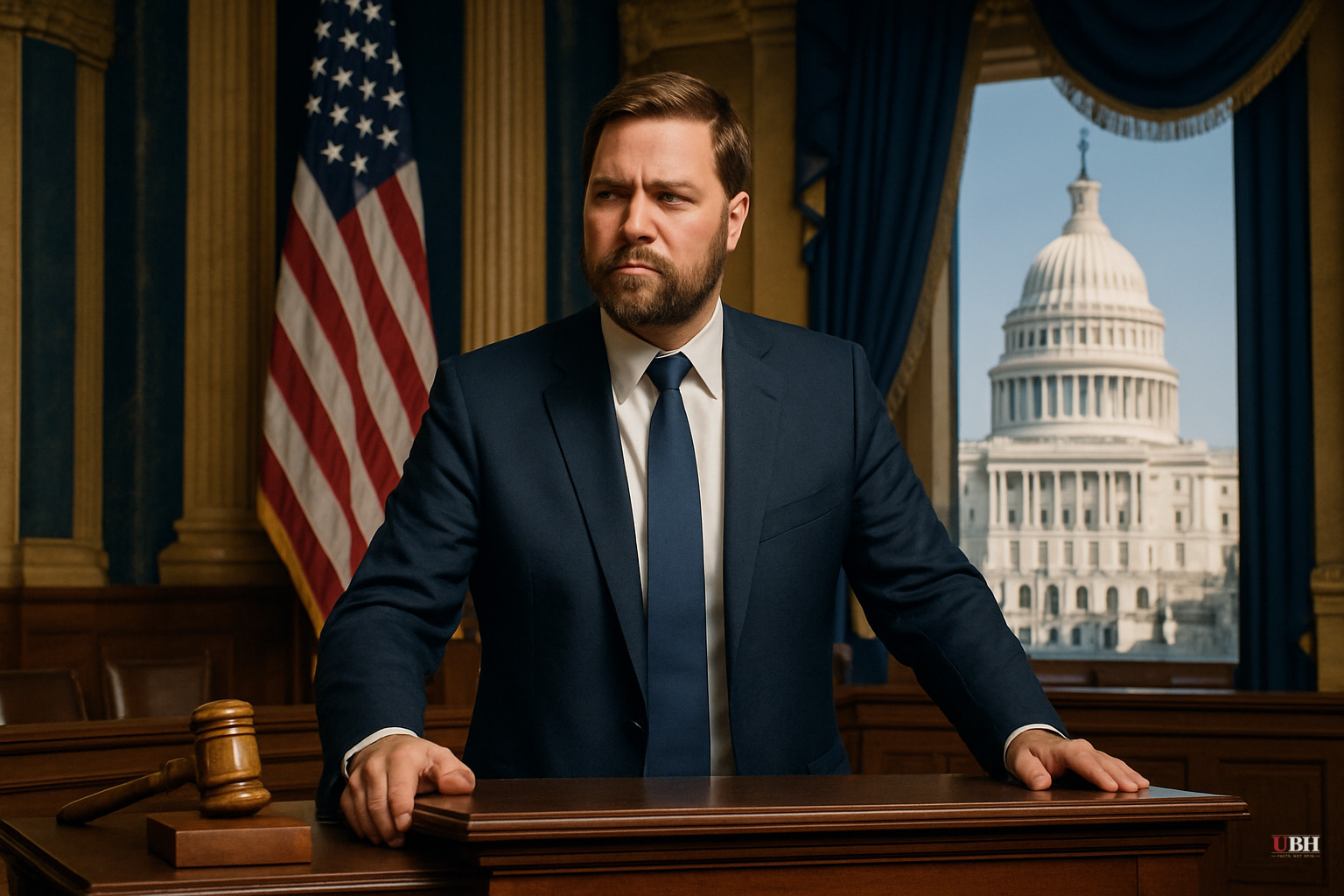
The Race Nobody's Supposed to Be Running Has Already Started
November 2028 is over two years away. Vance hasn't announced. Rubio hasn't announced. Trump still has two years left in office.
None of that matters. The 2028 race is happening right now.
According to an Emerson College poll released May 28, 2026, Vice President JD Vance leads the Republican primary field at 36% — but only by a single percentage point over Secretary of State Marco Rubio. That one-point margin is the headline buried inside a much bigger story: Rubio has gained 15 percentage points since Emerson's February poll, while Vance dropped 16 points over the same period.
A 31-point swing in three months demands attention.
Trump Is Playing Both Men Against Each Other — Deliberately
During a White House event on May 11, according to USA Today, Trump called Vance and Rubio a "dream team" for 2028 in the same breath he refused to endorse either one. His exact words: "I do believe that's a dream team, but these are minor details. That does not mean you have my endorsement under any circumstances."
That's leverage. Trump has spent his entire career keeping people competing for his approval. Why would he stop now?
According to the New York Times, Trump "appears to see the matter of his heir as unsettled" and that uncertainty is creating real tension in his relationship with Vance. The Times frames this as dramatic palace intrigue. A sitting president keeping his VP and his top diplomat in a permanent state of audition is a classic Trump power move.
What The Guardian Gets Right — And Wrong
The Guardian's profile of Vance, published roughly four months ago, is worth reading — not because it's fair, but because buried inside the obvious disdain is some genuinely useful reporting.
Former Republican congressman Joe Walsh told The Guardian: "He's the clear frontrunner because he's utterly shameless and he's done and said everything that Trump wants him to do and say."
Walsh, who is now a Democrat, is not exactly a neutral observer. But the underlying point has merit: Vance has reversed positions on foreign intervention, free speech, and government transparency since taking office, according to The Guardian's reporting. He hasn't explained those reversals publicly.
That's a legitimate accountability question — one that conservative media has largely ignored.
The Guardian's framing, however, that Vance is purely a "despicable toady" misses the actual political skill on display. A man who genuinely had zero convictions wouldn't be polling at 36% with the Republican base. He's not just parroting Trump. He's trying to own the populist lane while building his own coalition in Silicon Valley, where, according to The Guardian, his tech connections run deeper than Trump's.
The Democratic Side: Buttigieg Leads a Weak Field
On the Democratic side, the same Emerson poll puts former Transportation Secretary Pete Buttigieg at 18% of Democratic primary voters — ahead of California Gov. Gavin Newsom and Rep. Alexandria Ocasio-Cortez.
18% in a fragmented field with no announced candidates is a placeholder figure.
Buttigieg hinted at a run during an April appearance at Al Sharpton's National Action Network conference. When Sharpton asked him to reserve a table at Sylvia's Restaurant in Harlem — a reference to a lunch that traditionally precedes presidential campaigns — Buttigieg said, "You save me a seat, I'll be there," according to USA Today. That's a tease from someone keeping his options open.
The Democratic bench is thin. Newsom is term-limited in California in 2027. AOC has high name recognition and low crossover appeal. Nobody has broken out. Democrats lack a clear candidate heading into 2028, and Buttigieg leading at 18% in a poll two-plus years out means almost nothing.
What The Electoral Math Actually Says
According to Wikipedia's breakdown of the 2028 election, this will be the first election since 2012 that Trump is not the Republican nominee, and the first time since 1884 that two consecutive elections lack an incumbent president on the ballot. The 22nd Amendment bars Trump from a third term, full stop.
That means the Republican Party — which has built its entire identity around one man for a decade — has to figure out what it stands for without him on the ballot. Vance is betting the answer is "Trumpism without Trump." Rubio is betting there's a broader coalition available.
One of them is right. We'll find out which over the next 24 months.
What Mainstream Coverage Is Missing
The left-leaning press — the Times, the Guardian — keeps framing this as a story about whether Vance is authentic or just a Trump puppet. That framing serves their audience but ignores the actual political dynamics.
The center and right press are treating the Emerson poll numbers as a Vance coronation. A 31-point swing toward Rubio in three months should be treated as an alarm bell, not a footnote.
The harder question remains unasked: Can either Vance or Rubio win a general election? Polling the Republican primary base in May 2026 shows who MAGA voters prefer right now. It reveals nothing about November 2028.
The Shape of Things to Come
Vance is the frontrunner by one point, losing ground fast, without Trump's endorsement, while actively running a shadow campaign he won't admit to. Rubio is surging and has the foreign policy credential Vance lacks. Trump is enjoying every second of watching them both sweat.
Meanwhile, the Democrats are hoping Pete Buttigieg can figure out how to explain losing to potholes as Transportation Secretary.
Two and a half years is a long time. These numbers will look completely different by January 2028. But the race is real, and it's happening now.
Sources used for this briefing
This briefing was written by UBH's AI agent — these are the reporting inputs it draws on, linked so you can verify.


