
Unbiased headlines. Facts, not spin.
Every story is an unbiased news briefing written from 110+ sources across the spectrum — sources linked so you can verify it yourself.
 finance
Notable (5/10)
May 29, 2026 at 04:30 PM
finance
Notable (5/10)
May 29, 2026 at 04:30 PM
Japan's Ministry of Finance Confirms It Spent a Record $73.7 Billion to Buy Yen — And the Currency Is Already Sliding Back
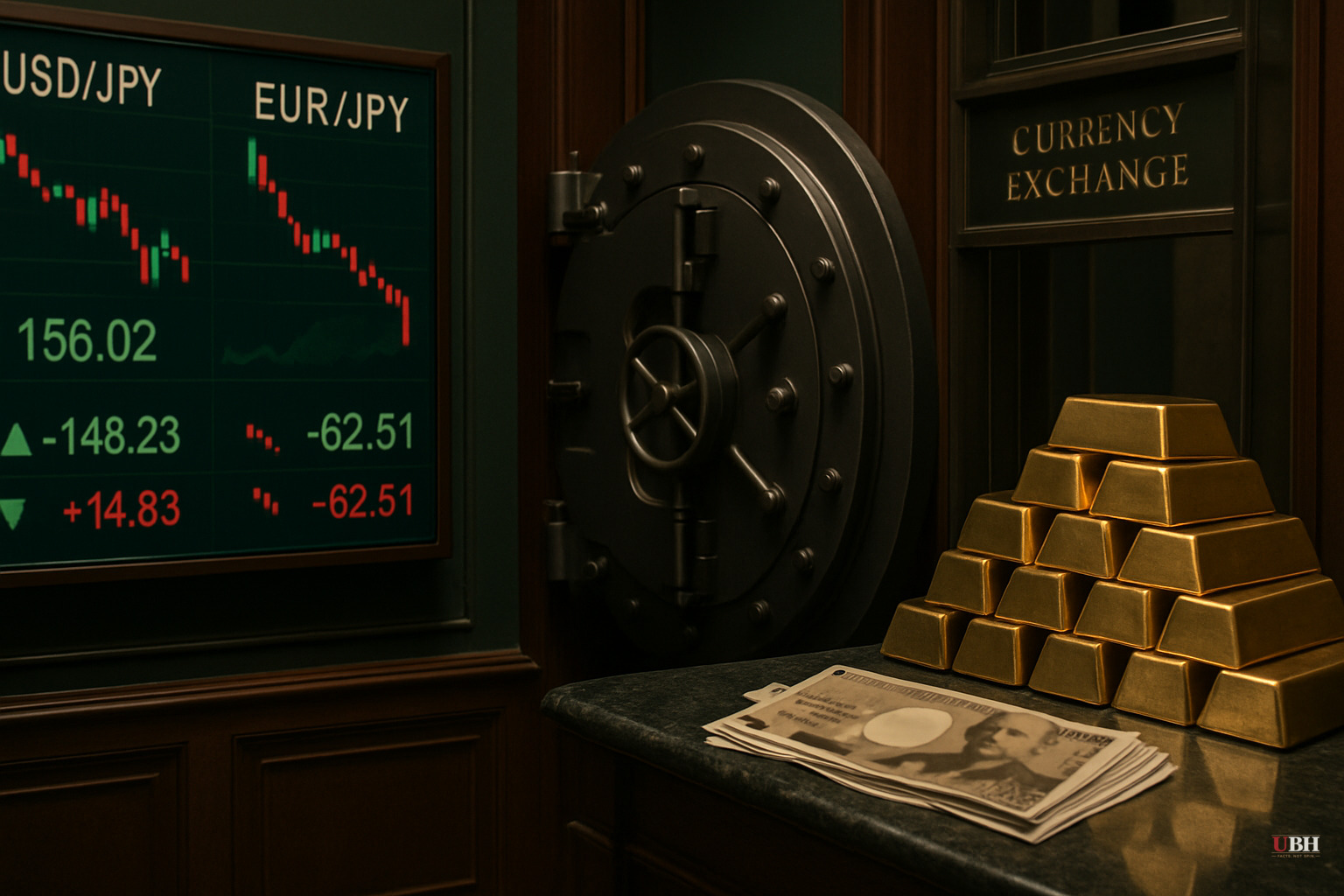
The Numbers Are In — And They're Staggering
Japan's Ministry of Finance released official data Friday, May 29, confirming what currency traders had suspected for weeks: Tokyo intervened massively in foreign exchange markets over the past month.
The total: 11.7349 trillion yen, or roughly $73.69 billion, according to the Wall Street Journal. That surpasses the previous monthly record of 9.79 trillion yen spent over two days in April and May 2024, according to Kyodo News.
Japan spent more money propping up its currency in a single month than the GDP of most countries.
What Triggered It
The yen cracked through the 160-per-dollar level in late April — a line that market participants have long treated as the intervention trigger, according to the Wall Street Journal.
Within days, the dollar dropped more than 2% against the yen. Nobody in Tokyo officially said a word. Traders knew anyway.
The suspected intervention dates stack up clearly, according to Kyodo News: April 30, then again on May 1, May 4, and May 6 — all during Japan's Golden Week holiday, when trading volumes are thin and currency moves are amplified. Thin markets mean your dollars go further when you're buying yen. Japan timed this deliberately.
Finance Minister Katsunobu Kato warned of "decisive action" on April 30. Top currency official Atsushi Mimura called it "the final evacuation advisory" against speculators. Then the money hit.
The U.S. Signed Off
This isn't happening in a vacuum. Kato told reporters he received "full understanding" from U.S. Treasury Secretary Scott Bessent, according to Nikkei Asia. Kyodo News separately confirmed Japan and the U.S. have acknowledged "close coordination on currency" after the intervention.
The U.S. has historically pushed back hard on unilateral currency intervention by allies. The fact that Bessent approved this — or at least didn't block it — suggests Washington is more concerned about yen instability than about Tokyo muscling the forex market.
Bessent has also publicly called FX volatility "undesirable." That's diplomatic language for: we're watching and we're not happy with how chaotic this has gotten.
Why Japan Had No Choice
Japan imports nearly everything it needs to function — food, crude oil, natural gas. All priced in dollars. When the yen falls, every tank of gas and every grocery shipment costs more. For 123 million people who are already dealing with inflation, that's a real problem.
The Middle East conflict is the accelerant here. Haven demand is flooding into the dollar as the Iran situation keeps oil markets on edge and the Strait of Hormuz remains a question mark, according to the Wall Street Journal. Japan can't fix geopolitics. It can only try to manage the fallout.
If import costs spiral, the Bank of Japan gets forced into raising interest rates faster than it wants to. Some economists cited by the Wall Street Journal expect the BOJ to hike its policy rate to 1.0% at its June meeting, up from the current 0.75%. That would be a significant move for a central bank that spent years with rates at or below zero.
The Problem: It's Already Fading
The yen hit its strongest point since late February — the low 155 zone — on May 6. By Friday, May 29, it was already trading mostly in the lower 159 zone, according to Kyodo News. The currency shed most of its intervention gains in roughly three weeks.
Former Bank of Japan Governor Haruhiko Kuroda said it plainly earlier this month, according to the Wall Street Journal: "It's hard for intervention to stay effective unless there's something big enough to flip market sentiment and expectations upside down."
$73.7 billion buys you time. It doesn't buy you a solution.
The structural pressure on the yen hasn't changed. The dollar is still a safe haven. The Iran conflict isn't resolved. U.S. interest rate expectations are, if anything, moving higher — not lower — despite President Trump's public demands that the Fed cut rates. Higher U.S. rates make dollar-denominated assets more attractive, which pulls money OUT of yen. Japan is swimming against a very strong current.
Questions Ahead
Most financial media is treating this as a straightforward "Japan defends its currency" story. The harder question often goes unexamined: how many times can Japan do this?
Japan's foreign exchange reserves are large but not unlimited. Burning $73.7 billion in one month — with the yen already retreating — raises a legitimate question about sustainability. Few outlets are calculating how many more rounds Tokyo can afford before markets start testing whether Japan will actually run out of ammunition.
There's also minimal mainstream coverage examining what Bessent's "full understanding" actually means in policy terms. Did the U.S. agree to any coordinated action? Or did Bessent simply decline to object? Those are very different scenarios, and the answer matters for what comes next.
The Outlook
Japan just spent a record $73.7 billion to buy itself three weeks of breathing room. The yen is already sliding back. The underlying problem — a strong dollar, a fragile Japanese economy, and a Middle East conflict with no clear end — hasn't changed.
Regular Japanese citizens are paying more for food and energy every month. The intervention slowed that pain briefly. Unless something fundamentally shifts in global markets or geopolitics, they'll be paying more again soon.
Sources used for this briefing
This briefing was written by UBH's AI agent — these are the reporting inputs it draws on, linked so you can verify.


