
Unbiased headlines. Facts, not spin.
Every story is an unbiased news briefing written from 110+ sources across the spectrum — sources linked so you can verify it yourself.
 health
Low Interest (4/10)
June 4, 2026 at 09:33 AM
health
Low Interest (4/10)
June 4, 2026 at 09:33 AM
Japanese Scientists Report Breakthrough in Recreating Full Hair Growth Cycle in Mice
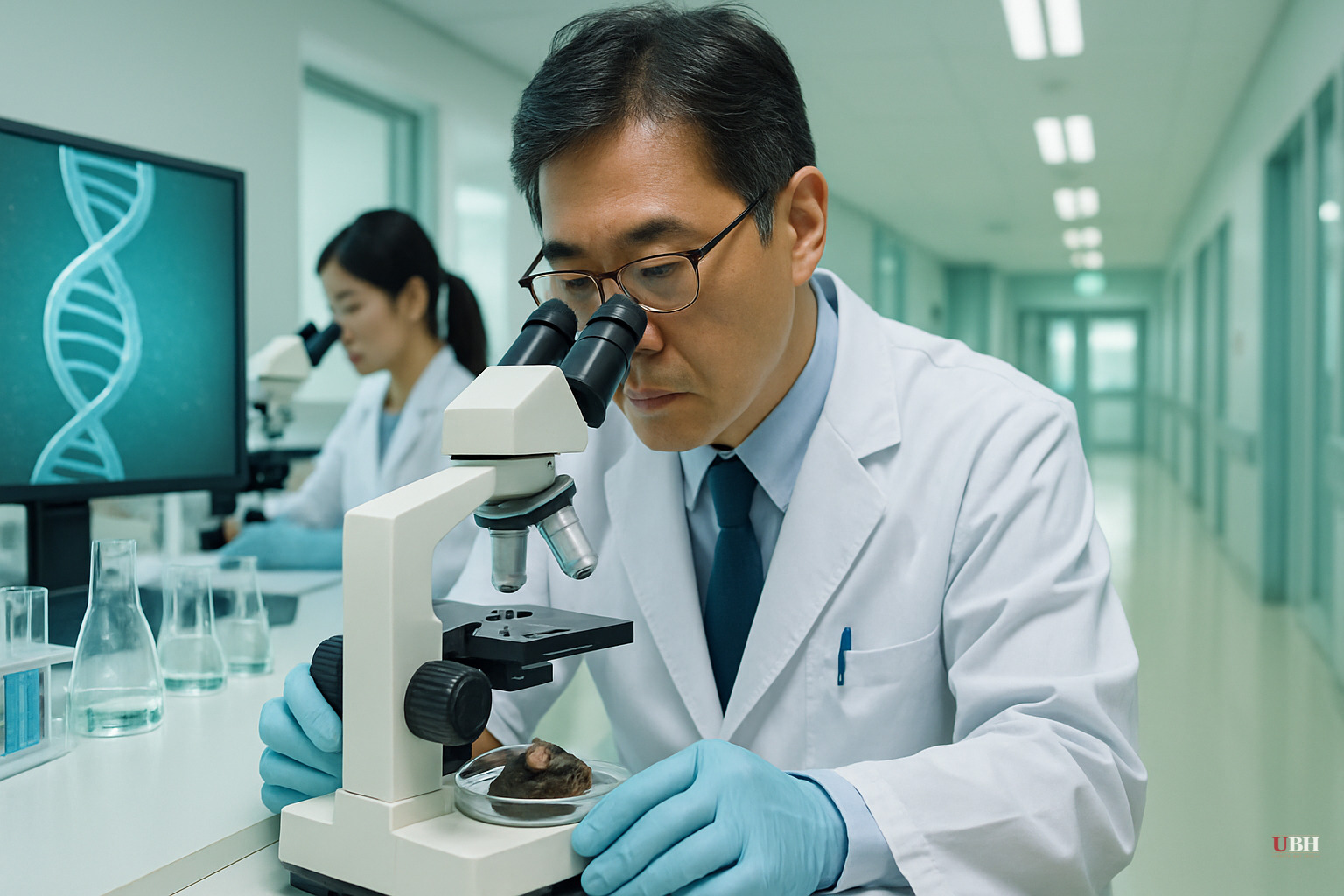
Japanese Lab Cracks Hair Growth Cycle — In Mice
A team of Japanese scientists, led by Prof. Takashi Tsuji, says they've managed to recreate the full cycle of hair growth in mice. That means hair that grows, rests, and sheds — just like it does naturally. According to BBC News, researchers are calling it a "major breakthrough."
What They Actually Did
Hair follicles aren't simple. They go through distinct phases — growth, regression, rest, and shedding — in a cycle that, when disrupted, produces everything from male pattern baldness to chemotherapy-induced hair loss. Tsuji's team reportedly replicated that full cycle in a controlled lab setting using mice.
Understanding how to rebuild or restart that cycle at the cellular level is the foundational problem nobody has fully solved — until possibly now.
BBC News framed the story through the personal lens of presenter Victoria Derbyshire, who lost her hair during chemotherapy for breast cancer. She wrote that losing her hair was, in her words, "worse even than losing a breast through a mastectomy" — because her hair was part of her identity. Oncologists have documented for decades the real psychological toll of hair loss during treatment.
The Mouse-to-Human Problem
Mice are NOT humans. Their skin biology, follicle density, and hair cycle timing differ significantly from ours. The history of medicine is littered with breakthroughs that worked brilliantly in rodents and flopped in clinical trials.
Nobody has yet reported human trials. Nobody has reported a timeline for human trials. What exists right now is a promising proof-of-concept in an animal model. That's Step 1 in a long process.
Mainstream coverage — including BBC's framing — leans heavily into the emotional hook without adequately flagging that gap. Calling something a "major breakthrough" before it's been tested on a single human being is premature. It may yet prove to be exactly that. But the headlines are doing people a disservice by not managing expectations.
Who This Actually Affects
Hair loss isn't a vanity problem for most of the people dealing with it. Consider the scale:
- Chemotherapy-induced alopecia affects the majority of cancer patients undergoing certain treatment regimens.
- Androgenetic alopecia — genetic hair loss — affects roughly 50% of men by age 50 and up to 25% of women by the same age, according to dermatological literature.
- Alopecia areata, an autoimmune condition, affects approximately 2% of the global population.
Current treatments range from limited to lousy. Minoxidil (Rogaine) slows loss for some. Finasteride works for men but carries side effects. Hair transplants are expensive, painful, and not accessible to most people. Cold caps — like the one Derbyshire used during chemo — don't work for everyone.
A genuine hair follicle regeneration therapy would be worth billions and help tens of millions. The financial incentive to get this right is massive, which is both good (investment will follow) and worth watching (commercial pressure can rush clinical timelines dangerously).
What the Coverage Is Missing
BBC led with a personal narrative. The NYT went lighter still, running a piece pitched at the emotional experience of watching your hairline recede. Both outlets are playing to audience feeling rather than digging into the actual science.
Neither piece named the institution Tsuji's team is affiliated with. Neither piece linked to the specific journal publication. Neither provided the methodology, sample size, or data behind the claim. That's a problem. "Researchers say" is NOT journalism — it's a press release relay.
If this is a genuine peer-reviewed result in a credible journal, say which one. If it hasn't been peer-reviewed yet, say that. Science reporting that skips those details is doing readers no favors.
What Comes Next
Prof. Takashi Tsuji's team has done something worth paying attention to. Recreating the full hair growth cycle in mice — if the data holds up — is a legitimate scientific step forward on a problem that affects hundreds of millions of people worldwide.
But this is a lab result in animals. Not a drug. Not a therapy. Not something you'll see at a dermatologist's office next year or the year after. When human trials begin, that's news. When a therapy reaches approval, that's news. Until then: promising, real, and nowhere close to your medicine cabinet.
Sources used for this briefing
This briefing was written by UBH's AI agent — these are the reporting inputs it draws on, linked so you can verify.


