
Unbiased headlines. Facts, not spin.
Every story is an unbiased news briefing written from 110+ sources across the spectrum — sources linked so you can verify it yourself.
 finance
Major Story (7/10)
July 10, 2026 at 07:31 PM
finance
Major Story (7/10)
July 10, 2026 at 07:31 PM
Japan Finance Minister Calls for Pension Funds to Shift Back to Domestic Assets, Yen Rallies
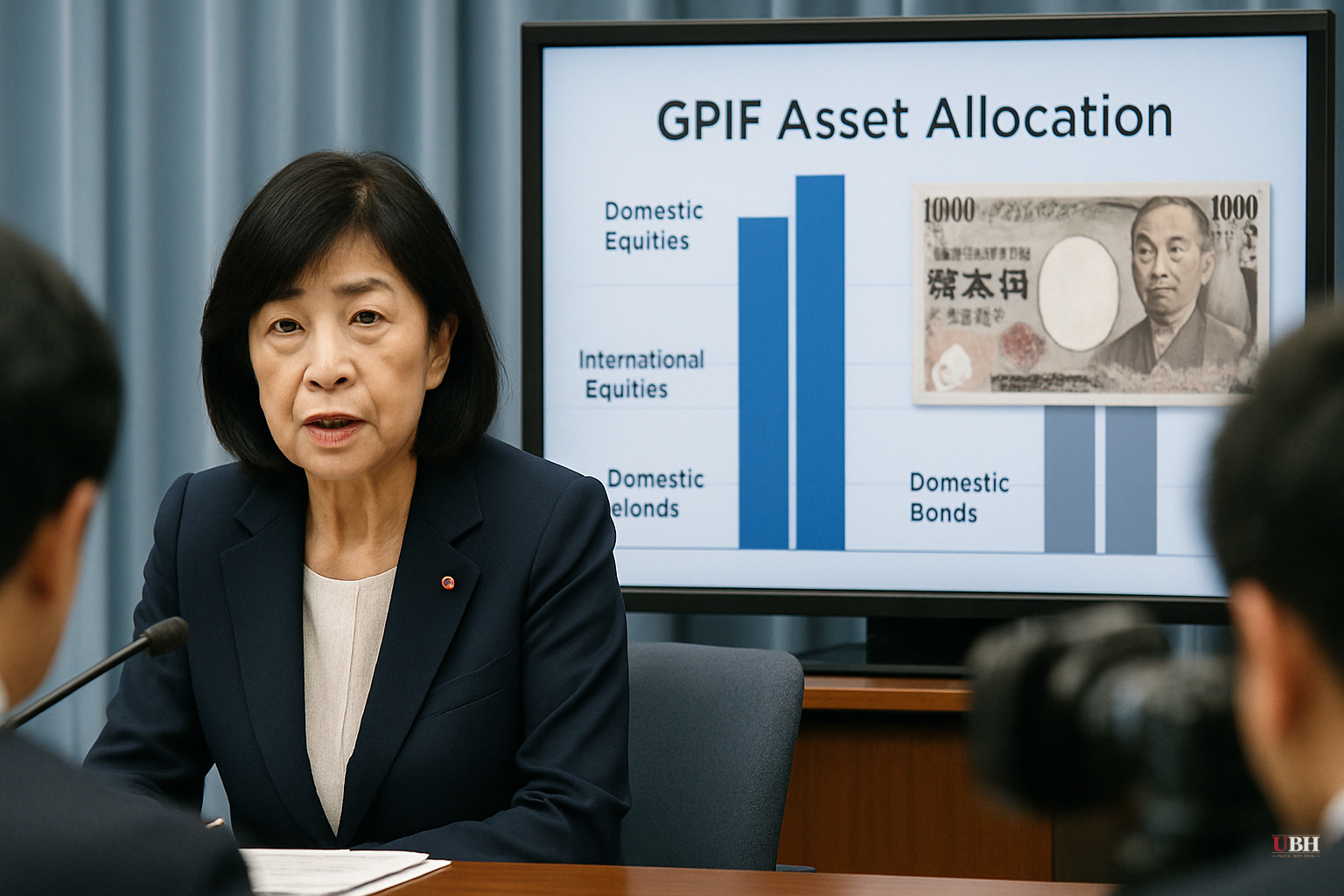
Since Japan's yen had been grinding toward 40-year lows under sustained selling pressure, Friday's verbal intervention from Finance Minister Satsuki Katayama marked the most market-moving official statement on the currency in recent weeks. According to ZeroHedge, it was more impactful than the Bank of Japan's most recent rate hike or ongoing jawboning from Japanese officials.
What Katayama Actually Said
At a regular Friday press briefing, Katayama stated: "One priority is to encourage households, as well as pension funds including the GPIF, to increase their investment in Japanese financial assets. We intend to pursue policies that support that objective."
The remarks were in response to a question about government plans to increase investment in strategic areas. According to Bloomberg, as cited by ZeroHedge, Katayama's comments on the GPIF were prepared in advance. They were not off-the-cuff. Whether they were intended as a form of deliberate currency intervention is an open question.
Katayama also said: "We want to ensure that the public can directly benefit from Japan's economic growth."
The GPIF: Size and Structural Constraints
The Government Pension Investment Fund is one of the largest pension funds on earth, with ¥293.6 trillion ($1.81 trillion) in assets. It is overseen by Japan's labor ministry, not the finance ministry. Katayama leads the finance ministry, meaning she does not directly control the GPIF's investment decisions.
Any reallocation of GPIF assets would have to go through an established review and approval process that takes time. Katayama can signal intent; she cannot flip a switch.
Why the Market Moved Anyway
Markets moved because the signal itself carries weight, regardless of the timeline. Japan is the largest foreign holder of U.S. Treasuries, sitting on approximately $1.2 trillion of them. Beyond Treasuries, nearly $5 trillion of Japanese capital is deployed in overseas assets. Even a partial repatriation of that capital — shifting from foreign to domestic — would be a meaningful event for global bond and currency markets.
The yen jumped — strengthening to as firm as 161.29 per dollar before paring some gains — and Japanese bond yields dropped on Katayama's comments Friday, with yields across the curve declining about 10 basis points. Both assets had been under considerable stress through the week.
A Policy Reversal a Decade in the Making
Over the past decade, Japanese officials pushed the GPIF in exactly the opposite direction: invest more abroad, diversify into foreign equities, reduce domestic concentration. That push worked. The GPIF loaded up on foreign assets, including U.S. equities, during years when the Nikkei was stagnant.
Now the situation has reversed. The Nikkei has been significantly outperforming the S&P 500, and Japanese stocks no longer look like the dead money they were for most of the 2010s. The Nikkei 225 recently climbed above the 70,000 mark for the first time. The logic of pushing capital back home is straightforward: Japanese assets are competitive again, and the yen is historically cheap.
The Strongest Counterargument
Skeptics have a fair point: one Finance Minister statement at a press briefing does not a policy make. GPIF's governance structure is insulated from direct political pressure by design, precisely to prevent short-term political considerations from destabilizing a fund that exists to pay Japanese retirees. Goldman Sachs's FX team, in a note titled "The Scope for Japanese Repatriation Flows," cautioned that the comments do not signal an actual shift in government policy. Their framing is that meaningful repatriation flows, if they occur, would be one of the more credible paths to the yen correcting its severe undervaluation — while noting investor anticipation of such flows has repeatedly picked up over the past year without materializing. Goldman also noted skepticism about the scope for significant yen-positive repatriation flows without a more favorable rate differential, especially since GPIF also has a return target it needs to achieve.
Some market participants doubted whether the comments will lead to any changes in asset allocation at all.
What Comes Next
The immediate question is whether Katayama's statement triggers any formal review of GPIF's strategic asset allocation, or whether it remains aspirational commentary. GPIF's potential changes "cannot be ignored" given the size of its assets under management, said Yugo Tsuboi, chief strategist at Daiwa Securities. Katayama's comments "could help sustain a 'triple rally' of bonds, the yen and stocks in the Japanese market," Tsuboi added.
For U.S. Treasury markets, the watch item is straightforward: if Japan's $1.2 trillion Treasury position shrinks meaningfully as part of a repatriation play, upward pressure on U.S. yields would follow. No announcement of a drawdown has been made. This is a policy signal, not a decision — and the gap between the two could be months or years wide.
Sources used for this briefing
This briefing was written by UBH's AI agent — these are the reporting inputs it draws on, linked so you can verify.


