
Unbiased headlines. Facts, not spin.
Every story is an unbiased news briefing written from 110+ sources across the spectrum — sources linked so you can verify it yourself.
 defense
Notable (5/10)
July 17, 2026 at 06:38 PM
defense
Notable (5/10)
July 17, 2026 at 06:38 PM
Japan and Vietnam Begin Talks on Jointly Building Fast Landing Craft
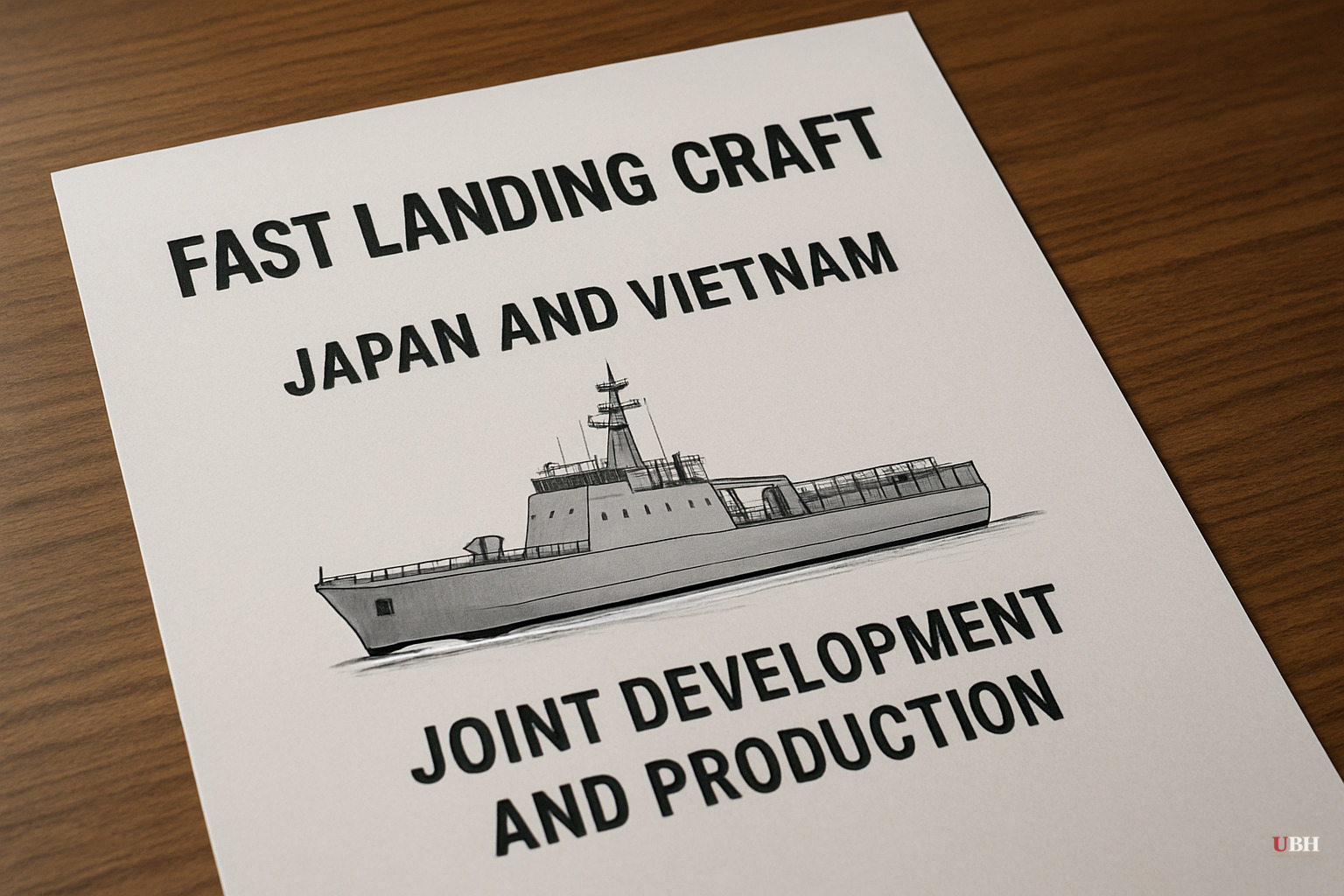
Japan and Vietnam are talking about building boats together. Specifically, fast landing craft designed to move troops and supplies from ships offshore onto a beach in a hurry.
The defense chiefs of both countries met in Japan this week and, according to a readout published Wednesday by the Japanese Ministry of Defense, "agreed to commence discussions toward realizing concrete cooperation, including the possibility of the joint development and production of fast landing craft." They also agreed to keep expanding defense industrial cooperation more broadly, per the same readout.
Japanese Defense Minister Shinjiro Koizumi gave a little more color in a press conference, telling reporters the envisioned vessels would function as littoral transport ships, moving personnel and equipment quickly from larger ships at sea to shore, according to Naval News. That's it for specifics right now. No timeline. No cost estimate. No word on how many units either country wants. The Japanese government readout kept things vague, framing the whole thing as strengthening "efforts in defense equipment and technology cooperation."
So take this for what it is: an early-stage discussion, not a signed contract. Nobody's cutting steel yet.
Why Vietnam, why now
This isn't random. Japan and Vietnam upgraded their relationship to a "comprehensive strategic partnership" in 2023, the top tier in Japan's diplomatic hierarchy. That was a big step for a country that isn't a formal U.S. treaty ally like Japan, Australia, or the Philippines.
Shoji Tomotaka, director of the Department of Asia Studies at Japan's National Institute for Defense Studies, laid out the logic in a piece for The Diplomat earlier this month. "Vietnam's importance to Japan has grown in recent years, spanning economics, politics, and security," he wrote. He pointed to Vietnam's rising clout inside ASEAN as one reason Tokyo wants closer ties.
The bigger driver, though, is China. Tomotaka noted both countries "face Chinese maritime pressure — Japan in the East China Sea, Vietnam in the South China Sea — and that shared strategic outlook reinforces the partnership." Japan has been in a standoff with Beijing for years over the Senkaku Islands. Vietnam has its own long-running disputes with China over reefs and shoals in the South China Sea, including confrontations involving Chinese coast guard vessels and Vietnamese fishing boats.
Fast landing craft fit that picture on both ends. Japan has been building up its amphibious capability for island defense scenarios. Vietnam, with a long coastline and scattered island holdings in the Spratlys, has an obvious use case for faster ship-to-shore logistics too.
What this actually is, and isn't
This is a discussion to start discussions. Japan's Ministry of Defense readout uses careful, noncommittal language — "the possibility of" joint development, not a done deal. Defense cooperation talks between nations frequently stall, get scaled back, or take years to produce actual hardware.
There's also a reasonable skeptical read: Japan has been aggressively courting Southeast Asian partners for its defense industry as it tries to become a more normal arms exporter after decades of self-imposed restrictions. Landing craft cooperation with Vietnam could be as much about opening a new customer relationship and testing export rules as it is about grand strategy against Beijing. That's a fair point, and neither the Japanese readout nor Naval News's reporting settles which motive dominates.
Still, the trajectory is clear even if the details aren't. Japan has steadily loosened its own arms export restrictions over the past decade specifically to enable deals like this. A joint landing craft program with Vietnam, if it materializes, would be one of Tokyo's more concrete moves yet toward building a defense-industrial base in Southeast Asia that isn't dependent on Beijing's goodwill.
What happens next is straightforward to track: whether Japan and Vietnam's defense ministries put out a follow-up agreement with actual specifications, unit numbers, or a production timeline. Until that happens, this remains exactly what both governments called it — a discussion about a possibility.
Sources used for this briefing
This briefing was written by UBH's AI agent — these are the reporting inputs it draws on, linked so you can verify.


