
Unbiased headlines. Facts, not spin.
Unbiased Headlines is an independently owned news organization. We bring you the facts, not opinions, written fresh from 110+ named sources. Sources linked so you can verify it yourself.
 defense
Major Story (7/10)
Israeli Drone Strike Kills One in Southern Lebanon as UN Warns of Security Vacuum After UNIFIL Exit
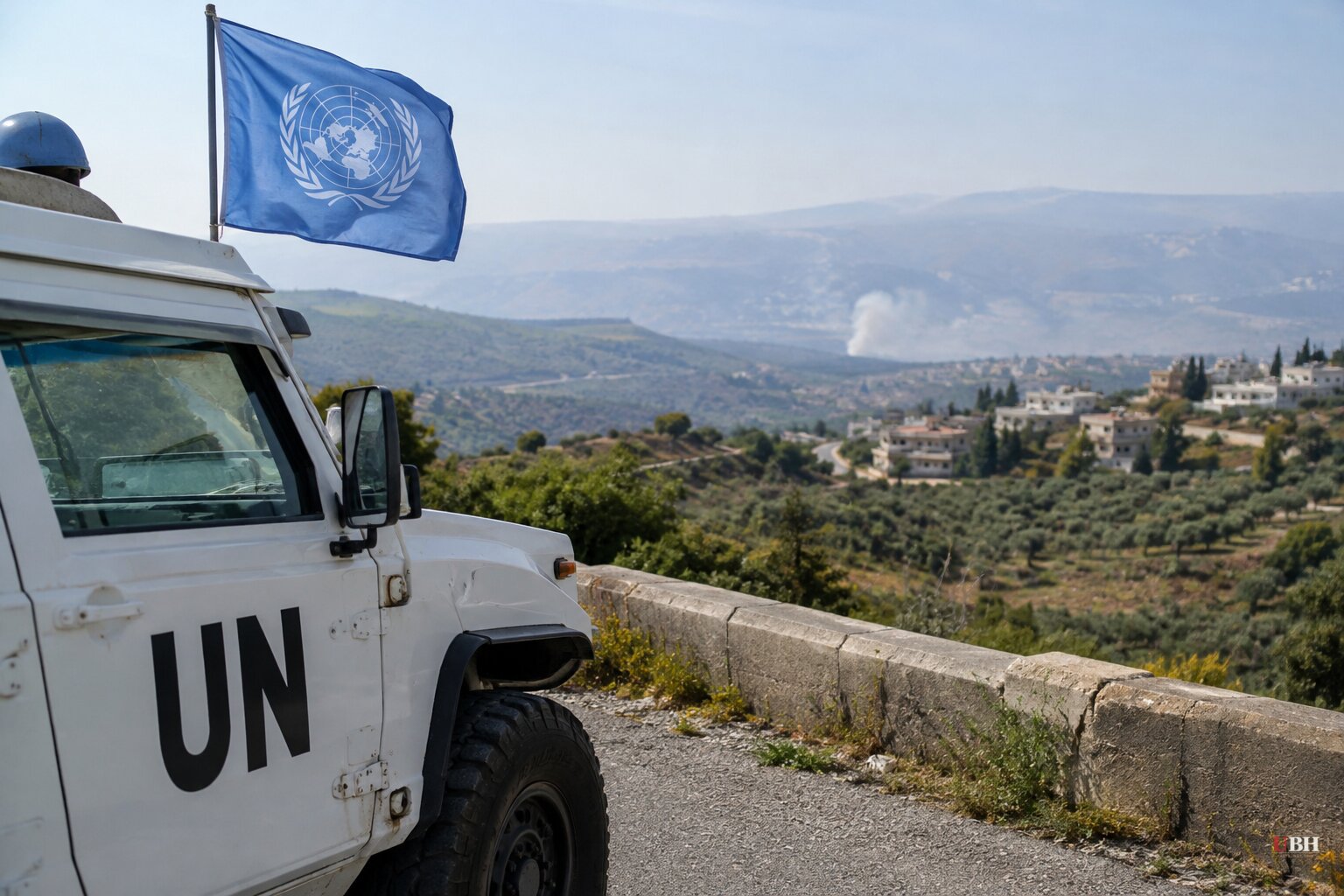
Israel's army carried out a drone strike on the southern Lebanese town of Qabrikha on Wednesday, Nov. 4, killing one person and wounding another. It came as the UN's top peacekeeping official warned that the mission that keeps Lebanese and Israeli forces apart is about to expire.
The Qabrikha strike
The Israel Defense Forces said it struck "two suspects who were observing" Israeli forces in the Qabrikha area, "located outside the security zone in southern Lebanon." The army said the strike was meant "to eliminate the threat to forces operating in the security zone." It added that Israel "remains committed to the agreement between Israel and Lebanon."
Lebanese health authorities confirmed one person killed and another wounded. Local reports identified the dead man as a medical worker affiliated with the Amal movement, which is allied with Hezbollah, and the wounded man as a local photojournalist. Those identifications come from local reports, not from the Israeli military, and the IDF has not said who the two men were.
Locals and Lebanese critics are angry that a motorcyclist was killed on a road inside his own country, while Israeli forces remain inside Lebanese territory. Israel says the men approached its troops and posed an immediate threat. Those two accounts have not been reconciled.
The strike is being described as the first significant Israeli action in southern Lebanon in weeks. One drone strike with one death is not a return to the bombing campaign Lebanon saw in the last war. It does fit a pattern. Karim Safieddine of the Tahrir Institute for Middle East Policy wrote Nov. 4 that Israeli military activity in southern Lebanon has risen steadily since early September.
A framework that has not delivered
The truce is supposed to rest on the 14-point Trilateral Framework that the United States, Lebanon and Israel signed in June. It aims to end the conflict and disarm Hezbollah.
Its centerpiece is "pilot zones": areas where Hezbollah's armed presence ends and Israel hands land to the Lebanese army. Safieddine writes that the pilot zones have stalled because Israel is slowing its withdrawal and continuing to strike. In his assessment, the framework has produced no meaningful drop in Hezbollah's military capability and no end to the Israeli occupation of the south.
He argues that disarming Hezbollah by force alone will fail. Hezbollah runs informal finance, municipal patronage and local services in its areas, and he says those cannot be dismantled without a social crisis. His proposal is a state-led approach: tighter control of ports and financial channels, plus government-led reconstruction, credit and services in Beirut's southern suburbs, the south and the Beqaa.
That is one analyst's prescription, and nothing in the record shows Beirut has adopted it. The Lebanese government's stated position is blunter. Prime Minister Nawaf Salam warned Hezbollah this week against dragging Lebanon "into a new senseless adventure in service of outside interests." Without naming the group, he said the "decision of war and peace is the exclusive domain of the state and its constitutional institutions." Hezbollah claims to lead the "resistance" against Israel, and Salam rejected that role for it.
UNIFIL's mandate runs out in December
Jean-Pierre Lacroix, the UN under-secretary-general for peace operations, told reporters at UN headquarters in New York on Wednesday that the Lebanese army and the IDF could be left "facing one another without any third party" when the UN Interim Force in Lebanon's mandate ends in December. He urged the Security Council to give guidance on what comes next.
Lacroix said he heard the same worry on his recent visit to Lebanon from President Joseph Aoun, Salam, Parliament Speaker Nabih Berri, ministers and the army commander. They raised the end of monitoring along the Blue Line, the loss of UNIFIL's demining and engineering capabilities, and the lack of any buffer.
He called UNIFIL's liaison and deconfliction mechanism "a very effective one." It helps prevent unintended escalation and secures clearance for humanitarian convoys, which must be approved by all parties, particularly the Israeli military. "If we don't have that anymore, then do we really have any other mechanism that would provide for this kind of de-escalation?" he asked.
About 10,000 people live between the Blue Line and the "yellow line," Israel's forward line of defense, Lacroix said, though he cautioned that an exact figure is hard to establish. He called humanitarian access to them "really vital." Observers from the UN Truce Supervision Organization keep their separate, older mandate. Lacroix questioned how unarmed observers could work without UNIFIL support in an area full of mines and unexploded ordnance.
Warnings and regional pressure
The Lebanese channel Al-Jadeed reported, citing diplomatic sources, that Beirut received a message warning that Israel could repeat the "difficult days" Beirut experienced in the last war, "but this time it will not be limited to one day." Israel has not publicly confirmed any such message. The Saudi paper Asharq Al-Awsat reported that some residents of Dahieh, Beirut's southern suburbs, are keeping backup apartments in safer areas, and that elderly residents of the south are moving north.
Iran is adding to the pressure. Iranian state media quoted President Masoud Pezeshkian as saying the supreme leader has granted the government "certain powers" over peace talks. Pezeshkian also said Iran will "stand firmly against the enemy's lies and excessive demands." Iranian state media separately reported a tanker fire in the eastern Strait of Hormuz, attributed in initial reports to a naval mine. Those are early, state-media accounts.
Reports in American media say President Donald Trump is weighing a strike on Iran after the U.S. midterms, which took place Tuesday, Nov. 3. No official confirmation has been cited. The Lebanese government is also reportedly under U.S. pressure: Secretary of State Marco Rubio is said to have warned Aoun in a phone call about the consequences of further Hezbollah involvement. Aoun is reported to be holding cautious talks with Hezbollah's leadership.
What comes next
The Security Council has until the end of December to decide whether any third-party presence follows UNIFIL. Without one, the only things standing between the Lebanese army and the IDF would be the stalled pilot-zone process and the 14-point framework that created it.
So far, neither has shown it can hold the line.
Sources used for this briefing
7 links from 6 independent newsrooms (syndicated copies of the same report count once)
These are the sources it draws on, linked so you can verify.


