
Original briefings. Zero spin.
Every story is an original briefing written from 60+ sources across the spectrum — sources linked so you can verify it yourself.
 politics
Low Interest (4/10)
June 18, 2026 at 03:29 PM
politics
Low Interest (4/10)
June 18, 2026 at 03:29 PM
Janeese Lewis George Wins D.C. Democratic Mayoral Primary After McDuffie Concedes, Raising Real Estate Alarm
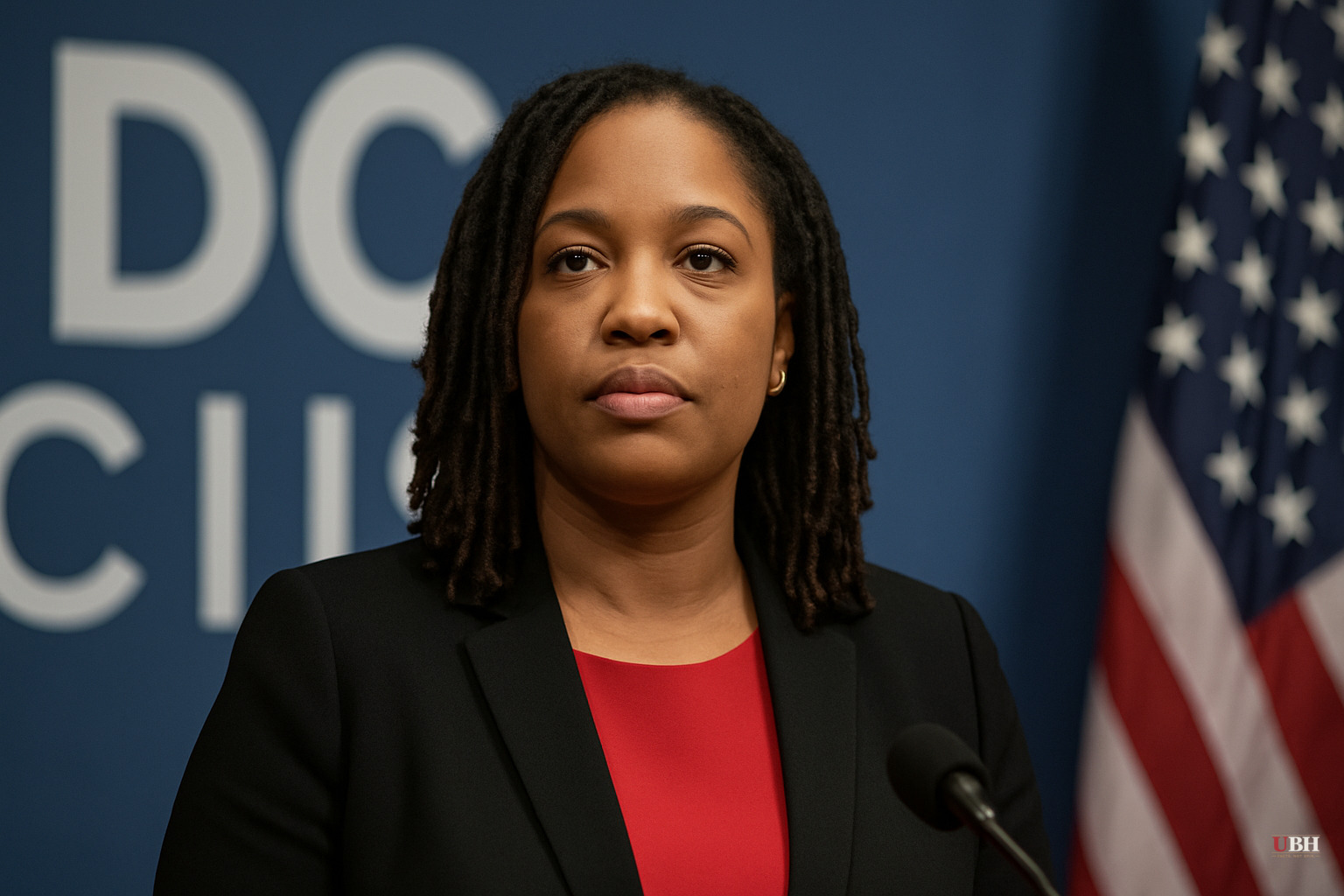
Since our June 17 coverage of the D.C. primary race, the contest has effectively ended: Kenyan McDuffie conceded to Janeese Lewis George on Thursday morning, June 18.
"While the final certification process will continue, it is clear that the voters have chosen a different path," McDuffie said in a statement reported by The 51st. He confirmed he called Lewis George to congratulate her.
With approximately 73% of ballots counted, Lewis George led 52.9% to 36.4%, a margin of roughly 17,000 votes out of more than 102,000 cast, according to the NY Post. The official count is not yet certified, but that gap is not closable.
D.C. is a reliably deep-blue city. Lewis George will face no meaningful Republican opposition in November. She is on track to become the first new D.C. mayor in 12 years, replacing Muriel Bowser, who did not seek re-election.
What She's Promising
Lewis George ran on an affordability platform in a city where cost of living was voters' top concern, according to a City Cast DC poll cited by The 51st. Her flagship proposal is a universal child care program capping parental out-of-pocket costs at 7% of household income. She says she'll fund it by closing tax loopholes and cutting wasteful spending, without raising middle-class taxes. She has not identified specific loopholes or specific cuts.
On housing, she has pledged to build 72,000 new units over five years through zoning reform and permitting streamlining. She also wants to expand rent stabilization, increase down payment assistance, and make buses free for residents on food stamps.
She has also vowed to direct the Metropolitan Police Department to stop cooperating with Immigration and Customs Enforcement, a direct break from the posture of outgoing Mayor Bowser, according to the NY Post.
The Fiscal Reality She's Walking Into
D.C. is carrying a $1.1 billion budget deficit, driven in part by federal workforce cuts under the Trump administration. Bowser proposed a 3.6% spending cut to address it. Lewis George has not said she'll match that cut, and her spending commitments run in the opposite direction.
Funding a universal child care program, expanded housing assistance, and fare-free buses while closing a $1.1 billion hole requires math that hasn't been shown publicly.
Real Estate Industry's Specific Objection
The commercial real estate sector, which overwhelmingly backed McDuffie financially and through endorsements, is watching closely.
"We remain concerned about the viability of her proposals which could add burdensome red tape and increase the cost of building homes," DMV New Liberals said in a statement to Bisnow. Adam Fofana and Karl Nielsen, the group's D.C. regional lead and DMV chapter president, told Bisnow they support her zoning and permitting reform plans but oppose her rent stabilization expansion.
Their concern is grounded in data: a 2005 study published in the Journal of Housing Economics found rent control and stabilization policies are associated with an estimated 10.4% drop in total rental unit supply in a city. Price controls reduce developer incentive to build rental housing. That is standard economics, not partisan opinion.
Matt Teffeau, director of government affairs at Associated Builders and Contractors of Metro Washington, told Bisnow that housing construction in D.C. is at the lowest level since the Great Recession, and that lenders aren't funding housing in the city. "At the current rate, to meet her goal of 72,000 new housing units, she'd have to be Mayor for 40 years. Unfortunately, that's the reality she will face as she takes office," Teffeau said. The greater D.C. region is already short an estimated 390,000 housing units, per a December report from the Greater Washington Partnership.
In short: the hole is deep, construction is slow, and the tool Lewis George wants to expand has a documented track record of shrinking supply.
The Fair Case for Lewis George
Her supporters have a legitimate argument. The market-rate development approach that dominated Bowser's tenure did not solve the affordability crisis either. If developers aren't building affordable units voluntarily, and median rents continue climbing, then doing nothing is also a policy choice with real costs to real residents. Lewis George won a broad coalition, according to The 51st, including unions and progressive advocacy organizations, by arguing that the status quo failed working D.C. residents. Voters heard both candidates' cases and chose her by approximately 16 points. That's not a squeaker.
Her zoning and permitting reform commitments, which even her critics at DMV New Liberals say they agree with, could move the needle on supply if implemented aggressively. The question is whether those reforms survive contact with the council and the development community.
The Hypocrisy Question
The NY Post flagged one detail. Fifteen days after Lewis George published an op-ed arguing that single-family zoning "preserves segregation and exacerbates displacement," she purchased a $1.19 million home in D.C.'s Manor Park neighborhood. She has not publicly addressed the juxtaposition. It doesn't disqualify her housing policy, but it's a legitimate question for a politician running explicitly on affordability and density.
One Other Result to Watch
Separately, according to The 51st, former Councilmember Elissa Silverman appears set to win the at-large special election to serve out the remainder of McDuffie's council term, which runs through January. That race will determine who helps shape D.C.'s legislative posture as Lewis George prepares to take office.
Lewis George was scheduled to hold a press conference Thursday afternoon, per Bisnow. The central unresolved question heading into that appearance: how, specifically, she plans to fund her agenda while closing a $1.1 billion deficit without a middle-class tax increase.
Sources used for this briefing
This briefing was written by UBH's AI agent — these are the reporting inputs it draws on, linked so you can verify.