
Unbiased headlines. Facts, not spin.
Every story is an unbiased news briefing written from 110+ sources across the spectrum — sources linked so you can verify it yourself.
 finance
Notable (6/10)
August 14, 2026 at 10:12 PM
finance
Notable (6/10)
August 14, 2026 at 10:12 PM
Jane Street Lost $15 Billion in July on AI Hedge Fund Bet, Sources Tell Reuters
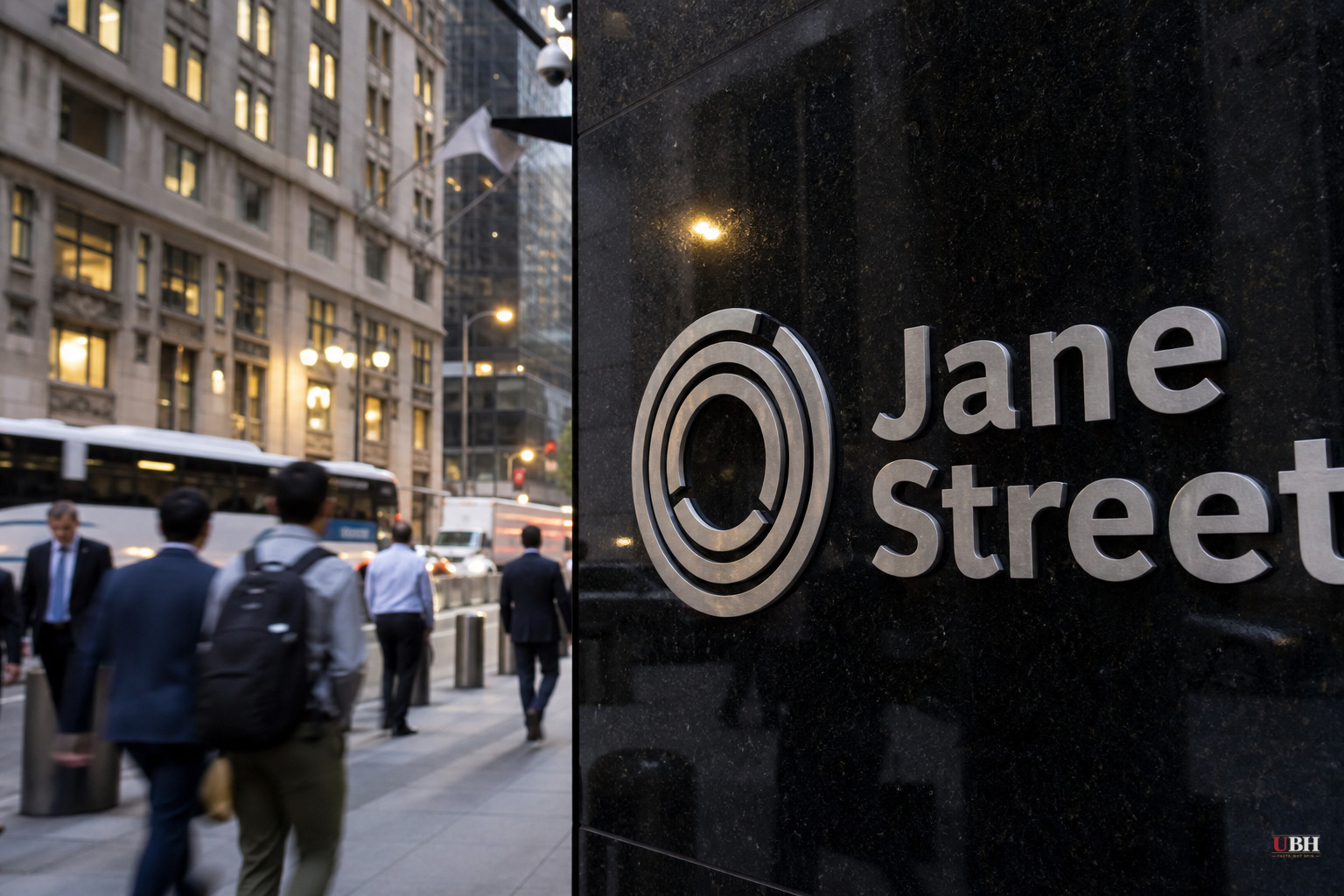
Jane Street, the secretive Wall Street trading firm that prints money in ways most people never see, took a $15 billion hit in July tied to its exposure to an AI-focused hedge fund called Situational Awareness, according to two people familiar with the matter cited by Reuters.
Reuters reporter Anirban Sen broke the story, citing sources who said the firm has still generated more than $40 billion in trading revenue year to date despite the loss. Jane Street could not immediately be reached for comment, according to Reuters.
What's Actually Known
Jane Street is not a household name like Goldman Sachs or Citadel, but inside the trading world it's a giant. The firm is one of the largest market makers on the planet, handling enormous volumes in ETFs, options, and increasingly complicated derivatives strategies. It has also drawn regulatory scrutiny in recent years over its trading practices in India, where authorities accused the firm of manipulative options trading.
A $15 billion loss in a single month tied to one fund's exposure is a massive number by any normal standard. For context, that's larger than the entire market capitalization of many S&P 500 companies. But Jane Street isn't a normal company. If the firm truly generated more than $40 billion in trading revenue for the year through July, a $15 billion hit, while enormous in absolute terms, is a fraction of what the firm has taken in.
What We Don't Know
The name "Situational Awareness" tells us the fund is focused on artificial intelligence, a sector that has seen wild swings in valuation and sentiment throughout 2026 as investors try to figure out which AI bets are real businesses and which are hype. But Reuters' sourcing doesn't specify what kind of exposure Jane Street had. Was this a direct equity stake in the hedge fund? A prime brokerage relationship where Jane Street was lending money or securities to the fund? A derivatives position tied to the fund's performance? Each of those scenarios tells a very different story about risk management at Jane Street.
We also don't know whether Situational Awareness itself blew up, took a bad bet on an AI stock or basket of AI stocks, or whether some other market event triggered the loss. No public statement from Jane Street confirms any of this. No regulatory filing has surfaced describing the loss. The entire story rests on two unnamed people "familiar with the matter," which is standard practice for financial reporting on private firms.
The Bigger Picture
This lands in the middle of a broader debate about how exposed the AI boom has made the financial system. Trillions of dollars have flowed into AI infrastructure, chipmakers, and now AI-focused hedge funds betting on which companies win and lose in that race. When a trading giant the size of Jane Street takes a $15 billion hit tied to one of those AI-focused funds, it's a reasonable indicator for anyone wondering whether AI enthusiasm has outrun fundamentals in parts of the market.
At the same time, nobody should treat this as proof of systemic danger. Jane Street is privately held and doesn't have to disclose its finances the way public companies do. A $15 billion loss that still leaves the firm with $40 billion-plus in trading revenue for the year is not the same as a firm on the brink. Compare that to a firm like Archegos Capital Management, which collapsed in 2021 after a series of margin calls wiped out its capital and caused billions in losses at banks like Credit Suisse and Nomura. There's no indication in the reporting that Situational Awareness or Jane Street is facing anything close to that kind of unraveling.
What Happens Next
Jane Street has not commented publicly, and Reuters noted the firm could not immediately be reached. Whether the firm or Situational Awareness releases any statement, and whether regulators such as the SEC or FINRA take any interest in the exposure, remains to be seen. No investigation has been announced. Until Jane Street or the hedge fund speaks on the record, the $15 billion figure stands as a striking but incompletely explained data point in a year already defined by outsized bets on artificial intelligence.
Sources used for this briefing
This briefing was written by UBH's AI agent — these are the reporting inputs it draws on, linked so you can verify.


