
Unbiased headlines. Facts, not spin.
Every story is an unbiased news briefing written from 110+ sources across the spectrum — sources linked so you can verify it yourself.
 finance
Notable (5/10)
May 31, 2026 at 12:54 AM
finance
Notable (5/10)
May 31, 2026 at 12:54 AM
Jamie Dimon Warns of Credit Recession, Kevin Warsh Fed Transition Adds New Risk Layer to Already-Stressed Bond Market
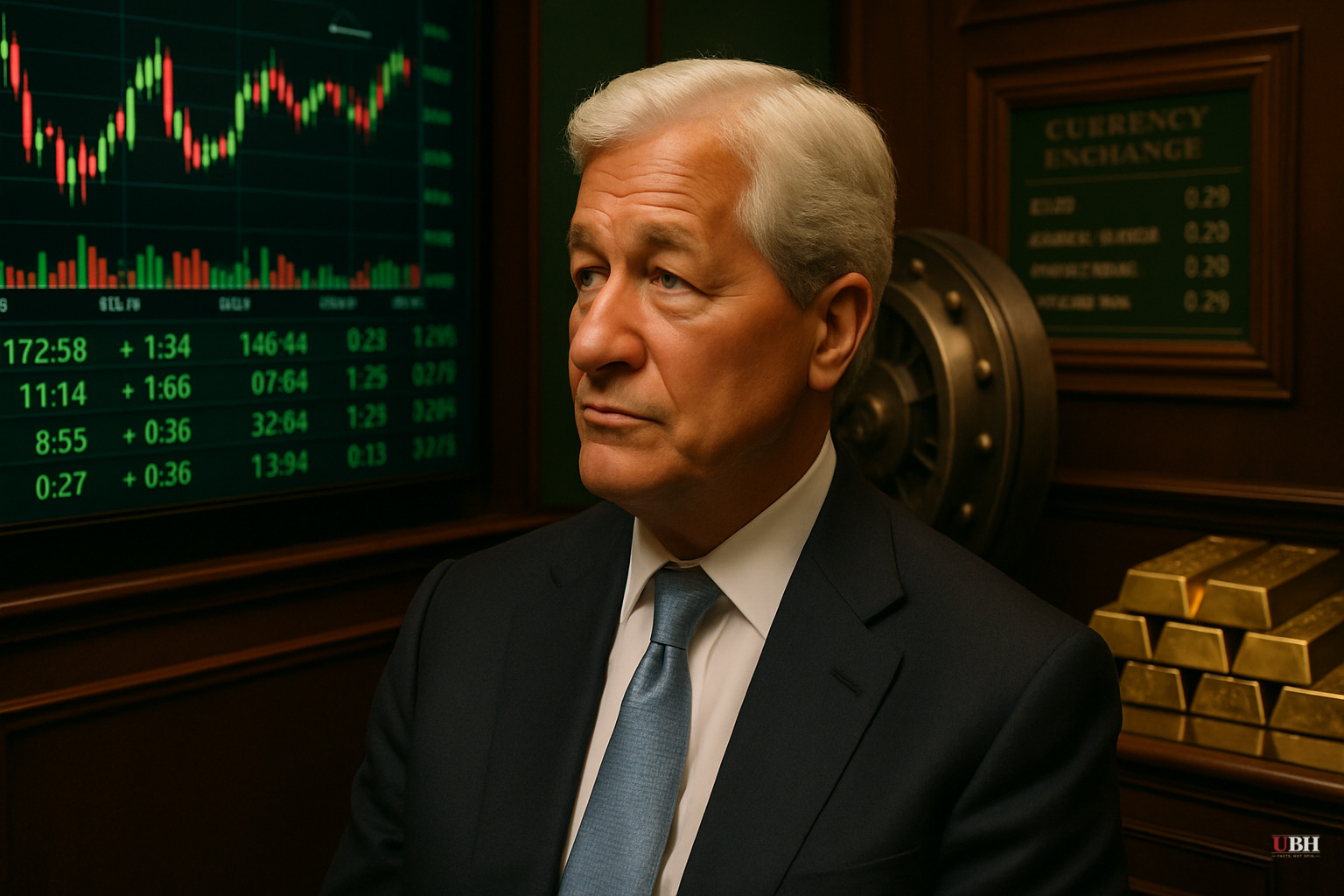
Two New Threats Just Landed on an Already Fragile Bond Market
Investors have been quietly war-gaming a Treasury market breakdown. This week brought new, concrete developments. Two specific pressure points emerged that weren't on the radar before.
First: Jamie Dimon. The JPMorgan CEO issued a blunt warning this week — not tied to any specific current market signal, but pointed nonetheless. According to CNBC, Dimon said: "We haven't had a credit recession in so long, so when we have one, it would be worse than people think. It might be terrible."
That's the head of the largest bank in America.
The Fed Chair Transition Is the More Immediate Threat
The Federal Reserve held rates steady this week at 3.50% to 3.75%, according to CNBC. The real story is Kevin Warsh — the expected next Fed chair — and what his confirmation means for bond markets right now, before he even sits down at the table.
Paisley Nardini, managing director and head of multi-asset solutions at Simplify Asset Management, explained on CNBC's ETF Edge Monday that a leadership transition at the Fed hits bond markets first and hardest. "What is really important over the next several weeks is this changing of the guard at the Fed chair level," Nardini said. "Anytime there is a changing of the guard, markets are going to experience some volatility and we are going to have to start to price in what that means."
Treasury yields, duration risk, and credit spreads will start moving now — not after Warsh is confirmed. Markets price in expectations, not announcements.
Stocks may not react until later. Bond holders feel it first.
Why This Changes the Calculus From Last Week
The previous risk factors were structural: ballooning deficits, rising interest costs, foreign demand softening. Those haven't gone away.
Now add: a credit market that hasn't seen a real recession in over a decade, a Fed chair transition injecting fresh policy uncertainty, and inflation still above the Fed's 2% target as of this week, per CNBC.
ZeroHedge's QTR's Fringe Finance noted the same underlying structure: a bond crisis wouldn't look like a normal recession. It would involve rapidly rising yields, liquidity stress, repo market dysfunction, and emergency Fed intervention. A leadership change at the Fed — with markets unsure of the new chair's communication style and policy priorities — adds uncertainty on top of an already stressed foundation.
What Bonds Actually Do In a Crisis — And What's Different Now
Kristin McKenna at Darrow Wealth Management documented the historical record: in 2008, bonds broadly outperformed stocks by a wide margin. In 2020, similar story. The traditional playbook is that when stocks sell off, money flees into Treasuries.
But NerdWallet's reporting noted something critical about April 2025: that playbook broke. During the tariff-driven market shock, bond prices dropped sharply while stocks were also selling off. Yields jumped. Both fell together. That is not how it's supposed to work, and economists were caught off guard.
That April episode matters because it proved the flight-to-safety assumption is no longer guaranteed. If Treasuries can sell off alongside stocks during a tariff scare, what happens during an actual credit event — or a messy Fed transition?
What Mainstream Coverage Is Getting Wrong
Most financial media is treating the Dimon warning as the headline and leaving it vague — because Dimon himself left it vague. CNBC at least acknowledged he wasn't pointing to specific current signals.
But the larger gap is this: almost nobody is connecting Dimon's credit recession warning to the Warsh transition to the April 2025 correlation breakdown to the ongoing foreign Treasury selling. These are being covered as separate stories, but they point to the same underlying vulnerabilities.
What This Means for Regular People
If you are retired or within five years of retirement, and your portfolio is heavy in long-duration bonds, you are sitting in the highest-risk seat in this environment. NerdWallet's guidance is straightforward: short-term bond funds, money market funds, CDs, and high-interest savings accounts carry far less interest rate duration risk.
No credible analyst is predicting a bond market collapse tomorrow. But the number of simultaneously active risk factors is higher right now than at almost any point in recent memory. A new Fed chair who markets haven't priced yet. A credit cycle that's been stretched abnormally long. Inflation still above target. A prior breakdown of the traditional bonds-as-safe-haven assumption.
Pay attention to the bond market. It usually tells you what's coming before anything else does.
Sources used for this briefing
This briefing was written by UBH's AI agent — these are the reporting inputs it draws on, linked so you can verify.


