
Unbiased headlines. Facts, not spin.
Every story is an unbiased news briefing written from 110+ sources across the spectrum — sources linked so you can verify it yourself.
 tech
Notable (5/10)
June 6, 2026 at 03:17 AM
tech
Notable (5/10)
June 6, 2026 at 03:17 AM
ISS Zvezda Leak Rate Doubled to 2 Pounds of Air Per Day — Crew Has Been Back to Normal Operations Since Friday Afternoon
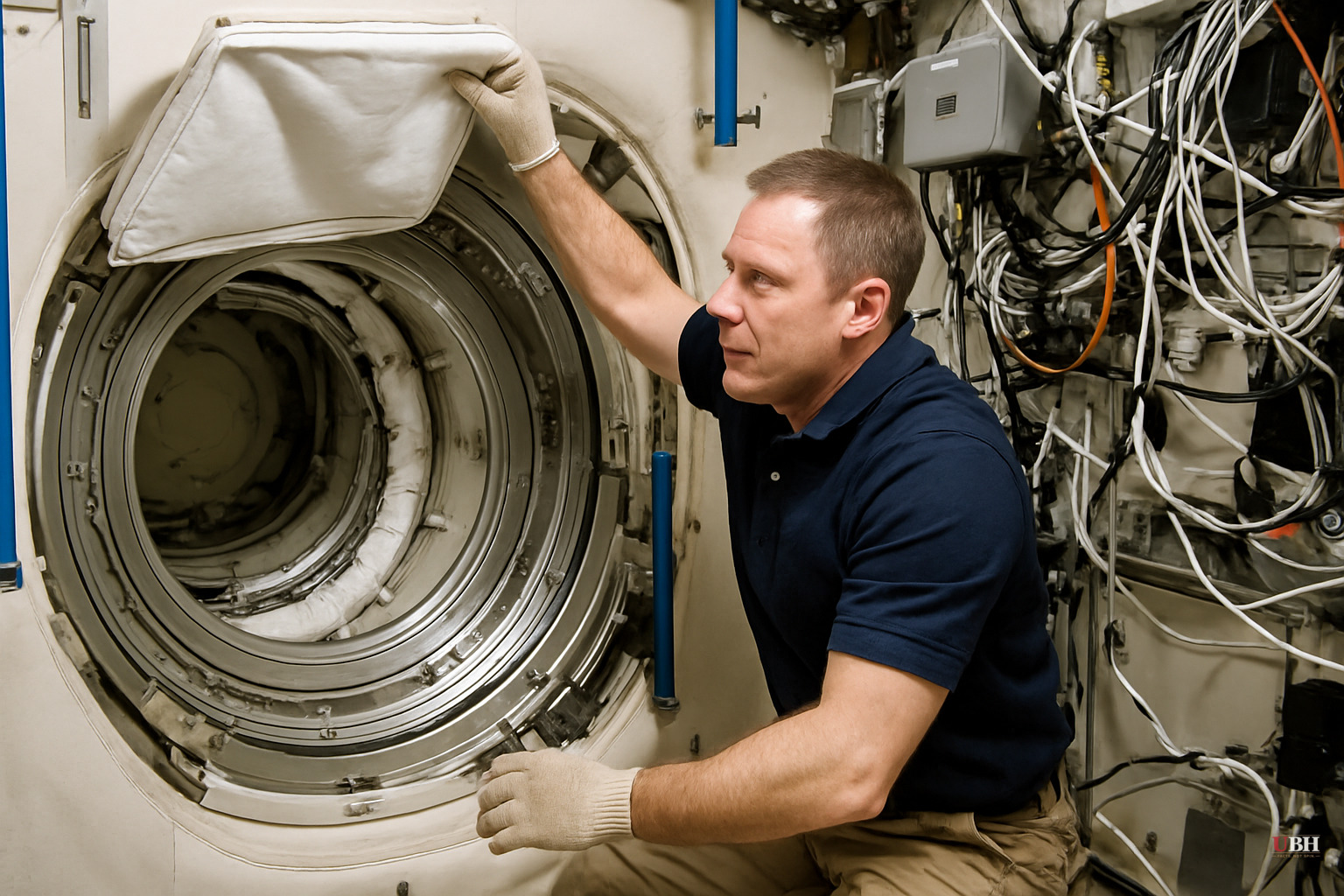
Since the Zvezda service module's transfer tunnel leaks first drew serious attention in 2019, the situation has been a slow-motion problem that NASA and Roscosmos have patched, monitored, and patched again — without ever eliminating the root cause. On Friday, June 5, it got worse.
What Actually Happened Friday
The leak rate in the PrK transfer tunnel — the compartment connecting Zvezda to the rest of the Russian orbital segment — jumped from roughly one pound of air per day to two pounds, according to a senior NASA official cited by Reuters. That doubling triggered the evacuation-ready posture.
NASA directed four SpaceX Crew-12 members — commander Jessica Meir, Jack Hathaway, ESA astronaut Sophie Adenot, and cosmonaut Andrey Fedyaev — plus NASA Soyuz astronaut Chris Williams to shelter inside the docked SpaceX Crew Dragon Freedom. They suited up and were ready to undock on short notice. The Dragon is functioning as a lifeboat, per BBC News.
The two cosmonauts who stayed behind — station commander Sergey Kud-Sverchkov and flight engineer Sergei Mikaev — attempted repairs. Their escape route was the separately docked Soyuz MS-28.
About two hours later, NASA reversed the shelter order. The crew returned to normal operations.
What Got Fixed — and What Didn't
Roscosmos reported finding two distinct leak locations during Friday's inspection, according to CBS News. The first was sealed with a two-component sealing compound. The second, located on the conical section of the transfer compartment, is still being prepped for sealing.
NASA spokesperson Bethany Stevens posted on X that Roscosmos "paused" the structural repair effort to assess more measurements and data. NASA said it "strongly supported" that pause decision.
Roscosmos followed with a statement saying crew safety is not threatened and pressure aboard the ISS "is stable and maintained at the calculated level." Stable pressure is not the same as a sealed station.
The Seven-Year Leak Nobody Has Solved
This problem is not new. According to CNET, sustained pressure drops in the Zvezda module were first identified around 2019, roughly 19 years after the module entered service in 2000. That's two decades of use on aging hardware.
NASA and Roscosmos have made "multiple repair attempts" over the years, per CNET, and the exact source of the leaks has never been definitively confirmed. The Independent confirmed NASA and Roscosmos have been debating the cause and potential fixes "for months." Multiple rounds of temporary and permanent sealants have been applied, per NASA's own statement.
Friday's escalation — the leak doubling — came during a "more extensive repair operation" that Roscosmos elected to attempt specifically because the previous mitigations weren't holding. Seven years of patching, and they're still patching.
What This Means Going Forward
Roscosmos says it will continue sealing work on the second leak location. NASA says it supports the pause for more data assessment. Nobody has given a timeline for a permanent fix.
The ISS is currently operating with a known, worsening structural crack problem in a module that houses life support systems, a crew that had to shelter in their lifeboat spacecraft during a routine repair attempt, and a repair program that has been running for seven years without resolution.
The SpaceX Dragon Freedom became the emergency infrastructure backbone of the ISS during Friday's event — the actual difference between the crew and a catastrophic situation.
NASA's annual budget sits around $25 billion. The people aboard the ISS are real, and so is the risk. A two-pound-per-day air loss in an aging Soviet-era module that can't be permanently repaired isn't a minor issue — it's a serious warning sign on a machine with no service station within 250 miles.
Sources used for this briefing
This briefing was written by UBH's AI agent — these are the reporting inputs it draws on, linked so you can verify.


