
Unbiased headlines. Facts, not spin.
Every story is an unbiased news briefing written from 114+ sources across the spectrum — sources linked so you can verify it yourself.
 defense
Major Story (8/10)
August 22, 2026 at 08:24 PM
defense
Major Story (8/10)
August 22, 2026 at 08:24 PM
Israel Struck a Syrian Air Base, Skipped Warning the US, and Nearly Dragged NATO Ally Turkey Into a Fight
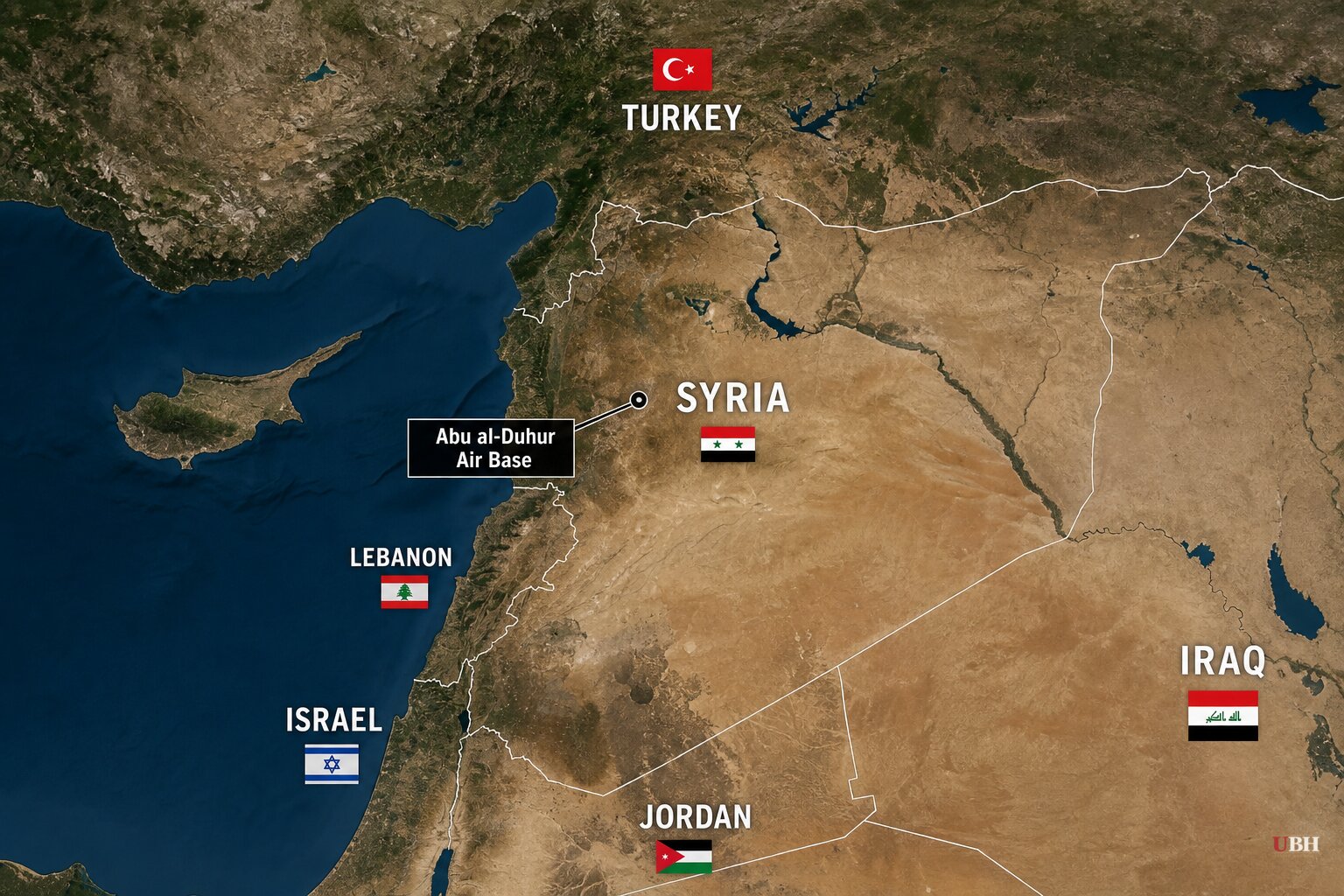
Two allies of the United States nearly shot at each other over a bombed-out airfield most people had never heard of. This is what happened this week in northwestern Syria, according to the man Washington sent to sort it out.
US Special Envoy to Syria Tom Barrack, who also serves as ambassador to Turkey, says Israel struck the Abu al-Duhur air base in Idlib province on August 18 without telling the United States first, and without telling Turkey either. Syrian state media said the base was hit eight times. No casualties were reported, according to the Epoch Times.
Barrack called the strikes an "unnecessary escalation" that "does not advance regional stability" in a post on X, and said the government of Syrian President Ahmed al-Sharaa "has neither adopted a predatory posture nor maintained proxy forces," according to the Epoch Times.
By Saturday, in an interview with Lebanese-Australian entrepreneur Mario Nawfal published on X, Barrack offered theories for why Israel did it. One possibility, he said, is that Israel was "baiting the Turks." Another is that Israeli intelligence believed Turkish forces were about to move into the base and "a commander somewhere in the field made a decision 'We're not going to let that happen,'" according to the Jerusalem Post and the Independent. Barrack stressed this was a theory, not an intelligence conclusion.
He also floated a domestic political angle, telling Nawfal the strike may have been a "very aggressive but maybe a well-received pre-election concept" tied to Israeli Prime Minister Benjamin Netanyahu "moving toward October," according to the Jerusalem Post. That is Barrack's speculation about motive. It is not something Netanyahu's office has confirmed.
Israel says Barrack has it wrong
Israeli Defense Minister Israel Katz responded on social media Saturday, saying Israel had shared "intelligence information to the authorised parties in the United States" before the strike and calling Barrack's comments "full of inaccuracies," according to Al Jazeera.
Netanyahu's office had already given its own account days earlier. It said Israel and Syria had an understanding on the "status quo" in security matters, and that Syria came close to violating it by letting Turkish troops deploy at the base near Aleppo, according to Ynet News and Breitbart. "Israel will not tolerate threats to its security, and will welcome a return to the status quo," the statement said.
There are two flatly contradictory claims here: Barrack says Israel told nobody in advance and the US had already concluded no Turkish deployment was happening. Katz says Israel gave Washington the intelligence beforehand. Both cannot be fully accurate. Neither side has produced documentation settling it, and this article isn't going to pick a winner between an on-record US envoy and an on-record Israeli defense minister.
Turkey denies it too
Turkey's Defense Ministry said no Turkish military delegation was present at the base before or during the strike, according to Reuters as cited by Fox News. Syrian Foreign Minister Asaad al-Shaibani acknowledged Turkish military officers had visited the facility for training, but said there were no plans for a permanent base or troop deployment.
Two Syrian officials, speaking anonymously to the Independent, said a Turkish delegation had visited the air base a day before the strike to review reconstruction work, not to deploy troops.
Turkey's government called Israel's justification "untenable" and accused Netanyahu of pursuing "expansionist and destabilizing policies" ahead of Israeli elections, according to Fox News.
How close did this get to NATO versus Israel
Barrack said Turkish jets nearly scrambled in response to unidentified aircraft near the border, and invoked Turkey's 2015 shootdown of a Russian jet as the risk everyone should be worried about, according to the Independent and Ynet News.
Israeli Defense Minister Katz responded not with de-escalation but with a warning aimed directly at Turkish President Recep Tayyip Erdoğan, accusing him of dragging Turkey into "dangerous adventures in Syria" and telling him not to test Israel's resolve, according to Fox News.
US Ambassador to Israel Mike Huckabee tried to lower the temperature, telling Reuters that Washington was refining "a de-escalation process" already in place and that a direct Israeli-Turkish confrontation wasn't imminent. Barrack said the US, Israel, Syria and Turkey need a formal "deconfliction mechanism" to prevent this from happening again, according to Ynet News.
That mechanism doesn't exist yet. Katz has publicly accused Trump's own envoy of misrepresenting the facts. Barrack is reportedly set to step down from his Syria post, according to comments from Secretary of State Marco Rubio referenced in Al Jazeera's reporting. Whoever replaces him inherits a dispute between two of America's own security partners that neither side is backing down from, and a base near Aleppo that is now a live flashpoint between a NATO member and Washington's closest Middle East ally.
Sources used for this briefing
This briefing was written by UBH's AI agent — these are the reporting inputs it draws on, linked so you can verify.


