
Unbiased headlines. Facts, not spin.
Unbiased Headlines is an independently owned news organization. We bring you the facts, not opinions, written fresh from 110+ named sources. Sources linked so you can verify it yourself.
 defense
Major Story (7/10)
defense
Major Story (7/10)
Israel Says No Commercial Goods Have Entered Gaza for Two Days, Blames Hamas Fees; Truckers' Union Disputes It
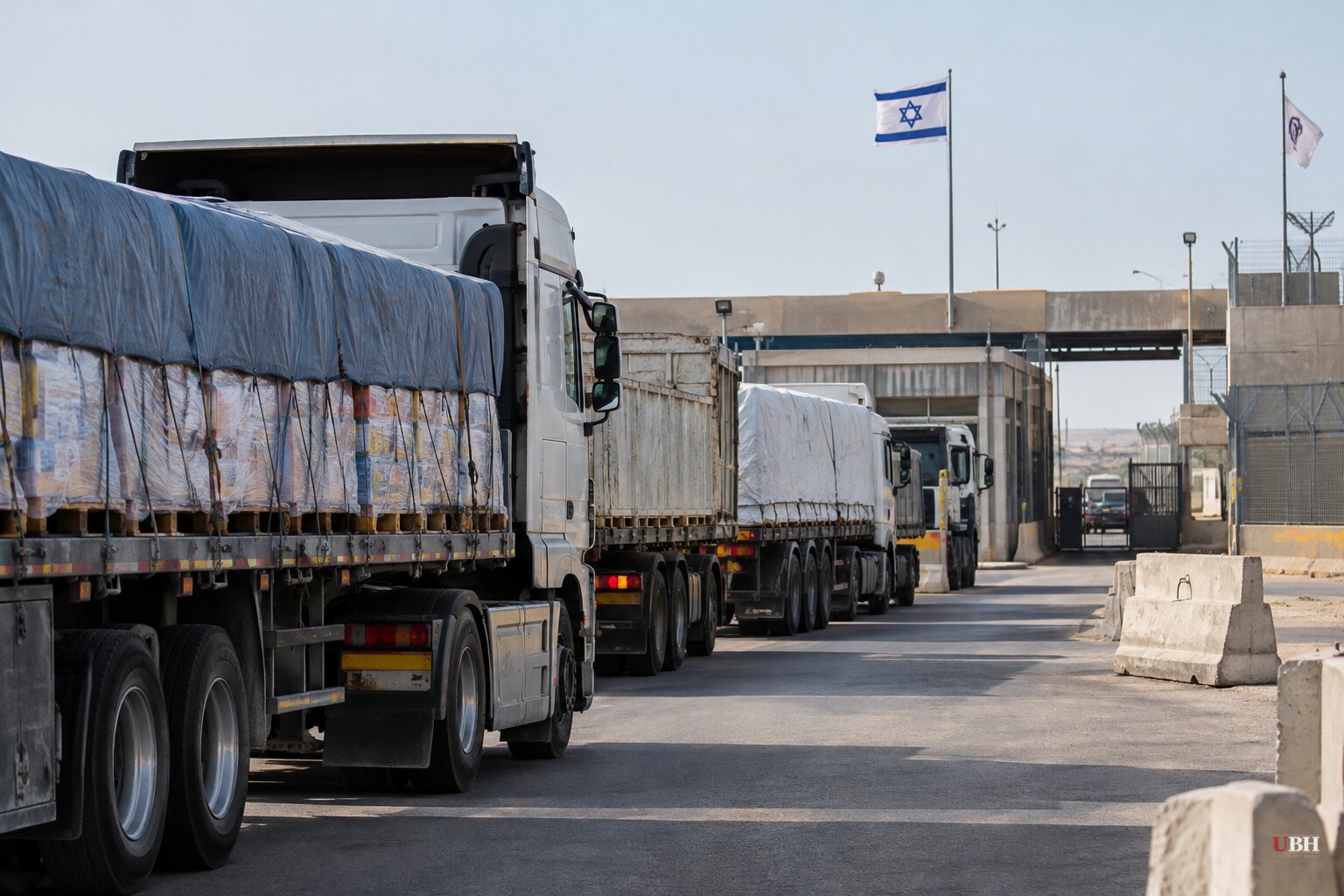
No commercial goods have entered the Gaza Strip for two days, Israeli authorities said Thursday, Oct. 15. COGAT, the Israeli military body that oversees humanitarian affairs in Gaza, announced the suspension in a statement Wednesday.
Who made the decision is the dispute. COGAT says Palestinian merchants did. Gaza's truckers say Israel did.
What COGAT says
COGAT's account is that Gaza merchants told Israel on Tuesday, Oct. 13, that they were cancelling the coordination of their truck entries. It says they were responding to a 10,000 shekel fee (about $3,220) that Hamas imposes on each truck entering Gaza, plus a demand that 30 percent of all sales in Gaza be conducted in cash.
COGAT deputy spokesperson Lt. Daniel Kantorovich said the agency was acting on the merchants' decision and could reverse it at their request.
"We were prepared to coordinate the entry of their trucks as usual, but the vendors informed us that they were cancelling the coordination due to Hamas's taxation mechanism and threats against them," Kantorovich said. "The merchants don't want to bring goods into Gaza."
COGAT said no private-sector vendors have tried to import goods since Tuesday. Israel has long accused Hamas of levying fees on imports to fund its operations. COGAT's statement did not make clear whether Israeli officials themselves made the call.
What Gaza's side says
Nahed Sheheiber, head of Gaza's private truckers' union, rejects COGAT's version outright. "The merchants are not the ones who stopped the shipments," he said. "The Israeli coordinator is claiming that Gaza's merchants are responsible, but the truth is that the Israelis are the ones who imposed the restrictions."
His union met with Gaza's Ministry of Economy after the announcement. Sheheiber said Israel is using the ministry's fees as a pretext to cut off commercial goods.
He did not deny the fee exists. The ministry had been asking merchants for 10,000 shekels per truck. Ministry representative Khaled Al-Rakab told the union the payment is not a tax but a voluntary contribution used to help pay public employees in the territory.
Gaza's government media office, which answered the Israeli claims Thursday, called them a "blatant disinformation campaign and false statement." It described the money as a voluntary payment to a fund helping people in need, such as widows and orphans. It said cash was encouraged because of an acute cash shortage but was never mandatory. It also said the Israeli claim was an attempt to hold Gaza's government responsible for the disruption of truck entry.
The two Gaza-side descriptions of what the money funds differ: public employee pay in one, a fund for widows and orphans in the other.
What is cut off
Aid groups generally bring in staples such as flour, while merchants import perishable foods like fruit and meat, according to data COGAT released earlier this year. Merchants coordinate directly with vendors outside the territory, and Israel's military inspects those shipments before they cross.
Gaza has no other way in. The territory of 2.1 million people is completely reliant on whatever Israel allows through its crossings.
Shaina Low, a spokesperson for the Norwegian Refugee Council, said humanitarian workers see a need for both channels to keep prices in check. "The humanitarian sector on its own cannot meet the needs of all the people," she said. "The markets need to be functioning."
A fragile food picture
The world's leading authority on food insecurity reported earlier this year that conditions in Gaza had improved since famine was declared in August 2025, but remained at crisis levels. Most families were not getting nearly enough to eat. The report warned that "even small disruptions to humanitarian access could rapidly reverse recent gains."
A global hunger monitor warned in July that more than two-thirds of Gazans could face acute hunger by the end of the year.
Under a US-mediated agreement, Israel is obliged to allow at least 600 humanitarian aid trucks into Gaza daily. Diplomats say far fewer usually enter.
What happens next
Kantorovich's statement that the halt can be reversed at the merchants' request puts the next move with the importers, or at least in the channel between them and COGAT. Sheheiber's union has already taken its concerns to the Ministry of Economy, the body whose fee is at the center of the dispute.
COGAT has not said whether humanitarian organizations will be allowed to bring in more to make up for the missing commercial supply. Neither side has said when trucks might resume.
Sources used for this briefing
6 links from 6 independent newsrooms (syndicated copies of the same report count once)
These are the sources it draws on, linked so you can verify.


