
Unbiased headlines. Facts, not spin.
Unbiased Headlines is an independently owned news organization. We bring you the facts, not opinions, written fresh from 110+ named sources. Sources linked so you can verify it yourself.
 politics
Major Story (8/10)
Israel Exit Polls Give Eisenkot's Bloc 52 to 53 Seats to Netanyahu's 50, Both Short of 61, With Turnout at 77.7%
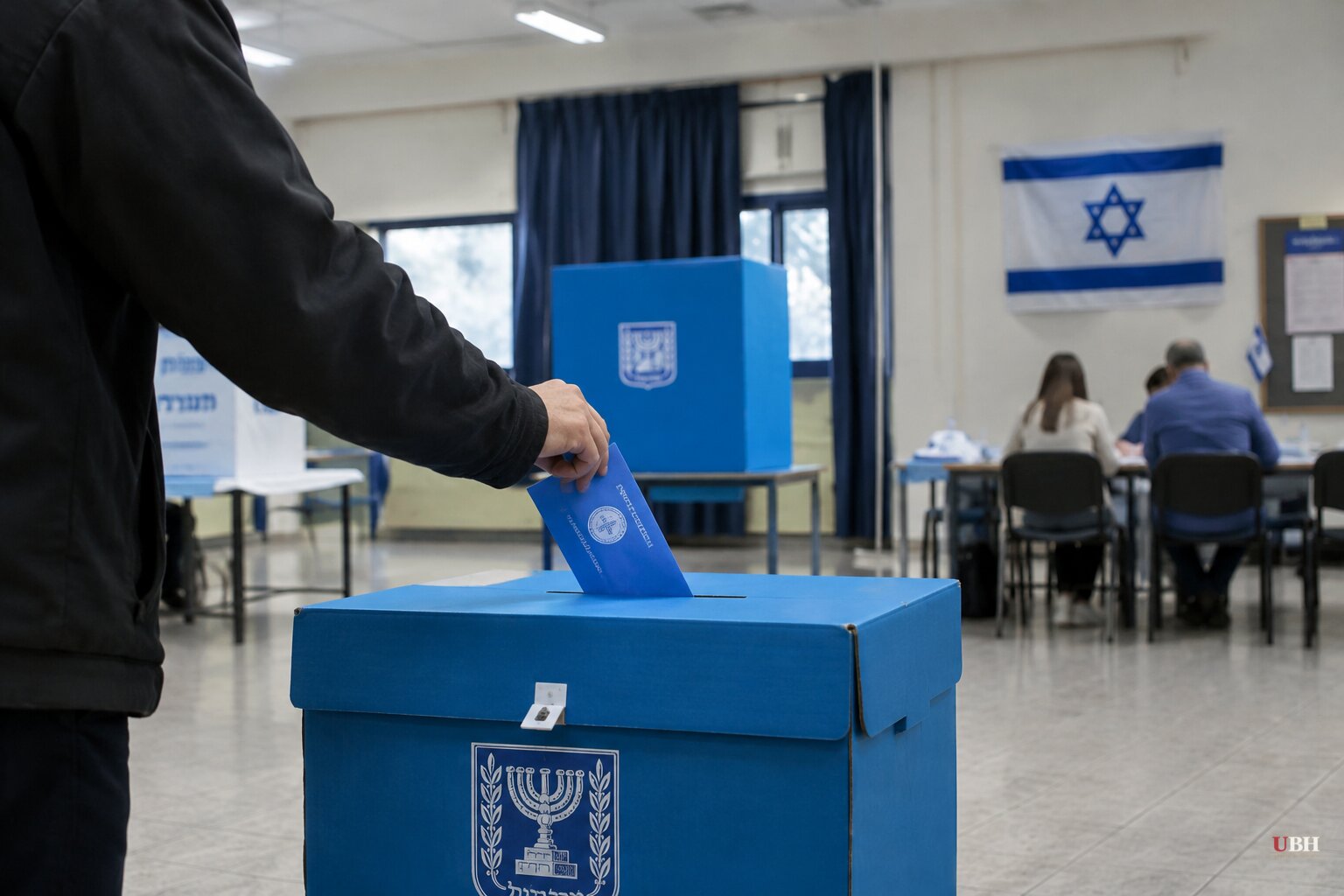
Since polls opened Tuesday morning, Oct. 27, Israel's election has produced its first hard numbers: after voting ended at 10 p.m. local time, three major exit polls showed Gadi Eisenkot's opposition bloc slightly ahead of Benjamin Netanyahu's coalition, with neither near a majority.
The Central Elections Committee said 77.7% of eligible voters had cast ballots as of 10 p.m. That is the highest turnout since 1999.
What the exit polls show
The Kan public broadcaster and Channel 13 each projected 53 seats for the four-party opposition bloc led by Eisenkot against 50 for Netanyahu's coalition. Across the three major exit polls, the opposition total ranged from 52 to 53. The Knesset has 120 seats, so 61 is a majority.
Likud is the largest single party in both of those polls, with 25 seats. Kan gave Eisenkot's Yashar party 21. Channel 13 gave it 23.
Likud's showing is well above where Channel 13 had it before the vote. That network's Oct. 23 survey projected 19 seats for Likud.
The exit polls are projections, not results. The final count may not be known until Wednesday, Oct. 28.
Arab parties hold the balance
Channel 13 projected 10 seats for the Joint List and seven for Ra'am, led by Mansour Abbas. That is 17 combined. Other projections ran as high as 18.
On Channel 13's numbers, Eisenkot's bloc plus the Arab-led parties would total 70 seats. That only becomes a governing majority if the lawmakers agree to an arrangement. Both Netanyahu and Eisenkot have ruled out governing with Arab-led parties, according to Newsweek's account. Outside support for a minority government remains a possible route.
Shira Efron, an analyst at the Rand Corp., called the result "a very good outcome for Eisenkot." She told NPR the most likely scenario is that Israel's president gives him the mandate to form a government, either as a minority government or through an alliance with Arab politicians.
A former Arab lawmaker, speaking as the Joint List celebrated the projections, declared "Ben-Gvir is out." That is a political claim, not a result.
Turnout and Netanyahu's fraud claim
Turnout was running ahead of 2022 all day. By 4 p.m. it stood at 55.7%, against 47.5% at the same hour in 2022. The Central Elections Committee's Dean Livne said no nationwide turnout had been that high since 1973.
Ofer Kenig of the Israel Democracy Institute said turnout rose in all sectors except ultra-Orthodox cities, where it fell. He added, "very, very cautiously," that the increase looked larger in liberal strongholds than in Netanyahu coalition strongholds.
Arab lawmaker Ahmad Tibi described Arab participation as unprecedented. No verified nationwide Arab turnout record has been published.
Netanyahu responded by alleging election theft. "They are trying to steal the election from us," he said, referring to arrests of Ra'am activists suspected of voter bribery. Election authorities reported no evidence of systematic ballot tampering.
The arrests are a matter for police and courts. No evidence of systematic tampering has been presented, and the Likud claim is a political accusation that has not been tested in any proceeding.
ZeroHedge reported that Likud asked for extended voting hours and was turned down. That account rests on a single report, and the Central Elections Committee has not been quoted on it.
The campaign stakes
Netanyahu, Israel's longest-serving prime minister, called the vote a "very moving and fateful moment" after voting in Jerusalem. He has President Trump's endorsement. Trump praised his leadership during the eight-month Iran war.
Eisenkot, a center-right former military chief of staff, voted in Herzliya and urged Israelis to turn out and "stick to the mission of replacing the worst government since the state's founding." He told voters not to "get excited by Netanyahu's scare tactics."
This is the first parliamentary election since the Oct. 7, 2023 Hamas-led attack and the wars that followed. Netanyahu faces anger over the Iran war and the response to Oct. 7. He is also on trial in a bribery case, and his request for a presidential pardon was denied. He denies wrongdoing in the corruption trial and the International Criminal Court war-crimes accusations. He says Israel's Gaza campaign "prevented genocide."
What comes next
The official count will settle whether the exit polls hold, and Likud's pre-election gap with the polls shows how far they can move. Once results are final, the president must decide who gets the first chance to assemble a coalition. With both leaders rejecting Arab-led parties as partners, the open question is whether Eisenkot can find 61 votes without them, or whether Israel heads into weeks of negotiation with no workable majority.
Sources used for this briefing
5 links from 5 independent newsrooms (syndicated copies of the same report count once)
These are the sources it draws on, linked so you can verify.


