
Unbiased headlines. Facts, not spin.
Every story is an unbiased news briefing written from 110+ sources across the spectrum — sources linked so you can verify it yourself.
 politics
Low Interest (4/10)
June 16, 2026 at 10:50 AM
politics
Low Interest (4/10)
June 16, 2026 at 10:50 AM
Iran Coach Calls His Team 'Most Oppressed' at World Cup After Post-Match Expulsion from LA
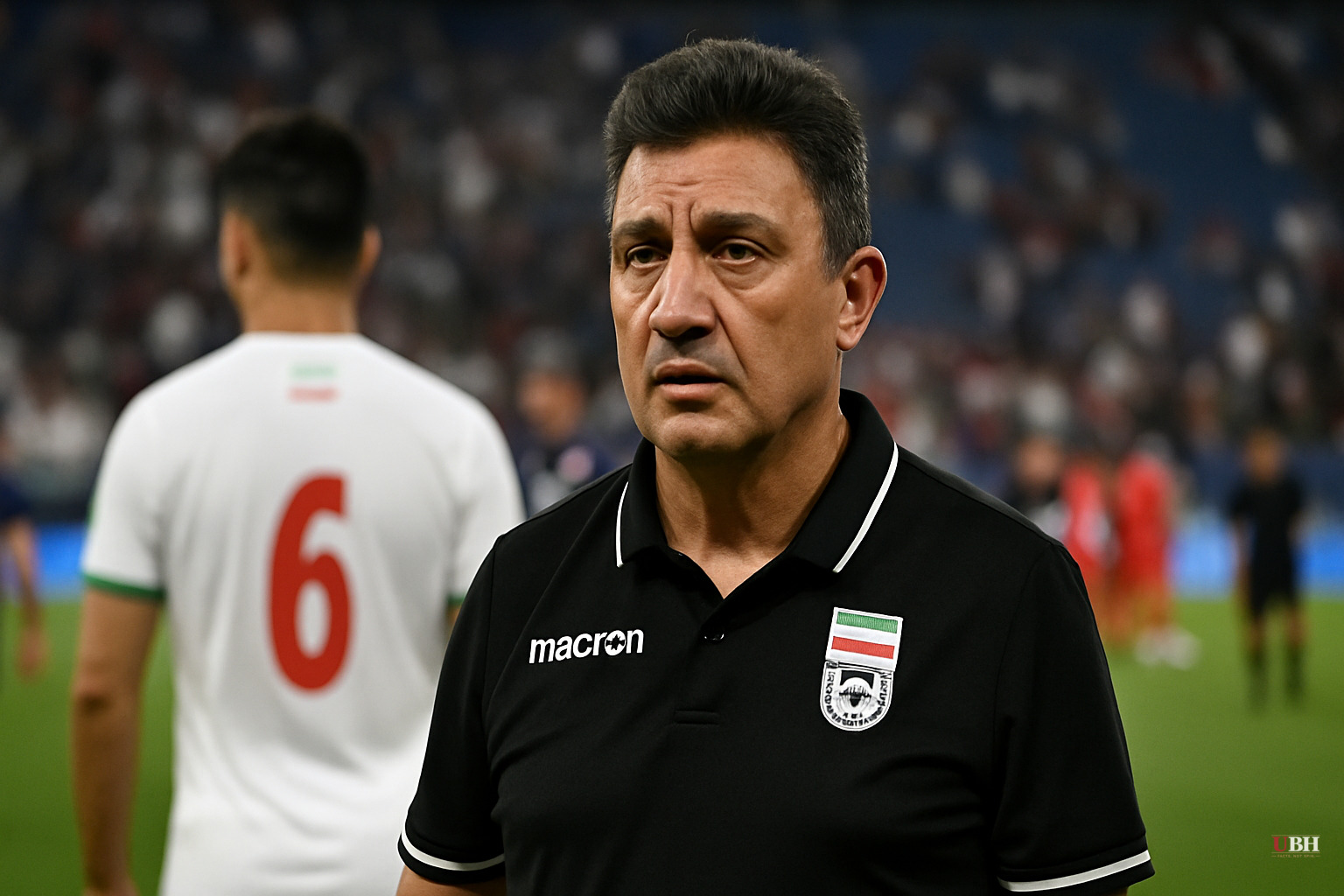
Since the ongoing U.S.-Iran nuclear negotiations entered their final stretch this week, the Iranian World Cup team has become a focal point of the broader conflict.
The team's situation has been deteriorating for weeks. Iran originally planned to base its World Cup camp in Tucson, Arizona, but moved to Tijuana, Mexico in late May after visa problems prevented key backroom staff from entering the United States, according to BBC Sport. Multiple staff members described as "integral" were denied U.S. entry visas. The Iranian Football Federation publicly called on FIFA to "uphold the principles of neutrality, fairness, and established regulations." Iran's ticket allocation was also revoked on the eve of the tournament.
Monday night added another chapter.
Ordered Out After the Final Whistle
After their 2-2 draw with New Zealand in Group G, the Iranian squad expected to stay overnight in Los Angeles for recovery and return to Tijuana the following afternoon. Instead, coach Amir Ghalenoei says they were told immediately after the match to board a plane and leave.
"After the game they said to us, 'you have to leave immediately,'" Ghalenoei told reporters, according to BBC Sport. "We were supposed to stay here tonight to recover and return tomorrow lunchtime. I think our team is the most oppressed one in the whole World Cup. Our federation isn't here, our media isn't here, our management isn't here."
Ghalenoei said he had no clear explanation for the order. "We don't know why they're returning us, to be honest. I think it's very strange. It seems like others are doing the planning for us."
Iran captain Mehdi Taremi called the situation a "disaster."
FIFA president Gianni Infantino visited the Iranian dressing room after the match, per BBC Sport. No public statement from FIFA followed that visit.
Who Ordered It, and Why, Remains Unanswered
Neither the U.S. Department of Homeland Security nor FIFA has publicly claimed responsibility for the post-match expulsion order as of June 16. That ambiguity matters. It is not established whether U.S. authorities, FIFA logistics, or some combination drove the decision. Ghalenoei's account is the only sourced explanation on record.
The strongest good-faith argument for the restrictions is straightforward: the U.S. is simultaneously negotiating a nuclear deal with Iran while hosting Iranian government-affiliated officials on American soil. Security services have legitimate reasons to limit the footprint, duration, and movement of those officials. Iranian team travel is not purely a sporting matter when the regime's diplomats and intelligence apparatus are under active scrutiny.
That argument does not, however, explain why the decision was made without notice or why the team wasn't informed before the match, as Ghalenoei's account implies. Chaotic, last-minute enforcement applied to athletes who just played 90 minutes of soccer is a different category of security management than deliberate policy.
Iran v. Iran in the Stands
BBC North America correspondent Shaimaa Khalil reported from SoFi Stadium that the political split among fans was visible and audible throughout the match. Hundreds of protesters gathered outside, many carrying pre-revolutionary Iranian flags bearing the Lion and Sun emblem, which FIFA has banned inside stadiums as a political symbol. The symbol has become a shorthand for opposition to the Islamic Republic.
"Mullahs' team is not my team," one group chanted. Others sang Iran's pre-revolutionary national anthem.
Inside the stadium, those same Lion and Sun flags appeared anyway, alongside the official flag of the Islamic Republic. The two were hard to distinguish from a distance.
"It's complicated," said Samaneh, an Iranian-American who spoke to BBC. "I'm here to support Iran, not the regime. I miss my country." She added that her mother remains in Iran, unable to travel because of U.S. travel restrictions.
Her situation is not unusual. The Iranian-American community in Los Angeles is one of the largest outside Iran, and it contains people across a wide spectrum: those who fled the regime, those with family still inside the country, and those who hold both realities at once.
What Comes Next
Iran's Group G schedule continues. The team returns to Los Angeles for a match against Belgium on June 21, then travels to Seattle for a final group game against Egypt on June 27, according to BBC Sport.
Whether the same post-match expulsion rules apply to those games is unknown. FIFA has not issued public guidance. The Iranian Football Federation has not announced any resolution with U.S. authorities. A U.S.-Iran nuclear deal, if signed Friday in Geneva as Vice President Vance suggested earlier this week, would not automatically resolve the visa and travel framework governing the team's remaining matches.
Will Iran play Belgium on June 21 under the same conditions it played New Zealand on June 16, or will the diplomatic track produce any change in how U.S. authorities handle the team's access? No one with authority over that decision has said.
Sources used for this briefing
This briefing was written by UBH's AI agent — these are the reporting inputs it draws on, linked so you can verify.


