
Unbiased headlines. Facts, not spin.
Unbiased Headlines is an independently owned news organization. We bring you the facts, not opinions, written fresh from 110+ named sources. Sources linked so you can verify it yourself.
 defense
Breaking / Critical (9/10)
defense
Breaking / Critical (9/10)
Iran Army Spokesman Says Hormuz Reopens If U.S. Leaves Region, While CENTCOM Says U.S. and Partners Control the Strait
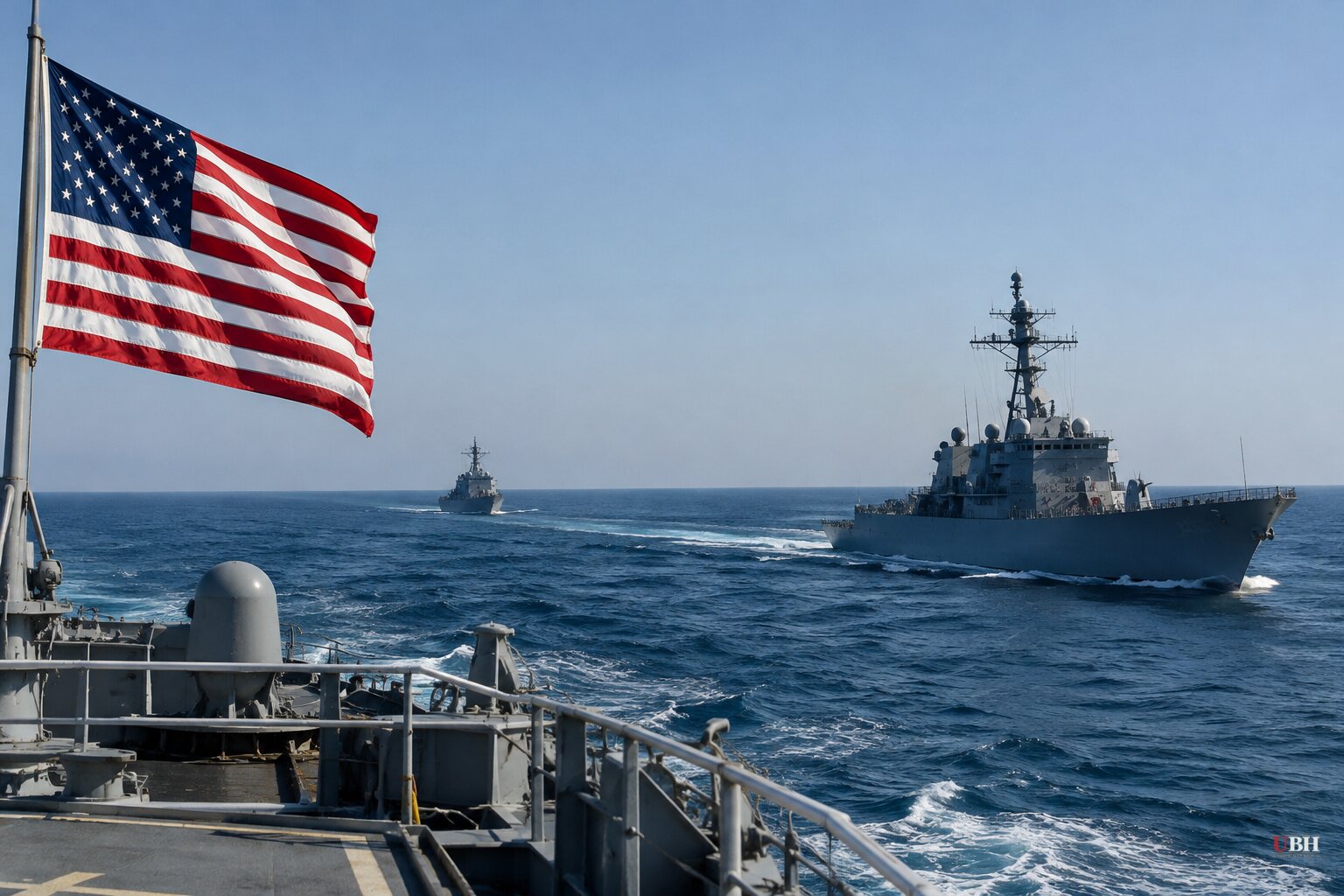
Since U.S. and Israeli strikes on Iran began on Feb. 28, the Strait of Hormuz has been the main bargaining chip in the war. Today, Oct. 16, Tehran put a price on it in public.
"If the United States leaves the region, the Strait of Hormuz will reopen and collective security will be established with the participation of the countries of the region, and the global economy will improve," army spokesman Mohammad Akraminia wrote on X. "If it does not leave, we will expel it."
Akraminia did not say what "leaves" means. He gave no indication whether he meant forces deployed during this war, every U.S. military unit in the region, or U.S. government personnel generally.
Two versions of the same waterway
The U.S. says the strait is open. Iran says it is closed to anyone without Iranian permission.
U.S. Central Command said Thursday that "the United States and regional partners control the strait as commercial vessels continue to transit despite unwarranted IRGC aggression." CENTCOM also said more than 40 commercial vessels crossed in the previous 24 hours. That count has not been independently confirmed.
CENTCOM said in an Oct. 8 post on X that U.S. forces had supported the shipment of more than 1.25 billion barrels of Gulf crude through the strait in recent months. "In contrast, Iran has not shipped any barrels because of America's ironclad blockade on Iranian ports," the command said. President Trump wrote on Truth Social that the blockade "will remain in full force and effect."
Iran's Supreme National Security Council Secretary Mohsen Rezaei told Press TV on Oct. 11 that the strait is not open. He said some vessels move through smuggling networks and that traffic remains far below prewar levels.
Ship attacks and a disputed sinking
At least three commercial vessels have been struck in the region this week in suspected Iranian attacks.
Singapore's Maritime and Port Authority confirmed that the container ship GFS Pride was hit by an unidentified projectile on Oct. 13, caught fire and later sank. All 21 crew were evacuated safely. A second Singaporean ship, the GFS Giselle, was hit by an unidentified projectile on Oct. 14. It reached anchorage under its own power, and all 22 crew were safe.
Singapore did not name who fired. The IRGC says the Pride struck a naval mine while on an "unauthorised" route off Oman. CENTCOM says an IRGC projectile hit it and that it sank under tow. CENTCOM also rejected an IRGC claim that hundreds of U.S. service members had been killed in Jordan.
The Greek maritime risk firm Marisks warned Thursday that ships still face "indiscriminate attacks" even with their tracking systems switched off, which many crews are doing to avoid detection.
Separately, the Iranian navy said Friday that it had identified a tanker on fire in a "prohibited area" of the Gulf of Oman, east of Hormuz. The navy said the ship had turned off its tracking and was trying to pass through. It did not say what caused the fire, and the tanker's name and crew status remain undisclosed.
The diplomatic track
Talks have not stopped. Iranian Foreign Ministry spokesman Esmail Baghaei said Oct. 12 that Tehran was reviewing a U.S. response to its proposal and would reply through intermediaries. Qatar and Pakistan are among the mediators.
Baghaei said security will not return to the strait while Washington maintains the blockade, economic pressure and "warfare."
Rezaei took a harder line. He said Iran gave Washington seven conditions through Pakistan, Qatar and Iraq, and that the U.S. accepted some and left others unclear. He called the response inadequate. "Iranian diplomacy has changed and there will be no return to the status quo ante," he wrote on X.
Rezaei also warned that if the U.S. attacks again, American-linked data systems and AI sensors in the region could be targeted. He put the value of that technology infrastructure at more than $2 trillion.
Trita Parsi, executive vice president of the Quincy Institute, said that in a private gathering on the sidelines of the U.N., Foreign Minister Abbas Araghchi floated a seven-day timetable. Under it, Iran would reopen the strait and resume nuclear talks if the U.S. lifted its naval blockade, waived sanctions on Iranian oil sales and observed a ceasefire that includes Lebanon. Parsi said Araghchi suggested a quick deal would help Trump ahead of the November midterms.
Parsi also described "deep suspicion" about whether Iran is simply trying to buy time to move more oil. Iran's U.N. mission and other officials had no immediate comment on his account. Parsi said the offer resembles the June memorandum of understanding, which called for a 60-day interim period and fell apart when Iran resumed attacks on shipping.
Trump has said he is in no rush to reach a deal. Iranian President Masoud Pezeshkian, seen as a relative moderate, has complained of an "atmosphere of distrust." "Every day, they increase the sanctions against us. Every day, they threaten us. Every day, they strike us," he told CBS News. Whether the security forces will back compromises he favors is an open question.
Pezeshkian spent Friday at a nature summit in Armenia, attended by U.N. Secretary-General Antonio Guterres. There he called war damage in the region "ecocide" that "must be condemned."
Iran has not announced a date for its answer to the latest U.S. message. Akraminia's statement sets the public Iranian position: a U.S. exit, or a fight to force one.
Sources used for this briefing
7 links from 6 independent newsrooms (syndicated copies of the same report count once)
These are the sources it draws on, linked so you can verify.


