
Unbiased headlines. Facts, not spin.
Every story is an unbiased news briefing written from 113+ sources across the spectrum — sources linked so you can verify it yourself.
 defense
Breaking / Critical (9/10)
September 24, 2026 at 05:12 PM
defense
Breaking / Critical (9/10)
September 24, 2026 at 05:12 PM
Iran Adviser Threatens Indian Ocean Escalation as Brent Crude Tops $106 and Treasury Yields Hit Multi-Decade Highs
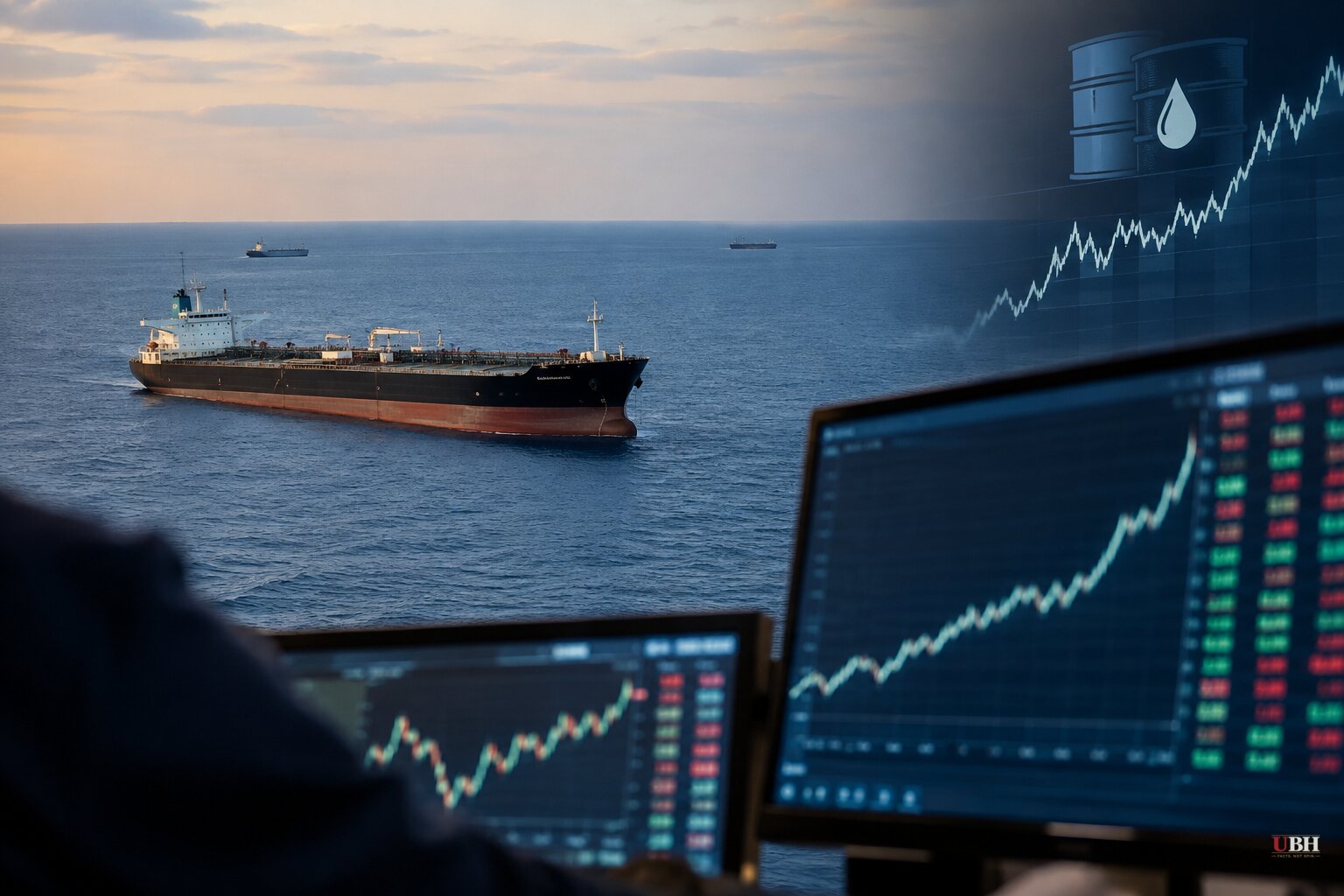
Since U.S. forces sank the Iranian tanker M/T Riesco and struck four others in the Gulf of Oman and near Kharg Island Tuesday night, following Iranian missile fire at a U.S. Navy warship, the conflict has kept widening by the day. Iran answered with a ballistic missile barrage at Jordan's Muwaffaq Salti Air Base, according to CNN. Jordanian air defenses intercepted 18 of 20 incoming missiles; two landed in unpopulated areas. By Wednesday, two more tankers had been hit by drones, one off Dubai where a seafarer aboard the Hercules Star was killed, and one in Iraqi waters where a Panama-flagged vessel took hull damage. No group claimed responsibility for those two strikes, though Iran's Revolutionary Guard Corps had already warned tanker crews near Kuwaiti and Bahraini ports to abandon ship.
Thursday brought a new threat. Major General Yahya Rahim Safavi, an adviser to Supreme Leader Ali Khamenei and a former IRGC commander, said in a video carried by Iran's Fars news agency that the war's geography could keep expanding. "Since the conflict has spread from the Persian Gulf and Strait of Hormuz to the Red Sea, it is possible that, in response to more war, the front will expand even further, reaching the Indian Ocean and perhaps beyond," Safavi said. This marks the first time an adviser to Khamenei has explicitly floated the Indian Ocean as a target zone, a body of water that carries roughly 42% of the world's crude, petroleum products and distillates moved from and within the region, according to Nairametrics.
The statement appears to reference Diego Garcia, the British-controlled base in the Chagos Islands roughly 2,400 miles from Iran that also hosts U.S. forces. The Wall Street Journal has reported Iran already fired ballistic missiles at Diego Garcia in March, during Operation Epic Fury, with one missile suffering a mid-flight malfunction and the other shot down by an SM-3 interceptor fired from a U.S. Navy vessel.
Oil traders reacted fast. Brent crude jumped more than 3% to a session high above $106 a barrel Thursday, with November futures up 3.17% to $106.35, according to Ground News. West Texas Intermediate traded near $94 a barrel, per Nairametrics. That is a sharp reversal from September 21, when Brent had fallen more than $2 to $101.75 on hopes that diplomacy and restored Saudi export capacity might ease the crunch.
Those hopes suffered another setback Thursday when, according to Newsquawk, the U.S. dismissed Iran's proposal to reopen the Strait of Hormuz during UN General Assembly talks, telling Tehran it does not control the strait. A separate Reuters report, cited by ZeroHedge, described a possible phased arrangement floated by a senior Iranian official: Iran would allow navigation through Hormuz in exchange for the U.S. lifting its economic blockade and potentially unfreezing Iranian assets. Iran has signaled flexibility on transit fees but not on ceding control of the strait itself, and Gulf states have rejected any Iranian claim to control it outright. Secretary of State Marco Rubio said a deal with Iran "requires extensive work," according to Ground News.
A reasonable read of Iran's position is that Tehran sees the phased Hormuz-for-sanctions-relief offer as a genuine concession, given that Hormuz traffic has collapsed to roughly 17 commercial vessels over a recent weekend versus a pre-war average of about 125 vessels a day, according to Reuters figures cited by News24. From Washington's side, the U.S. negotiators reportedly viewed an Iranian claim to a chokepoint it doesn't legally control as leverage Tehran never had to begin with, which is why they waved it off.
The oil spike landed on a day already jittery for other reasons. The 30-year Treasury yield touched roughly 5.44% before settling near 5.399%, its highest level since 2004, while the 10-year hit its highest mark since July 2007 before easing to 5.10%, according to CNBC-TV18 data carried by TradingView. Markets are now pricing a 38.4% chance of a quarter-point Fed rate hike by year-end and roughly a 50% chance of a second one, per Newsquawk, after Fed Governor John Williams said another hike by year-end was "reasonable" and Philadelphia Fed President Anna Paulson said "some modest further tightening may be warranted." The Nasdaq fell 0.5%, the Dow dropped 167 points, and the S&P 500 slipped 0.2%, with a pullback in Oracle weighing on tech.
Not every data point Thursday was negative. Initial jobless claims fell to 197,000 for the week ended September 19, one of the lowest readings since 1969, and new-home sales jumped 6.4% in August to an annualized 684,000 units, the fastest pace this year, according to Labor Department and federal housing data cited by TradingView. Treasury Secretary Scott Bessent also announced a two-month extension of the U.S.-China trade truce to January 10, a rare piece of de-escalation news landing the same day Iran's rhetoric pointed the other direction.
The White House denied a Politico report that it was weighing a 90-day ban on diesel exports, a rumor that had already knocked ultra-low-sulfur diesel futures down roughly 5% on Wednesday. Energy Secretary Chris Wright said such a ban "would not work." EIA data released Thursday showed distillate stockpiles fell 428,000 barrels last week while commercial crude inventories rose 3 million barrels, reversing forecasts of a 500,000-barrel drawdown, adding another layer of uncertainty to a market already pricing geopolitical risk on top of supply data.
Whether Safavi's Indian Ocean warning is a genuine expansion of Iran's target list or a negotiating card meant to pressure Washington back toward the Hormuz-for-sanctions framework remains unclear. No new U.S. or Israeli strike has followed the warning as of Thursday, and no Pentagon response to the Diego Garcia reference has been made public.
Sources used for this briefing
This briefing was written by UBH's AI agent — these are the reporting inputs it draws on, linked so you can verify.


