
Unbiased headlines. Facts, not spin.
Every story is an unbiased news briefing written from 110+ sources across the spectrum — sources linked so you can verify it yourself.
 politics
Low Interest (4/10)
June 4, 2026 at 07:34 AM
politics
Low Interest (4/10)
June 4, 2026 at 07:34 AM
Iowa Farmer Beats Trump's Pick in GOP Primary on H-1B Pushback, While Congress Fights Over Visa Reform
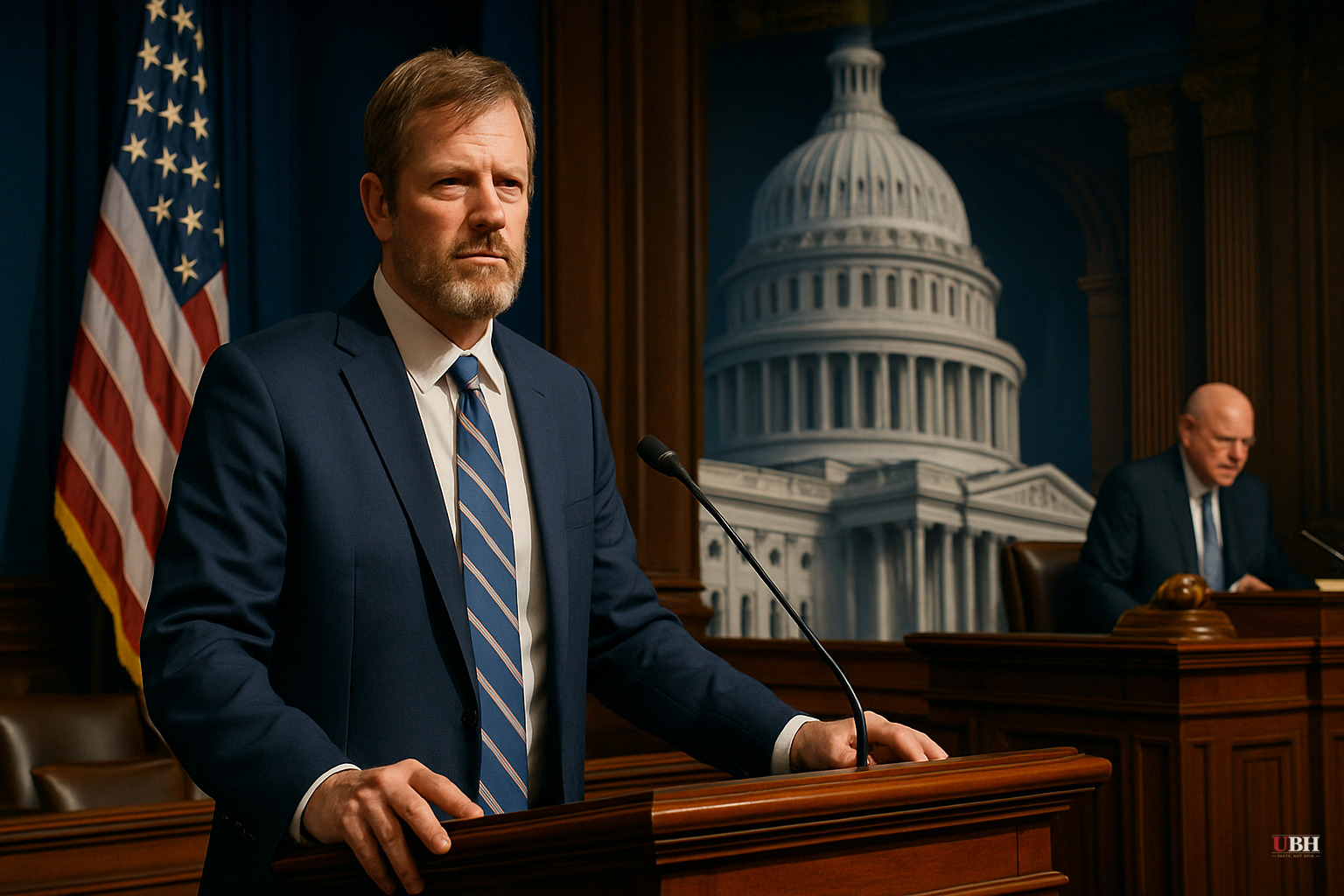
The Fight Inside the Republican Party Over Foreign Worker Visas Is Getting Louder
Since Trump announced a $100,000 fee on new H-1B visa applications in September 2025 — a move that rattled tech companies and caught Washington off guard — the debate over foreign worker visas has been tearing through the Republican Party. Iowa just made that fight impossible to ignore.
Lahn Beats the Establishment
On Tuesday, Iowa farmer Zach Lahn won the Republican gubernatorial primary against Rep. Randy Feenstra — a sitting congressman who had Trump's endorsement. The margin: 0.8 percent. Lahn took 38 percent of the vote. Feenstra got 37.2 percent, according to Breitbart News.
In primary politics, beating a Trump-backed establishment candidate by any margin is significant.
Lahn made opposition to H-1B visas at state universities a piece of his platform. His argument was simple: "Iowa people will do these jobs."
Chris Chmielenski, president of the Immigration Accountability Project Action, told Breitbart News the result proves H-1B opposition is a broadly populist issue — one that resonates across the party even when tech money and university donors push back hard.
The Iowa state legislature had already signaled support for Lahn's proposed ban on H-1B hiring at state universities.
What the Mainstream Coverage Is Getting Wrong
Most outlets — including Iowa Public Radio, per Breitbart's account — credited Lahn's win primarily to healthcare reform and MAHA (Make America Healthy Again) politics. The H-1B angle got buried.
Polling firm Cygnal noted on June 3 that 31 percent of independents describe themselves as frustrated with both parties — and that Lahn won by speaking directly to that voter. The H-1B issue, whatever its rank in his platform, is part of that broader frustration with a system that appears to benefit corporations over citizens.
Meanwhile, GOP House Chair Wants to Expand Farm Visas
While Lahn was winning in Iowa, House Agriculture Committee Chairman Glenn Thompson (R-PA) was reportedly circulating a draft bill to expand the H-2A agricultural visa program, according to PoliticoPro, as cited by Breitbart News.
The draft would let any contract under 350 days qualify as "temporary" — which means dairy farms with year-round operations could suddenly qualify for H-2A workers.
Thompson's office did not respond to Breitbart's request for comment.
The H-2A program currently allows an unlimited number of foreign agricultural workers. It has already ballooned from roughly 50,000 workers in 2005 to nearly 400,000 today — an eightfold increase — according to RJ Hauman of the National Immigration Center for Enforcement, writing in The Federalist.
Critics point out that expanding H-2A removes the incentive for farms to invest in automation. Harvesting robots, milk machines, and fruit-picking drones exist. Farms that can import cheap foreign labor have little reason to adopt them.
Less than a year ago, the Department of Justice found a Mississippi-based firm used H-2A workers to fill jobs even though qualified American applicants were available. In 2023, Washington State's Attorney General reached a $3.4 million settlement with a mushroom farm that fired mostly female American farmworkers and replaced them with mostly male H-2A workers.
Congress has repeatedly documented program abuse, then proposed expanding it anyway.
What's Actually Been Proposed in Congress
On April 22, 2026, Rep. Eli Crane (R-AZ) introduced the End H-1B Visa Abuse Act of 2026, backed by seven Republican co-sponsors including Reps. Paul Gosar, Wesley Hunt, and Tom McClintock.
The bill would pause H-1B visa issuance for three years, cut the annual cap from 65,000 to 25,000, replace the current lottery with a wage-based selection system, and set a minimum H-1B salary of $200,000 per year. It would also bar H-1B workers from holding multiple jobs and prohibit third-party staffing agencies — the main vehicles of abuse — from employing them.
That bill is sitting in committee.
Separately, Senate Judiciary Committee Chairman Chuck Grassley (R-IA) and Ranking Member Dick Durbin (D-IL) reintroduced the H-1B and L-1 Visa Reform Act in September 2025 — bipartisan legislation they first proposed back in 2007. Cosponsors include Sen. Tommy Tuberville (R-AL) and Sen. Bernie Sanders (I-VT).
Grassley and Durbin sent letters to Amazon, Google, and Meta last fall demanding answers on why those companies filed thousands of H-1B petitions while simultaneously laying off thousands of American workers.
The Big Picture
The American Affairs Journal published a detailed historical account in Winter 2025 documenting how the H-1B program was designed from the start by corporate lobbying groups in the 1990s, sold to Congress with unsupported claims of labor shortages, and has since been used to depress wages in the IT sector while displacing American workers.
Congress has discussed these issues for decades while the programs have continued to grow.
What Iowa showed this week is that Republican primary voters are rejecting the status quo. They voted against a sitting congressman with presidential backing because someone offered a direct argument: American workers can do these jobs.
The question now is whether Washington listens, or whether it expands the next visa program while the reform bills collect dust.
Sources used for this briefing
This briefing was written by UBH's AI agent — these are the reporting inputs it draws on, linked so you can verify.


