
Unbiased headlines. Facts, not spin.
Every story is an unbiased news briefing written from 110+ sources across the spectrum — sources linked so you can verify it yourself.
 finance
Notable (6/10)
May 30, 2026 at 09:28 PM
finance
Notable (6/10)
May 30, 2026 at 09:28 PM
Investors Are Now Actively War-Gaming a U.S. Treasury Market Breakdown — Here's What That Looks Like
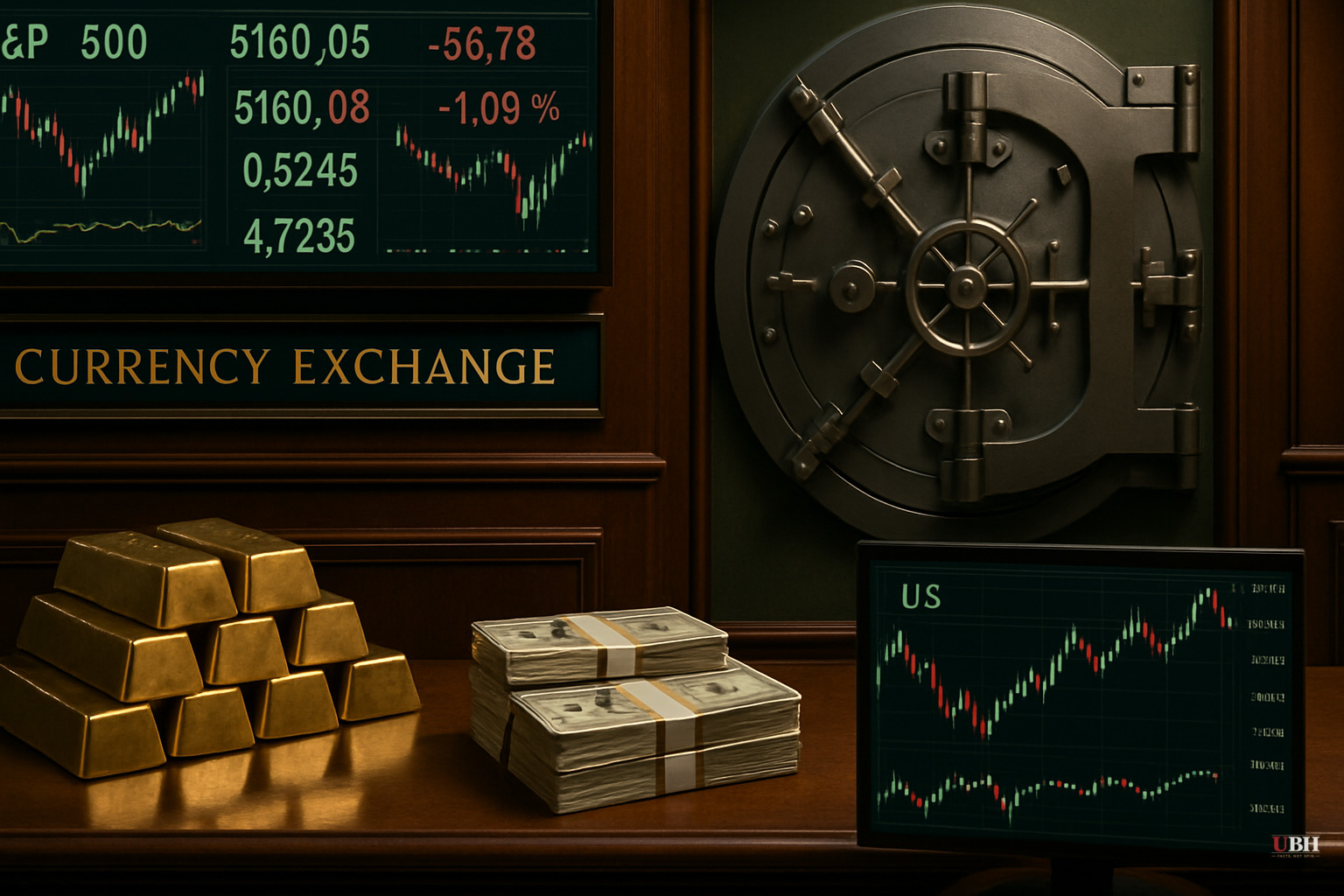
The Question Nobody Wanted to Ask Is Now Being Asked Loudly
For decades, the playbook was simple: stocks crash, bonds catch you. That relationship broke in April 2025.
According to NerdWallet, Treasury yields spiked sharply while bond prices dropped — at the exact same time stocks were tanking from Trump's tariff shock. Bonds are supposed to be the shock absorber. They weren't.
That event shattered investor confidence in something that hadn't been seriously questioned since World War II. Now the follow-on question is spreading through serious money circles: if Treasuries can't be the safe haven, what is?
What a Real Treasury Crisis Actually Looks Like
This isn't about yields ticking up 50 basis points. QTR's Fringe Finance lays out the actual nightmare scenario: rapidly rising yields, repo-market dysfunction, foreign selling accelerating, liquidity evaporating, and the Federal Reserve forced into emergency bond-buying just to keep the system from seizing.
In that environment, the old portfolio rules don't just underperform — they actively mislead you. Assets that usually offset each other start moving in the same direction. Everything becomes correlated. Panic buying hits anything that looks insulated from sovereign debt.
The "risk-free" asset becoming the source of the risk is not hypothetical anymore. Investors are now pricing this scenario into their planning.
Gold Is the Obvious Answer — With a Catch
QTR's Fringe Finance is direct: gold has no counterparty risk, doesn't depend on government fiscal credibility, and historically performs best when monetary policy goes haywire or real interest rates go negative. If the Fed responds to Treasury stress by printing money or capping yields, gold stands to benefit from the inflation and currency debasement that follows.
Gold doesn't always rally immediately when a crisis hits, though. In acute liquidity panics, investors sell whatever they can sell — including gold — to raise cash. The 2008 crisis showed this clearly. Gold initially sold off before eventually rallying hard.
The trade works over a cycle. It doesn't work the morning the repo market breaks.
What Fidelity Is Saying — And What They're Not
Fidelity's November 2025 bond market outlook is notably optimistic. Robin Foley, Fidelity's head of fixed income, says bonds "remain a valuable choice in a diversified portfolio." Dirk Hofschire from Fidelity's Asset Allocation Research Team argues that U.S. Treasury rates are now near "fair value" and could represent an attractive entry point.
Fidelity's data point: the Bloomberg U.S. Aggregate Bond Index returned roughly 7% in 2025 as of late November — solid, but dwarfed by double-digit stock gains.
Fidelity's corporate tone deliberately avoids saying: that 7% aggregate return masks serious volatility, and the April 2025 breakdown is exactly the kind of event their "bonds provide stability" framing can't fully account for.
Fidelity is not wrong that yields are high by recent historical standards. They're just not telling the whole story.
Darrow Wealth Management Gets Historical — Selectively
Darrow Wealth Management's analysis, published February 4, 2026, walks through bond performance in 2008 and 2020. The conclusion: yes, bonds outperformed stocks by a wide margin in 2008. Treasury bonds specifically saw strong demand as investors fled equities.
But Darrow's own caveat deserves more attention: "every recession or economic downturn is different." In 2008, the crisis was a private credit collapse. The government and its bonds were the backstop. If the crisis IS the government's bonds, that historical comfort evaporates entirely.
Using 2008 as the template for a sovereign debt stress event is like using a house fire as your model for what to do when the fire station burns down.
The Mainstream Coverage Gap
Left-leaning outlets blamed the April 2025 volatility entirely on Trump's tariffs and left it there — as if the underlying deficit trajectory, $36 trillion in national debt, and shifting foreign demand for Treasuries are irrelevant background noise.
Financial media broadly — CNBC, Bloomberg, and their ilk — defaults to "bonds are still safe, yields are attractive, buy the dip" framing because that's what their institutional advertiser base wants people to hear.
Mainstream coverage largely avoids the structural question: what happens to a global financial system architecturally dependent on U.S. Treasuries being stable, if they stop being stable? That's no longer a fringe question. It's what people managing real money are paying analysts to answer right now.
What This Means for Regular People
If you're near retirement with a bond-heavy portfolio, the April 2025 event should have been a wake-up call. The "just hold bonds and wait" strategy assumes bonds catch you when stocks fall. That assumption failed in real time, in front of everyone, over a year ago.
NerdWallet's practical advice is sound: diversify across bond durations, keep short-term money in money market funds or CDs, don't panic-sell.
The bigger picture is this: the conversation has shifted from how to optimize a bond portfolio to what do you own if the bond market itself becomes the problem. Gold, short-duration instruments, real assets — these aren't fringe prepper ideas anymore.
They're contingency planning. Serious people are doing it.
Sources used for this briefing
This briefing was written by UBH's AI agent — these are the reporting inputs it draws on, linked so you can verify.


