
Unbiased headlines. Facts, not spin.
Every story is an unbiased news briefing written from 110+ sources across the spectrum — sources linked so you can verify it yourself.
 finance
Low Interest (2/10)
July 31, 2026 at 07:12 PM
finance
Low Interest (2/10)
July 31, 2026 at 07:12 PM
Invesco Muni Bond Team Says the Market Isn't as Boring as It Looks
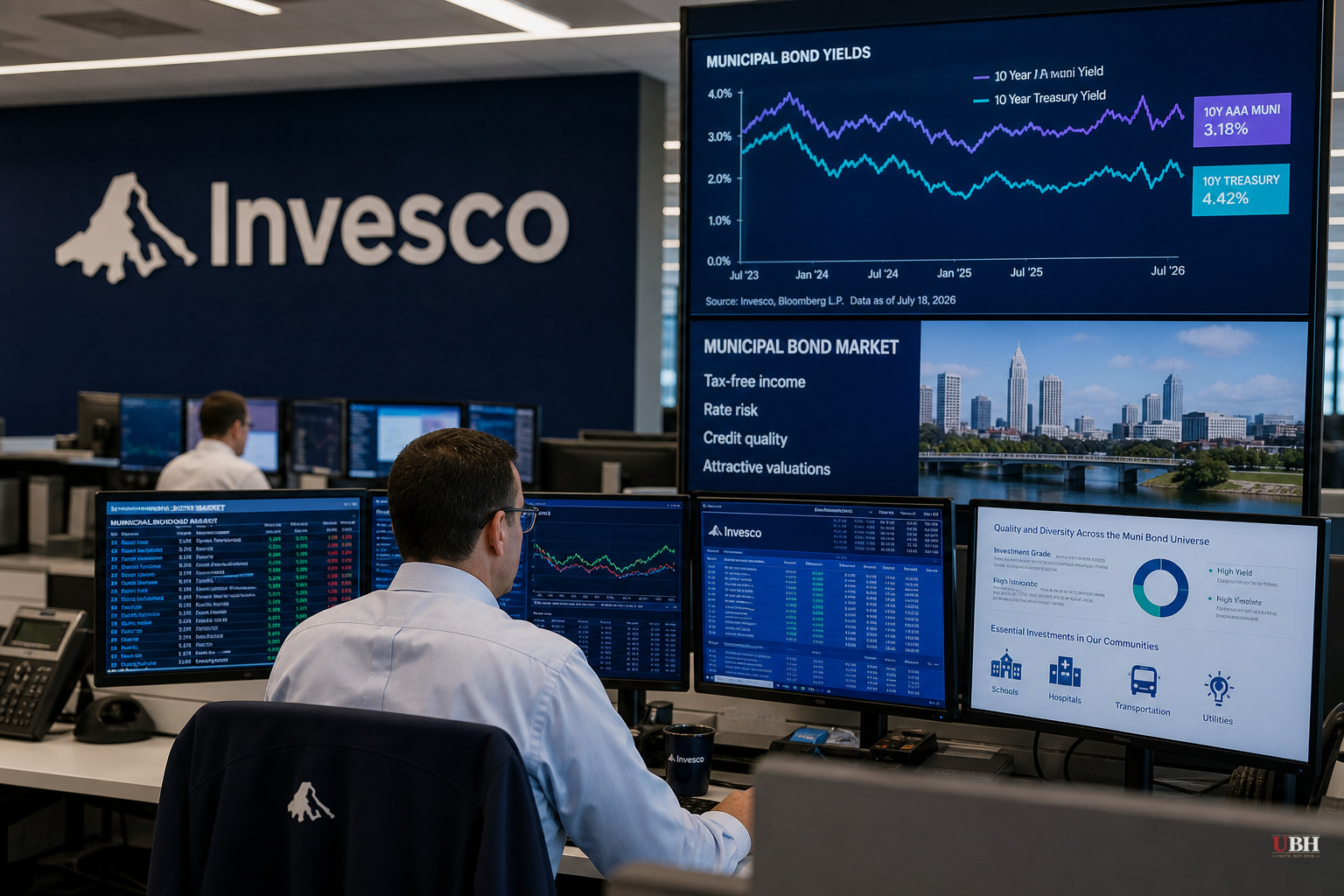
What Invesco actually said
Invesco's municipal bond desk, run by Mark Paris and Tim Spitz, put out its latest commentary on July 18, 2026, following a quarterly recap and outlook the pair published June 30, 2026. Both build on a theme Invesco pushed back in a May 5, 2026 podcast: that so-called "boring" municipal bonds may be anything but in the current market.
All the data behind the July commentary is dated as of July 16, 2026, and the opinions are explicitly framed as Paris and Spitz's own views as of that date, not guarantees.
Munis have spent decades as the asset class nobody talks about at dinner parties. They fund roads, schools, water systems, hospitals. States and local governments issue them, and in return investors typically get interest payments exempt from federal tax, and often state tax too if you live where the bond was issued. Invesco's own materials spell that out plainly: municipal bonds "typically pay interest that is tax-free in their state of issuance," and because of that tax perk they "usually offer lower pre-tax yields than similar taxable bonds."
Why this is getting attention now
Municipal bonds don't usually get their own podcast episode. The fact that Invesco felt the need to argue they're "anything but boring" reflects where rates and credit conditions sit heading into the back half of 2026.
Interest rate movement has been squeezing bond prices across the board. Invesco's disclosures are direct about this mechanism: "bond prices generally fall as interest rates rise and vice versa." When rates rise, existing muni bonds with lower coupons become less attractive, and their market prices drop. When rates fall, the opposite happens. Either way, that volatility is the opposite of boring for anyone holding these bonds in a brokerage account or a bond fund.
There's also credit risk, which Invesco flags without sugarcoating. An issuer, meaning a city, state, or local authority, "may be unable to meet interest and/or principal payments," which knocks down the value of its bonds and can drag down its credit rating. Invesco's own risk language treats that as a live possibility, warning that "legislative or economic conditions could affect an issuer's ability to make payments of principal and/or interest."
The case for munis, stated fairly
The strongest argument for paying attention to this corner of the market isn't complicated. For investors in higher tax brackets, tax-free income is real money. A muni bond yielding less than a comparable taxable bond can still come out ahead after taxes, especially in high-tax states. That's the core pitch Paris and Spitz are making, and it's a legitimate one grounded in the tax code, not spin.
The counterargument deserves equal airtime. Skeptics of the "munis are undervalued" narrative point out that lower pre-tax yields only pay off if you're actually in a tax bracket where the exemption matters. For investors in lower brackets, or those holding munis in already tax-advantaged accounts, the tax break is wasted, and they're just accepting a lower return for no reason. That's a fair, common-sense objection, and Invesco's own disclosure implicitly concedes it by noting munis "usually offer lower pre-tax yields" as a tradeoff, not a bonus.
What's missing from a single-firm outlook
Invesco's commentary is exactly what it says it is: the opinion of two of its own bond managers, published to promote the firm's fixed-income products. It's not independent research, and Invesco says as much in its own fine print, calling the piece something that "should not be construed as recommendations" but rather "an illustration of broader themes."
That's a reasonable disclaimer, and it should be taken seriously. A firm that manages municipal bond funds has an obvious incentive to argue municipal bonds deserve more attention. None of that means Paris and Spitz are wrong about rate risk or credit risk, both of which are real and well-documented features of the muni market, per Invesco's own disclosures. It just means readers should treat this as one shop's sales-adjacent outlook, not a neutral referee's call.
What to watch next
Invesco's own materials frame these comments as forward-looking statements that "are not guarantees of future results" and "involve risks, uncertainties, and assumptions." Anyone weighing a municipal bond purchase should consult a financial professional before making any investment decisions, check their own tax bracket, and compare after-tax yields directly rather than taking any single firm's framing at face value. Invesco's disclosures say the same thing, almost word for word.
Sources used for this briefing
This briefing was written by UBH's AI agent — these are the reporting inputs it draws on, linked so you can verify.


