
Unbiased headlines. Facts, not spin.
Every story is an unbiased news briefing written from 110+ sources across the spectrum — sources linked so you can verify it yourself.
 tech
Low Interest (4/10)
May 28, 2026 at 01:58 PM
tech
Low Interest (4/10)
May 28, 2026 at 01:58 PM
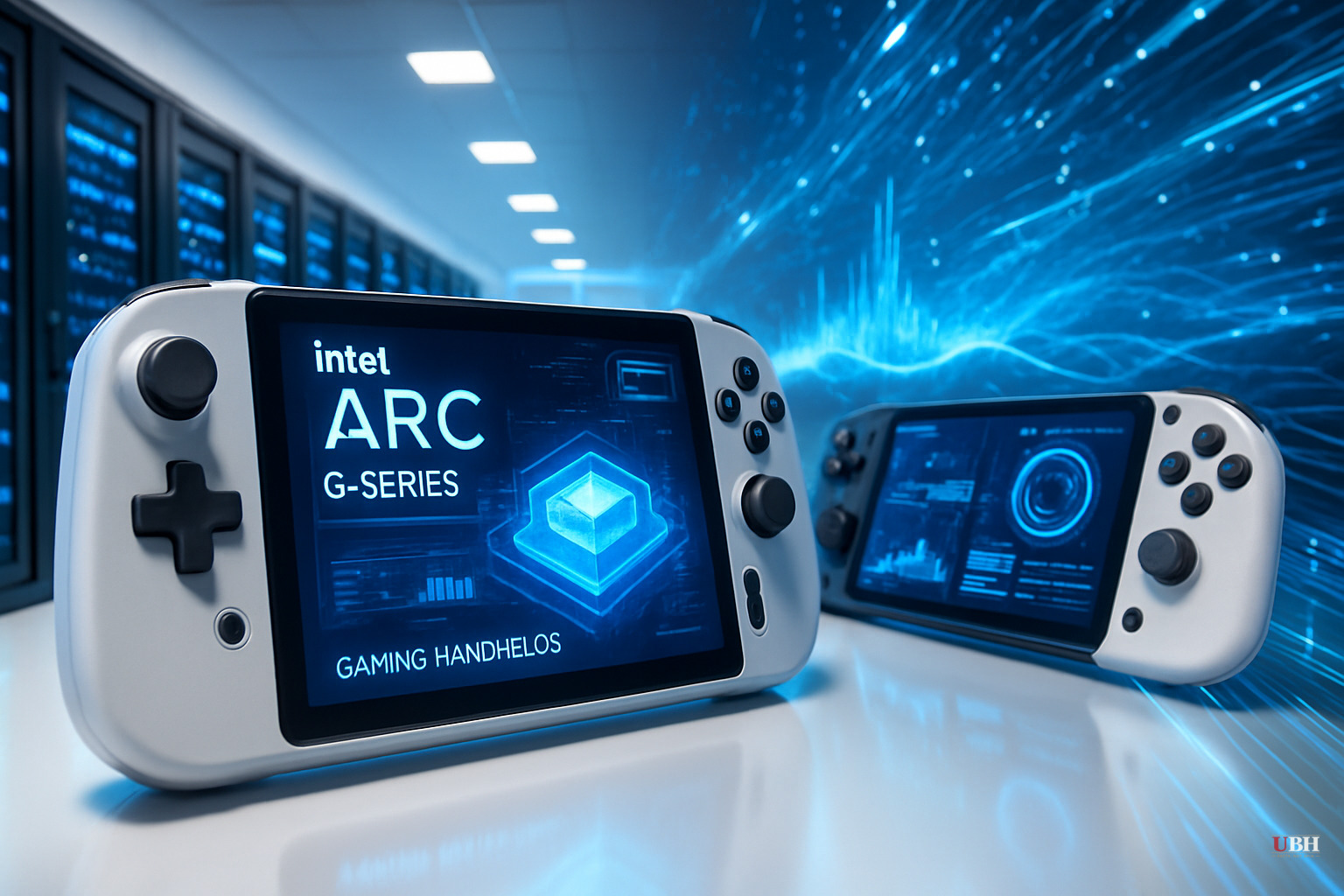
Intel Reveals Arc G-Series Chips for Gaming Handhelds at Computex 2026, Taking Direct Shot at AMD
Intel Finally Gets Serious About Gaming Handhelds
For years, AMD's Ryzen Z-series chips owned the gaming handheld market by default. Intel watched from the sidelines. That dynamic is shifting.
At Computex 2026 on May 28, Intel officially unveiled the Arc G-Series — a new family of chips purpose-built for gaming handhelds, according to Engadget. The lineup includes the Arc G3 and Arc G3 Extreme, both featuring up to Intel's Arc B390 GPU with real-time ray tracing and AI-powered upscaling via XeSS 3 technology.
Real devices are already lined up: the Acer Predator Atlas 8, the MSI Claw 8 EX AI+, and a OneXPlayer device. Expect them in stores later this year.
What's Under the Hood
The Arc G-Series chips are modified versions of Intel's existing Core Ultra 3 lineup — internally codenamed "Panther Lake," according to Tom's Hardware. The architecture features two performance cores, eight efficiency cores, and four low-power efficiency cores.
They're built on Intel's new 18A process node. AMD's Z2 chips are built on older silicon — a fact Intel has been aggressively publicizing. Intel reportedly called AMD's Z2 platform "ancient silicon" in direct competitive messaging, per Tom's Hardware. That claim will need to be backed up with performance data.
Connectivity specs are solid: Wi-Fi 7 R2, Thunderbolt 4, and dual Bluetooth 6. Intel is matching full desktop-class connectivity rather than shipping compromised mobile chips.
The Software Play Nobody's Talking About
The hardware is only half the story.
Intel is betting heavily on software integration to differentiate the Arc G-Series. The chips are optimized for Windows 11's full-screen Xbox mode, according to Engadget. The standard Windows interface on handhelds has traditionally been cumbersome — anyone who's used a Steam Deck running Windows knows the friction.
Intel is also rolling out Intel Precompiled Shaders — a cloud-based system that delivers pre-optimized shaders to supported games instead of forcing your device to compile them locally. Shader compilation stutter has been a persistent performance problem in PC gaming. The system's effectiveness remains to be tested.
Supported games at launch include Black Myth: Wukong, Call of Duty: Black Ops 6, and The Outer Worlds 2. The list is short. How quickly Intel expands it will determine whether this feature becomes a selling point.
The Acer Predator Atlas 8: First Real Test Case
The Acer Predator Atlas 8 is the headliner device. According to Engadget's Sam Rutherford, it packs an 8-inch 1,920 x 1,200 display running at 500 nits brightness with a 120Hz variable refresh rate. Storage is 1TB. RAM goes up to 24GB of shared memory. Battery is an 80WHr unit — one of the larger batteries in the handheld space.
Other specs: Hall Effect analog triggers (eliminating drift concerns), a Gorilla Glass Victus front panel, a microSD card reader, and two Thunderbolt 4 ports. Most handhelds ship with one.
Acer also included a physical trigger sensitivity switch, toggling between shallow actuation for shooters and deeper analog pull for racing and flight sims.
On cooling, Acer is using an updated AeroBlade fan claiming 10% better airflow than previous models, plus dual 2-watt speakers with DTS:X Ultra audio.
Release window: October 2026. Pricing: NOT disclosed yet. Without a price tag and without benchmark data, comparing the Atlas 8 to competitors like the Lenovo Legion Go 2 or ASUS ROG Xbox Ally is difficult.
Acer's Handheld Track Record
Acer is not a dominant handheld gaming manufacturer. The company's previous lineup — the Nitro Blaze 7, Blaze 8, and Blaze 11 — generated minimal market presence. According to Tom's Hardware, the Blaze 8 and Blaze 11 were never released in global markets. The Blaze 7 was released but "was never marketed enough to make a splash," per Tom's Hardware.
Acer is now applying Predator branding to this device — its premium gaming line — which indicates a more serious commitment. Results remain pending. The Predator Atlas 8 needs to ship on schedule, price competitively, and deliver performance.
What This Means Going Forward
The timing is awkward. Engadget noted that Intel's announcement came the day after a Steam Deck price increase — a sign that Valve is tightening margins in a market that's getting more expensive.
The gaming handheld market is crowded. ASUS, Lenovo, MSI, and Valve all have established products. AMD's Ryzen Z2 has a head start and a proven track record. Intel needs its Arc G3 chips to deliver real, measurable performance gains.
No benchmarks. No price. October release.
Intel is making the right competitive moves. Whether the Arc G-Series actually displaces AMD in handhelds or becomes another expensive entry depends entirely on performance numbers we don't have yet.
Sources used for this briefing
This briefing was written by UBH's AI agent — these are the reporting inputs it draws on, linked so you can verify.


