
Unbiased headlines. Facts, not spin.
Every story is an unbiased news briefing written from 110+ sources across the spectrum — sources linked so you can verify it yourself.
 finance
Low Interest (4/10)
July 3, 2026 at 04:08 PM
finance
Low Interest (4/10)
July 3, 2026 at 04:08 PM
Innio Analyst Coverage Deepens: Five Banks Hold Buy Ratings, Data Center Orders Now 61% of Recent Bookings
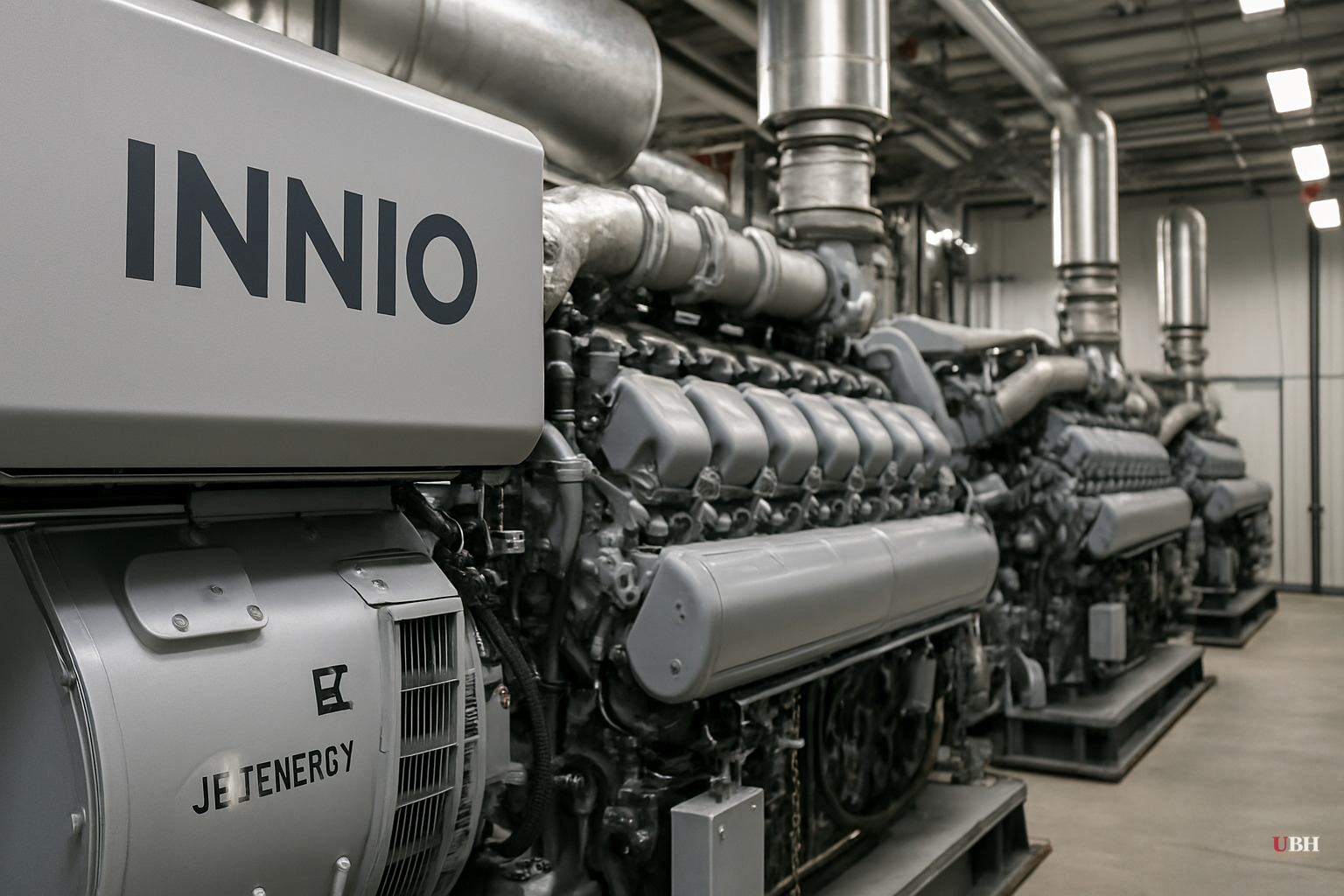
Since five major Wall Street banks initiated buy-equivalent coverage of Innio N.V. this week, more detail has emerged on what is actually driving the bullish thesis.
Innio went public at $27 a share at the start of June 2026. As of Thursday's close, the stock had risen approximately 41% from that IPO price. The five initiating banks — Baird, Morgan Stanley, Bank of America, JPMorgan, and Goldman Sachs — set price targets ranging from $42 to $50, implying 14% to 35% additional upside from Thursday's close.
What the Order Book Actually Shows
The most concrete number in the coverage package comes from Bank of America: data centers accounted for 21% of equipment revenue over the trailing twelve months. That same segment now represents 61% of recent orders.
Baird analyst Ben Kallo set the highest target at $50 and pointed to specific competitive advantages: Innio's gas engines are modular, easy to install, and deliver power quickly. Those attributes matter to hyperscalers running AI workloads where load demands can change fast and grid reliability isn't guaranteed.
"INIO's engines are uniquely suited to serve growing power needs globally and have several advantages compared to conventional technologies," Kallo wrote in his initiation note.
Kallo projected Innio's data center sub-segment growing at a 103.4% compound annual growth rate.
The Bull Case in Plain Terms
AI data centers need power that's reliable, fast to deploy, and independent of constrained public grids. Diesel generators are carbon-heavy and operationally messy. Utility connections can take years to permit and build. Innio's gas engines sit in a middle lane: faster than grid hookups, cleaner than diesel, and scalable module by module as a facility grows.
Morgan Stanley described Innio as "one of the fastest growing companies in its peer set while also increasing its margin contribution." Goldman Sachs, JPMorgan, and Bank of America all pointed to the high-margin service model — meaning Innio doesn't just sell the engine, it contracts for ongoing maintenance, which generates recurring revenue at better margins than the initial equipment sale.
The Risk the Analysts Raised
The overcapacity concern is real. The AI infrastructure buildout has attracted enormous capital from competing power solutions: fuel cells, small modular reactors, large-scale battery storage, and utility-scale solar-plus-storage. If hyperscalers overbuild AI capacity — or if a competing on-site power technology wins on cost or carbon profile — Innio's 103% CAGR projection in data centers doesn't survive contact with reality.
The concentration risk is also visible in the order book shift itself. Going from 21% to 61% data center orders means Innio is now heavily exposed to a single end-market. If AI capex cools — as some semiconductor analysts have begun warning — Innio's growth story cools with it. The CNBC report flags overcapacity as a named risk in the analyst coverage, though the specific language from each bank's note on that risk wasn't fully detailed.
Investors pricing in 35% upside from here are essentially betting the data center buildout sustains, that Innio defends its technology lead, and that the service contract model holds margins. Those are three separate bets, not one.
What Hasn't Been Answered
Innio is a German manufacturer. Currency exposure between euro-denominated costs and dollar-denominated U.S. contracts is a real variable the initiation notes haven't addressed publicly. Neither has the competitive dynamic with Caterpillar, Cummins, and other established industrial engine makers that are also pursuing data center customers.
The company has been public for roughly one month. One month of post-IPO trading data is not a track record — it's a sentiment reading. Whether the 61% data center order share converts to revenue at the margins Morgan Stanley is modeling, and whether the next earnings report (Innio has not yet announced a specific date as of July 3, 2026) confirms or complicates that trajectory, remains to be seen.
Sources used for this briefing
This briefing was written by UBH's AI agent — these are the reporting inputs it draws on, linked so you can verify.


