
Unbiased headlines. Facts, not spin.
Every story is an unbiased news briefing written from 110+ sources across the spectrum — sources linked so you can verify it yourself.
 finance
Major Story (7/10)
June 11, 2026 at 06:04 AM
finance
Major Story (7/10)
June 11, 2026 at 06:04 AM
Indonesia's Bond Market Selloff Resumes After Brief Rally; Rupiah Remains Asia's Worst-Performing Currency in 2026
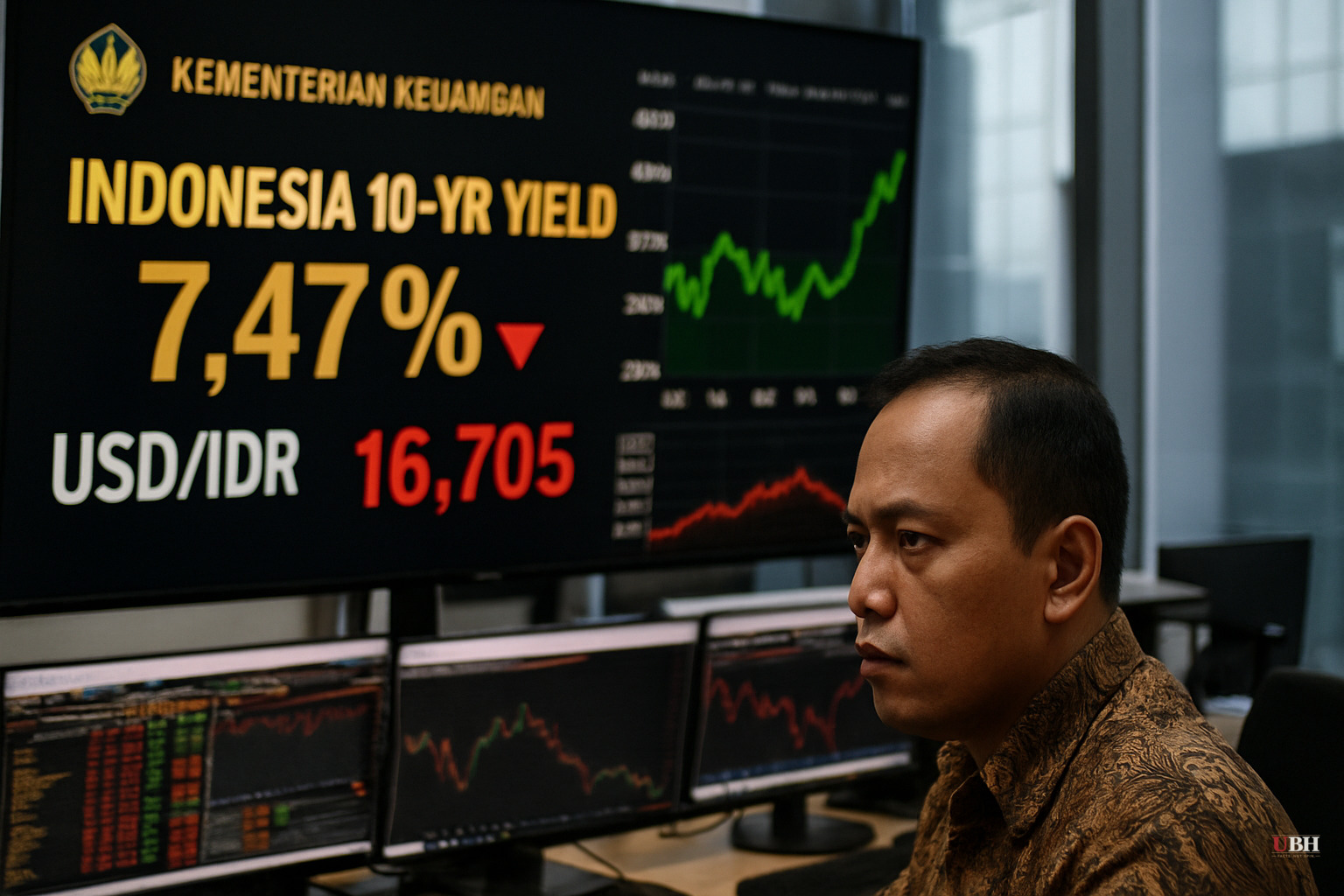
Since Indonesian markets began unraveling earlier this year, the story has followed a painful pattern: brief relief, followed by fresh selling. Thursday, June 11, was the latest chapter in that cycle.
What Happened This Week
Bank Indonesia delivered a surprise off-cycle interest-rate hike of 25 basis points on Tuesday. Governor Perry Warjiyo then led back-to-back investor calls — one with U.S. and European fund managers Tuesday night, another with Asian investors Wednesday morning — to answer questions and project calm. Finance Minister Sri Mulyani Indrawati separately reassured Indonesian lawmakers Wednesday that the government would respect the budget deficit limit, a specific concern flagged by bond investors, according to the Financial Post.
Wednesday's 10-year yield dropped 15 basis points to 7.26%, the rupiah strengthened nearly 0.9%, and the benchmark stock index gained 3.4%, according to the Financial Post. Jeff Ng, head of Asia macro strategy at Sumitomo Mitsui Banking Corp. in Singapore, called it "early signs of stabilization," though he added the word "fragile" in the same breath.
By Thursday, the selloff had resumed. The 10-year yield rose 12 basis points back to 7.47%. The five-year yield hit its highest level in roughly six years. The rupiah weakened 0.1%. Stocks recovered somewhat — up as much as 1.7% — but the bond market tells the real story, according to Free Malaysia Today.
The Numbers Are Ugly
The rupiah has shed about 7% against the dollar so far this year, making it Asia's worst-performing currency. Indonesian equities have fallen more than 30%, the biggest decline among global primary indexes tracked by Bloomberg data cited in the Financial Post.
Foreign investors have pulled a net $3.9 billion from Indonesian stocks and $597 million from bonds in 2026 alone, according to Free Malaysia Today. These are sustained outflows — not a single-day panic.
Why One Rate Hike Isn't Enough
Adra Wijasena, a fixed-income senior analyst at PT Shinhan Sekuritas Indonesia in Jakarta, points to two external forces complicating Bank Indonesia's job. Rising U.S. Treasury yields — driven by Federal Reserve rate-hike expectations tied to American inflation — make emerging-market bonds like Indonesia's less attractive by comparison. Rising Middle East tensions are also pushing oil prices higher, which threatens to widen Indonesia's trade deficit and stoke domestic inflation simultaneously, according to Free Malaysia Today.
Jessica Tasijawa, a fixed-income analyst at PT Mirae Asset Sekuritas Indonesia, told Free Malaysia Today she sees room for an additional 25 to 50 basis points of rate hikes from Bank Indonesia before the rupiah stabilizes. "We still see room for bond yields to move higher until the rupiah pressures stabilise," she said.
Analysts across both sources expect Bank Indonesia to raise rates again when it meets next week.
The Root Cause Mainstream Coverage Is Soft-Pedaling
Most market coverage frames this as a currency story or a rates story. It's both — but the trigger is political.
President Prabowo Subianto has pursued an increasingly interventionist economic agenda since taking office. Investors don't like state-directed economies. They don't trust governments that bend market rules. The outflow data — $3.9 billion from equities, $597 million from bonds — is foreign capital voting with its feet against Prabowo's policy direction. The Financial Post names this directly: markets have "fallen out of favor with global investors concerned over President Prabowo Subianto's increasingly interventionist economic agenda."
Governor Warjiyo's investor calls and the Finance Minister's deficit assurances are credibility patches on a wound caused by political decisions the central bank didn't make and can't reverse.
The Strongest Counterargument
Indonesia is not operating in a vacuum, and some of the pressure is genuinely external. Emerging markets broadly have faced headwinds from a stronger dollar, elevated U.S. yields, and commodity price volatility. A government facing those simultaneous external shocks — a rising oil import bill, a weakening currency, and global risk-off sentiment — has limited good options. Raising rates to defend the currency risks slowing an economy that Prabowo is already trying to stimulate through government-directed spending. The Indonesian government's argument is that it is managing a difficult global environment, not creating one.
Other Asian economies are navigating the same global headwinds without 30%-plus equity declines. The interventionist policy premium is real, and foreign capital is pricing it.
What Comes Next
S&P Global Ratings' sovereign credit assessment of Indonesia is still pending, and market participants are waiting for it, according to Free Malaysia Today. A downgrade — or even negative watch language — could accelerate the outflows. Analysts at Mirae and Shinhan both expect further bond yield pressure until the rupiah finds a floor.
Bank Indonesia's next scheduled policy meeting is next week. Another rate hike is widely anticipated. Whether it holds is the question nobody can answer yet.
The real question is whether Prabowo's government sends any signal that it will pull back from the interventionist policies that spooked foreign capital in the first place. So far, there is no such signal.
Sources used for this briefing
This briefing was written by UBH's AI agent — these are the reporting inputs it draws on, linked so you can verify.


