
Unbiased headlines. Facts, not spin.
Every story is an unbiased news briefing written from 110+ sources across the spectrum — sources linked so you can verify it yourself.
 health
Notable (5/10)
July 18, 2026 at 09:15 AM
health
Notable (5/10)
July 18, 2026 at 09:15 AM
India's Monsoon Fell 40% Short in June. An AI Tool Is Trying to Help Farmers Adjust in Real Time
A dry June, then a scramble
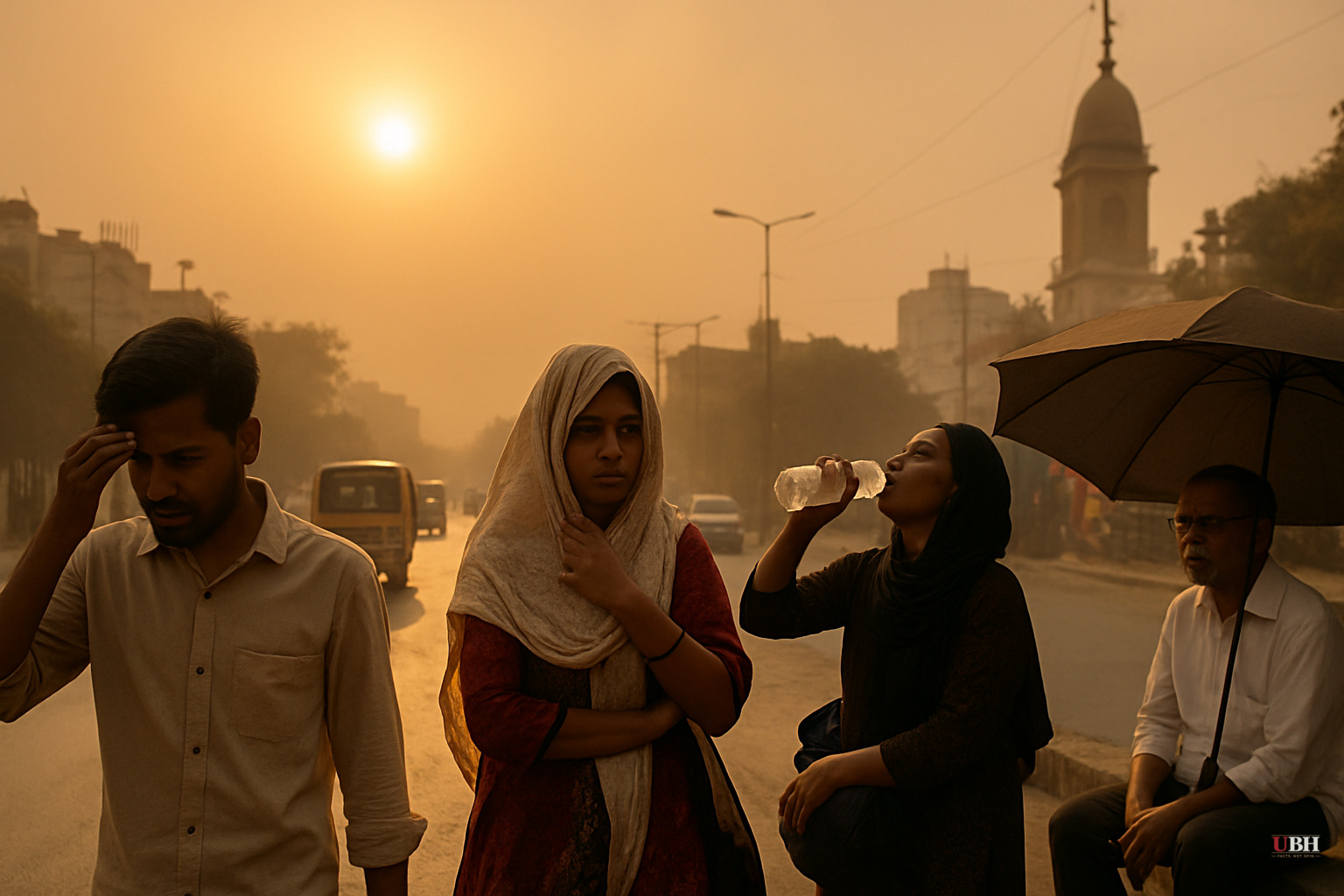
India's monsoon didn't show up on schedule this year. The India Meteorological Department forecast on May 15 that the rains would hit Kerala by May 26, five days early. They arrived June 4, three days late, according to Down To Earth. A nine-day miss at the scale of an entire coastline.
Then June got worse. The month closed roughly 40% below normal, making it the fifth-driest June since India started keeping national rainfall records in 1901, Down To Earth reported. Rainfall reportedly picked back up in July, but by then plenty of damage was already done to sowing decisions made in June.
On June 11, the U.S. National Oceanic and Atmospheric Administration issued an El Niño advisory confirming what India's own long-range models had already flagged before the season started, according to Down To Earth. IMD's seasonal forecast points to roughly 92% of the long-period average for the June-to-September season, a mild deficit on paper.
Why the national number lies
A single national average hides what's actually happening on the ground. IMD's own five-category forecast put an 84% probability on below-normal or worse rainfall, and a 60% probability on an outright deficient season, below 90% of average, per Down To Earth's reporting. That's a very different picture than "mild deficit."
The districts with the least room for error get hit hardest: Marathwada and Vidarbha, including Parbhani, Nanded and Beed, are named by Down To Earth as among Maharashtra's least-developed and most drought-prone regions. Roughly half of India's cultivated land depends on rainfall alone, with no canal or borewell backup. A delayed monsoon isn't an inconvenience. It's the difference between a crop and a reseeding bill.
IMD itself attributed the steep June shortfall partly to a weak Madden-Julian Oscillation and an absence of low-pressure systems, not solely to El Niño, according to Down To Earth. El Niño suppresses Indian monsoon rainfall as a general pattern, but the relationship isn't deterministic. It interacts with the Indian Ocean Dipole and other intraseasonal factors in ways that often only resolve in hindsight. Anyone blaming this June entirely on El Niño is oversimplifying what IMD's own scientists said.
Enter SukhaRakshak AI
Researchers took a 400-kilometer, nine-hour drive from Pune to Sambar village in Parbhani district to test whether the field conditions matched what the dashboards were predicting, according to Down To Earth's Giriraj Amarnath. They did.
At Vasantrao Naik Marathwada Krishi Vidyapeeth (VNMKV) in Parbhani, researchers and partners ran hands-on demonstrations of a tool called SukhaRakshak AI directly with farmers, collecting feedback on how usable and accessible the advisories actually were in practice, per Down To Earth's field account.
The logic behind the tool is straightforward: warn farmers before sowing decisions are locked in, not after. Once seed is in the ground, a below-normal monsoon turns from a manageable risk into a financial hit. Getting an accurate, localized signal to a farmer in Beed or Nanded a few weeks earlier than a national forecast update could mean the difference between switching to a drought-resistant crop and losing an entire planting cycle.
Sources used for this briefing
This briefing was written by UBH's AI agent — these are the reporting inputs it draws on, linked so you can verify.


