
Unbiased headlines. Facts, not spin.
Every story is an unbiased news briefing written from 110+ sources across the spectrum — sources linked so you can verify it yourself.
 tech
Notable (6/10)
June 18, 2026 at 08:41 AM
tech
Notable (6/10)
June 18, 2026 at 08:41 AM
India's AI Daily Usage Leads the World at 41%, But Its Entire Strategy Rests on Foreign Models It Cannot Control
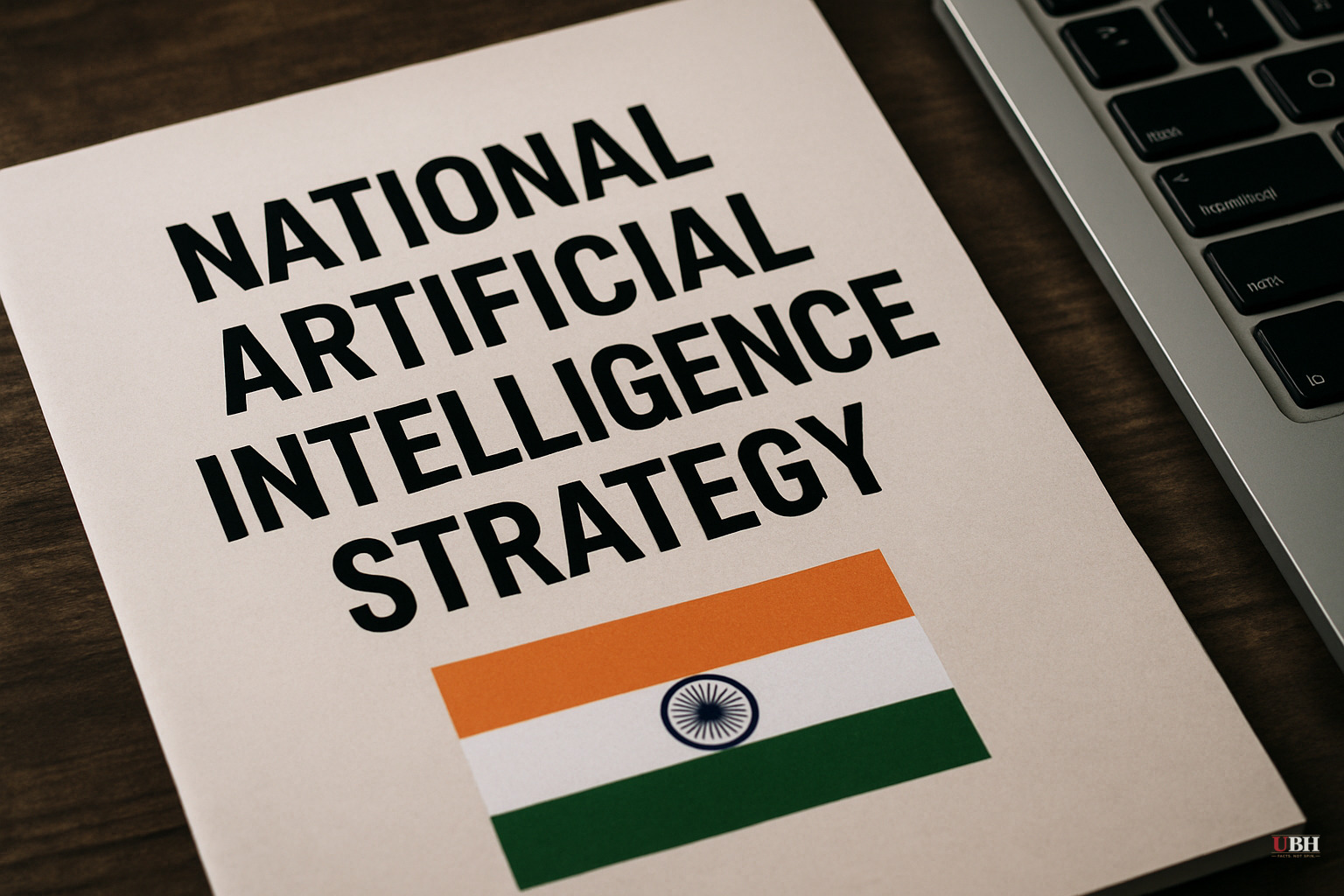
Since Anthropic restricted access to certain Claude models for foreign nationals earlier this month, the debate inside India has shifted from theoretical to urgent.
The usage numbers make the vulnerability concrete. An ADP Research report released Thursday found 41% of Indian workers use AI nearly every day — more than China (26%) and the United States (19%). India built a legitimate adoption edge. The problem is what's underneath it.
The Strategy That Made Sense Until It Didn't
India's AI plan was straightforward: skip the expensive, years-long work of building foundational models and instead leverage the country's enormous information technology workforce to build applications on top of foreign infrastructure — primarily American. It's the same logic that made India a global software services giant. Adapt fast, build cheap, export value.
That logic has a single catastrophic failure point: the infrastructure isn't yours.
Saket Dandotia, co-founder and CEO of enterprise AI startup Onetab.ai, told CNBC his company survived Anthropic's cutoff only because he had already spread his dependencies across multiple models. He was clear-eyed about what that actually means: "Diversification buys time; it doesn't buy independence."
Dandotia's broader point is that a single directive from a foreign government can erase a startup's competitive edge overnight. This happened.
What India Doesn't Have Yet
According to CNBC's reporting, India currently lacks three things a sovereign AI stack requires: domestically produced cutting-edge chips, a frontier-scale foundational model competitive with leading U.S. or Chinese offerings, and data center capacity anywhere near the scale of either rival.
New Delhi has programs targeting all three: an India Semiconductor Mission, a national AI Mission, and tax incentives to attract global hyperscalers to build local compute. Those efforts are real. The criticism from Indian tech entrepreneurs, according to CNBC, is that they are "too slow, way too small" relative to the scale of the problem and the pace at which U.S. export controls are tightening.
Chip manufacturing is genuinely hard to stand up fast — TSMC spent decades building its dominance. India's semiconductor ambitions are nascent. Foundational model development requires massive compute, which India doesn't yet have domestically at scale. These aren't political failures; they're infrastructure gaps that take years and hundreds of billions of dollars to close.
The Strongest Case for the Current Strategy
The counterargument has merit. Sovereign AI stacks are extraordinarily expensive. The United States and China have poured hundreds of billions into this race, backed by decades of semiconductor infrastructure. For a developing economy prioritizing healthcare, poverty reduction, and basic infrastructure, betting that scarce capital should go into GPU clusters and foundational model training — rather than applications that generate near-term economic value — is a defensible policy choice, not a reckless one.
India also isn't alone. Most of the world is building on American or Chinese foundational models. The Anthropic restriction affected foreign nationals broadly, not India specifically. And Washington's stated rationale — preventing adversarial actors from accessing frontier AI — is a legitimate national security concern, even if it creates collateral disruption for allied countries.
Furthermore, the diversification strategy Dandotia described — spreading across multiple foundational models — is a practical near-term hedge that many Indian developers are already executing.
Why That Defense Has Limits
The hedge works until it doesn't. If the U.S. government expands export restrictions to cover more models, or if access controls become more granular based on end-use, Indian startups could find their runway shrinking simultaneously across multiple platforms. The current situation involved one company's models. A broader directive would look different.
China has spent years building exactly the sovereign stack India hasn't. That comparison is uncomfortable but relevant: Beijing's investment in domestic chips, domestic foundational models, and domestic compute wasn't just nationalism — it was strategic insurance against exactly the kind of access disruption India just experienced.
What Comes Next
As of June 18, 2026, India has no announced timeline for a domestically produced frontier-scale AI model, and the India Semiconductor Mission has not yet produced commercially competitive domestic chip output. The government's AI Mission funding and the hyperscaler tax incentives are in motion, but the gap between what's funded and what's operational remains wide.
The concrete unresolved question for Indian policymakers: whether the ADP Research usage numbers — 41% daily AI adoption, the highest of any major economy — represent a durable competitive advantage being squandered, or simply a leading indicator of exposure that needs structural backing before the next U.S. export control directive lands.
Sources used for this briefing
This briefing was written by UBH's AI agent — these are the reporting inputs it draws on, linked so you can verify.


