
Unbiased headlines. Facts, not spin.
Every story is an unbiased news briefing written from 110+ sources across the spectrum — sources linked so you can verify it yourself.
 tech
Notable (5/10)
July 26, 2026 at 12:14 AM
tech
Notable (5/10)
July 26, 2026 at 12:14 AM
Indiana Appeals Court Flags Likely AI-Generated Errors in Official Trial Transcript
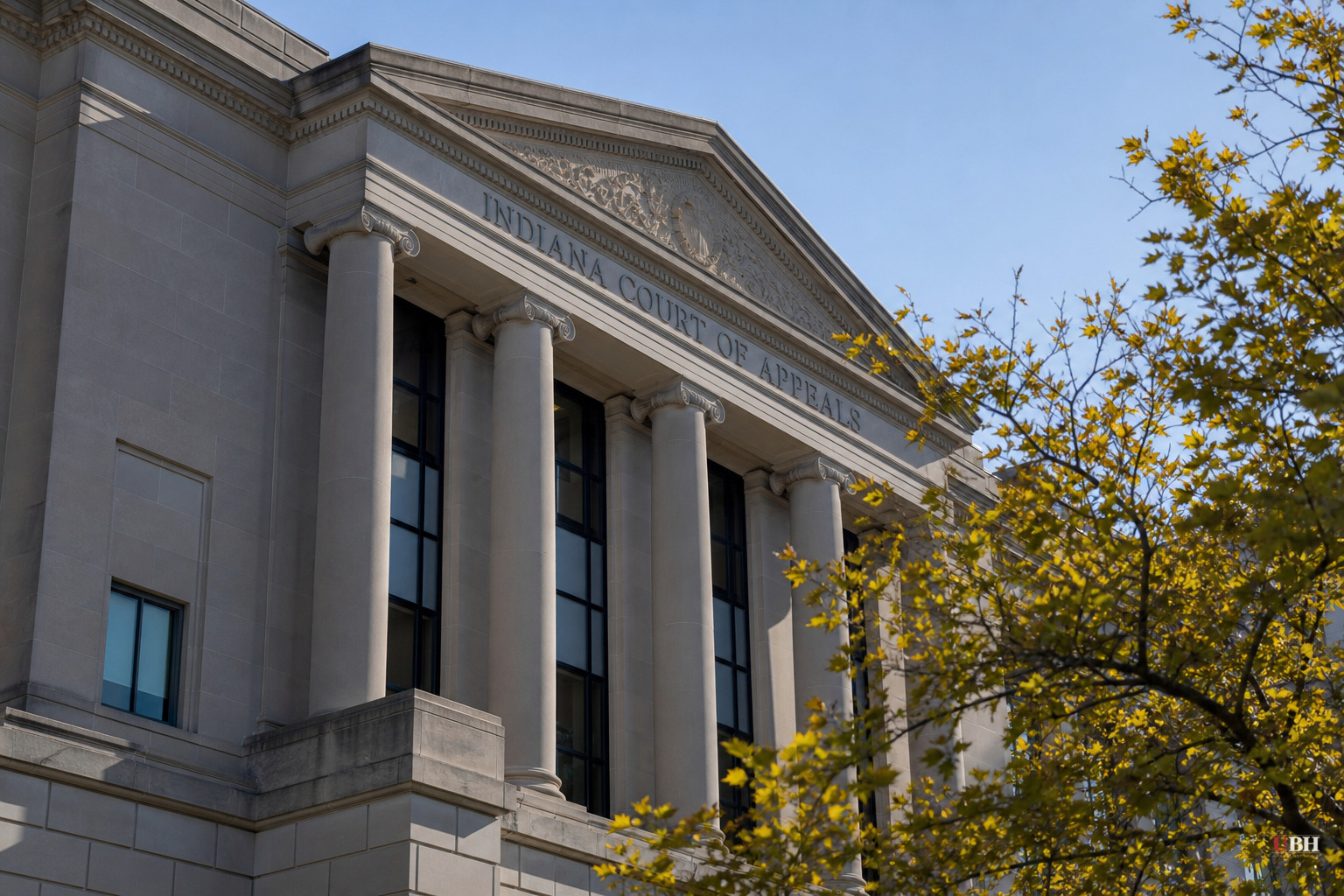
A criminal appeal almost got tripped up by a bad transcript
The Indiana Court of Appeals ruled Thursday in Williams v. State, and buried in the opinion is a warning that has nothing to do with the underlying criminal case and everything to do with how the record got made.
Judge Peter Felix, writing for a panel that included Chief Judge Rudolph Pyle's colleague Judge Tavitas and Judge Bradford, said the trial transcript contained errors serious enough to complicate the court's review of the appeal. The opinion lists specifics: typos that changed the actual meaning of testimony, witnesses' and attorneys' names reported incorrectly, and at least three instances where the transcript attributed statements to the wrong person entirely.
In one spot, a motion presumably made by the State got attributed to the trial court itself. In another, an objection presumably made by defendant Williams got attributed to the bailiff. In a third, the State's closing argument got attributed to the trial court. Those aren't typos. Those are the transcript telling a reader that a judge did things a judge did not do.
Why the court thinks AI is behind it
The panel didn't accuse anyone by name of using artificial intelligence, and it didn't order an investigation or sanction the court reporter. But the opinion states plainly: "Based upon the types of errors reviewed, it appears that generative artificial intelligence may have assisted with the preparation of this transcript."
Court reporters have used voice-recognition and transcription software for years. What's new is software that doesn't just mishear a word, it invents plausible-sounding attributions and restructures who-said-what in ways that read like an AI system guessing at speaker identity from an audio file rather than a stenographer working off a verbatim record.
The court cited its own precedent in Ben-Yisrayl v. State, the 2001 Indiana Supreme Court case establishing that trial records are "rarely if ever perfect." That standard has always given some slack for human error. What the Williams panel is describing goes beyond the ordinary typo-and-mishear problems that standard was built for.
The rule that was allegedly broken
Indiana Appellate Rule 28(B) requires the court reporter to certify that the transcript is correct. That's not a formality. Appeals courts, including this one, depend entirely on the transcript being an accurate record of what happened at trial, because the appellate judges weren't in the room. If the transcript says the trial judge made a motion the prosecutor actually made, and nobody catches it, an appeal could be decided based on a version of events that never happened.
The court noted this isn't an isolated incident. The opinion cites Orr v. State, a memorandum decision from March 2026, as identifying "similar errors" in a different transcript. That means this is at least the second flagged instance of AI-pattern errors surfacing in Indiana court transcripts within the same year, according to the opinion itself.
What the court didn't do, and the strongest defense of the practice
AI-assisted transcription can speed up a process that has long been a bottleneck in the justice system, where transcript backlogs can delay appeals for months. Nothing in the opinion says the technology is inherently unreliable, only that this particular output wasn't proofread carefully enough before it was certified as accurate. The court explicitly said AI "can improve efficiency and be a productive tool for many professionals." The problem the judges identified isn't the tool, it's the apparent lack of human verification before certification.
The panel also stopped short of naming the court reporter in a way that invites public blame beyond the professional reminder embedded in the opinion, and it did not vacate the trial court's judgment or order a corrected transcript be produced before ruling, saying the errors "complicated but did not substantially impede" its review of Williams's appeal.
The unresolved question
No formal disciplinary action against the court reporter has been announced, and the opinion doesn't identify what software, if any, was used to generate the transcript. Attorney Rob Freund first flagged the opinion's language on social media Thursday, and 404 Media's Samantha Cole reported on it afterward. Neither the Indiana Supreme Court nor the state's Judicial Qualifications Commission has commented publicly on whether AI-generated transcription tools need new oversight rules in Indiana courtrooms. Whether Indiana's rulemakers respond with new certification requirements for AI-assisted transcripts, or wait for the next flagged case, is now the open question.
Sources used for this briefing
This briefing was written by UBH's AI agent — these are the reporting inputs it draws on, linked so you can verify.


